10 Bathroom Renovation Ideas That Will Make You Fall in Love With Your Space Again
This article was created in line with Trends Oraa’s research and content standards.
Your bathroom is the first room you walk into every morning — and you deserve better than peeling grout and dim lighting. These 10 bathroom renovation ideas will completely transform how you start and end your day.
Whether you’re working with a tight budget or ready to go all-in, this guide covers real, actionable ideas with expert tips, a full budget breakdown, and everything in between. Stick around — idea #7 is the one most people completely overlook, and it makes the biggest visual impact.
You might also love our viral guide on bathroom tub ideas that bring the spa home
Why Your Bathroom Deserves More Attention Than You’re Giving It
Think about it. You spend time in your bathroom twice a day, every single day. That’s over 700 visits a year. Yet most of us pour renovation energy into kitchens and living rooms and forget that the bathroom is actually one of the highest-ROI spaces in your home.
Studies consistently show that even minor bathroom updates — new fixtures, fresh tile, better lighting — can return 60–70% of their cost at resale. And the daily mood boost? That’s priceless.
Now let’s get into the good stuff.
1. Go Bold With a Statement Tile Wall
What You’re Looking At
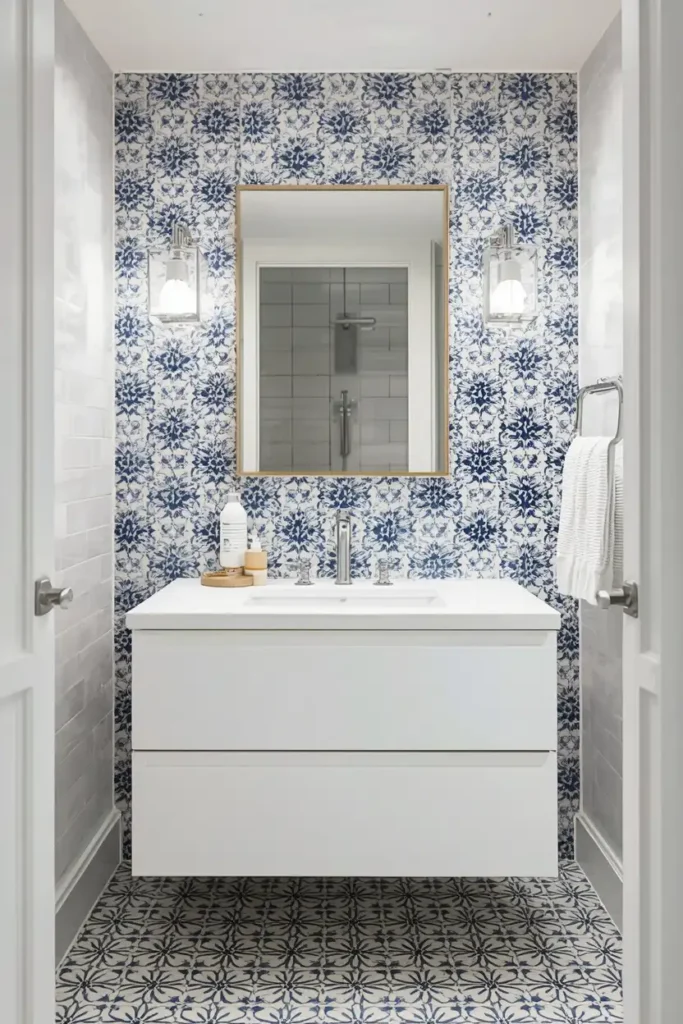
Imagine walking into a bathroom where one wall is completely covered in richly patterned encaustic tiles — deep navy and white geometric shapes that feel both modern and timeless. The rest of the room stays neutral: white walls, chrome fixtures, clean lines. That one tile wall does all the talking.
This is called an “accent tile wall” strategy, and it’s one of the most dramatic, cost-effective transformations you can make in any bathroom — small or large.
Expert Tip: You don’t need to tile the entire room to make a statement. A single accent wall behind the vanity or inside the shower enclosure creates a focal point that makes the whole room look intentional and designed. Use large-format tiles (12×24 or bigger) for a more seamless, luxe look with fewer grout lines to clean.
Why it works: The human eye is naturally drawn to contrast and pattern. By keeping the rest of the room simple, that one bold wall becomes art. It breaks the monotony without overwhelming the space. Plus, statement tiles have incredible staying power — they feel current without chasing trends.
Best of all? A single accent wall typically uses far fewer tiles than a full-room install, which keeps costs manageable. You get a high-end look without the high-end price tag.
Which tile style speaks to you — bold geometric patterns or soft organic textures? Drop your answer in the comments!
2. Replace Your Vanity Light Bar With Layered Lighting
What You’re Looking At
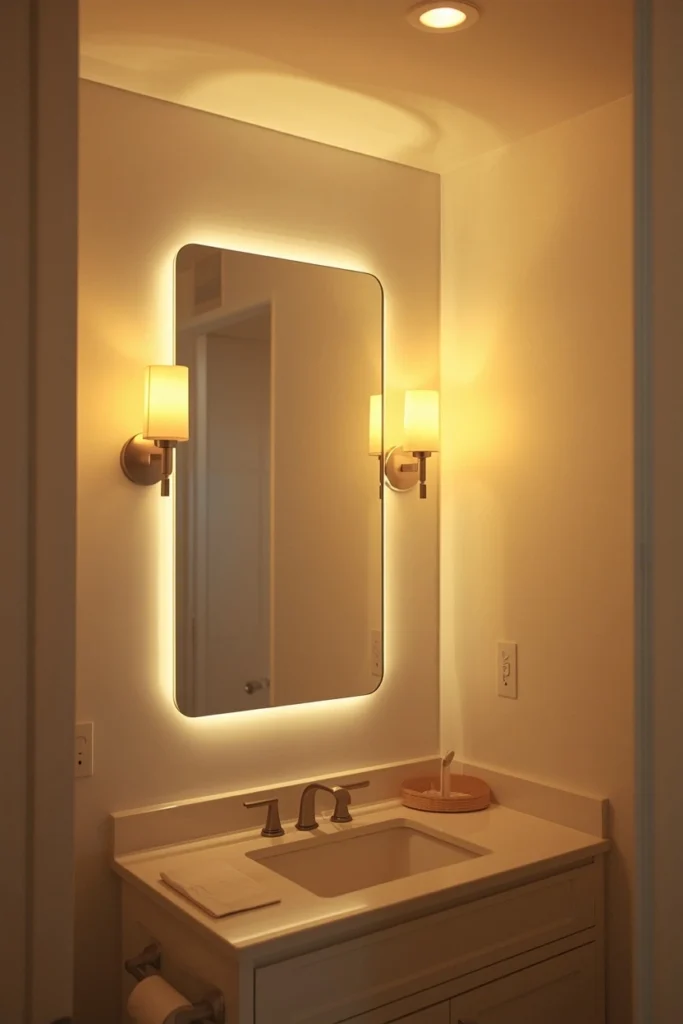
Picture a bathroom where the old single-bar light above the mirror has been replaced with something much smarter: warm sconce lights mounted on either side of the mirror at eye level, plus a subtle recessed light in the ceiling overhead. The room glows instead of glares.
Most bathrooms are lit terribly. That overhead fluorescent bar creates harsh shadows that make everyone look tired. Layered lighting — ambient, task, and accent — changes everything.
Expert Tip: Mount your side sconces at 60–65 inches from the floor (roughly eye level when standing). This eliminates under-eye shadows and gives you the most flattering, accurate light for getting ready. Dimmer switches are a must — they let you shift from bright morning light to a relaxing evening glow with one touch.
Why it works: Lighting is one of the cheapest upgrades with the most dramatic visual impact. Changing your lighting literally changes how you perceive every other element in the room — tile color, cabinet finish, mirror frame. It’s the renovation multiplier most people forget about.
Good lighting also adds a sense of space. Bright, well-distributed light makes a small bathroom feel significantly larger and more open. This is why hotel bathrooms always feel luxurious — they’ve mastered layered lighting.
3. Install a Floating Vanity for an Instant Modern Upgrade
What You’re Looking At
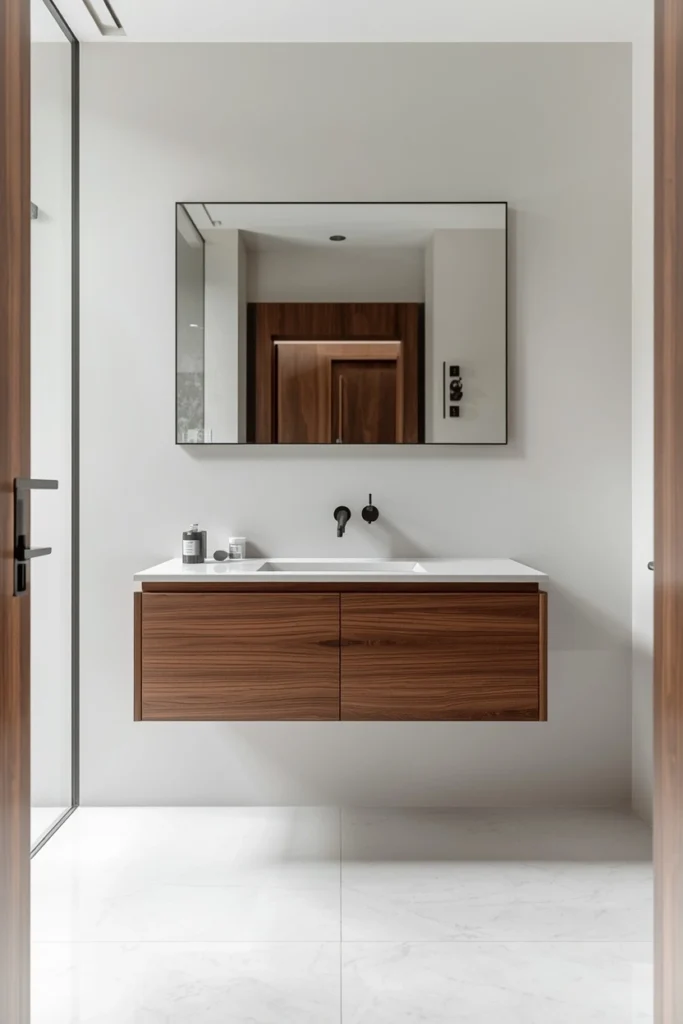
A wall-mounted floating vanity in a warm walnut finish, hovering about 16 inches off the floor. Beneath it, open floor space. The room looks larger, cleaner, and infinitely more expensive than it actually is.
Floating vanities have become one of the most searched bathroom renovation ideas because they solve two problems at once: style and storage.
Expert Tip: If you’re switching from a floor-mounted vanity to a floating one, hire a plumber for the drain relocation — but the rest is surprisingly DIY-friendly. Make sure your wall studs can handle the weight (most floating vanities max out at 150 lbs). Go for soft-close drawers and doors; they make cheap cabinets feel premium.
Why it works: Visual floor space is the single fastest way to make any room feel bigger. When your eye can travel uninterrupted from one wall to the other, the brain reads “spacious.” The floating vanity also creates a natural landing spot for hidden under-vanity lighting, which adds another layer of warmth to the room.
Paired with a vessel sink or undermount sink, a floating vanity feels like something straight out of a boutique hotel. This is a renovation that pays for itself every single morning.
4. Swap Out Hardware and Fixtures (The $200 Upgrade That Looks Like $2,000)
What You’re Looking At
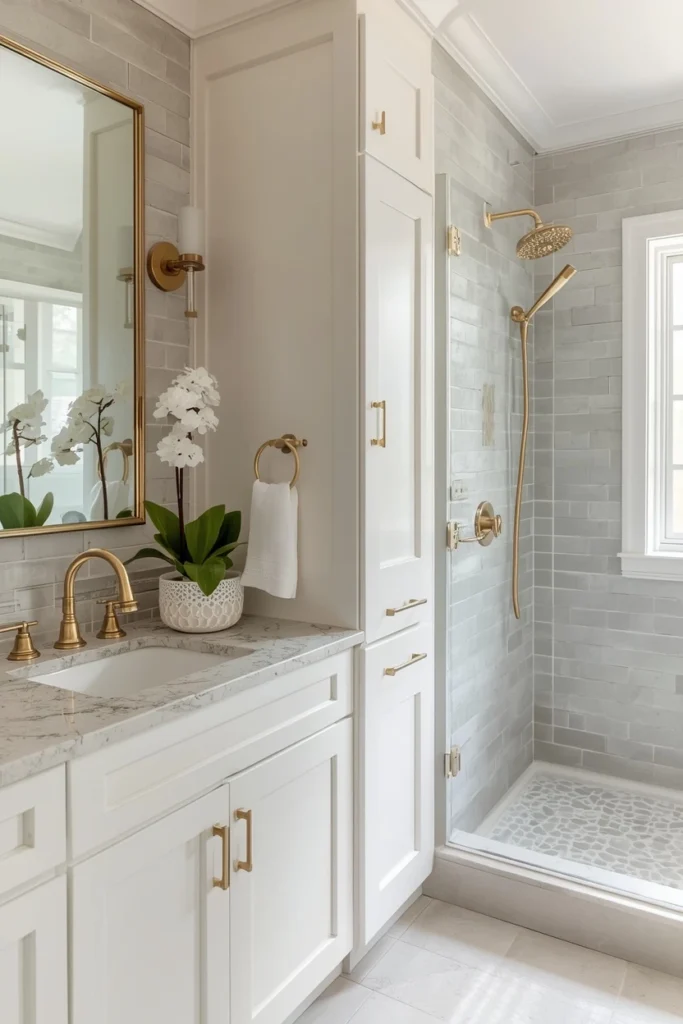
A bathroom where every single piece of metal has been swapped to brushed gold — cabinet pulls, towel bars, robe hooks, faucet, and showerhead. The tile and cabinets are untouched. The transformation is stunning.
Here’s the important part — this is possibly the highest bang-for-your-buck upgrade in this entire list.
Hardware is the jewelry of your bathroom. Swapping out cheap chrome for brushed nickel, matte black, or warm brass creates visual cohesion that makes the whole room feel intentional and designed.
Expert Tip: Buy all hardware from the same collection in the same finish. Mixing metals is trendy when done intentionally, but random mismatched metals just look unfinished. Set a budget of $150–$300 and upgrade everything at once: cabinet pulls, towel bars, toilet paper holder, faucet handles, and showerhead. The coordinated look is what creates the “wow.”
Why it works: Our brains pick up on visual inconsistency even when we can’t name it. When every metal element in a room matches, the space feels polished and complete. It’s the same reason luxury hotels coordinate their fixtures so precisely — unity signals quality. And since these swaps are mostly tool-free, this is the perfect weekend project.
5. Add Wainscoting or Shiplap for Texture and Warmth
What You’re Looking At
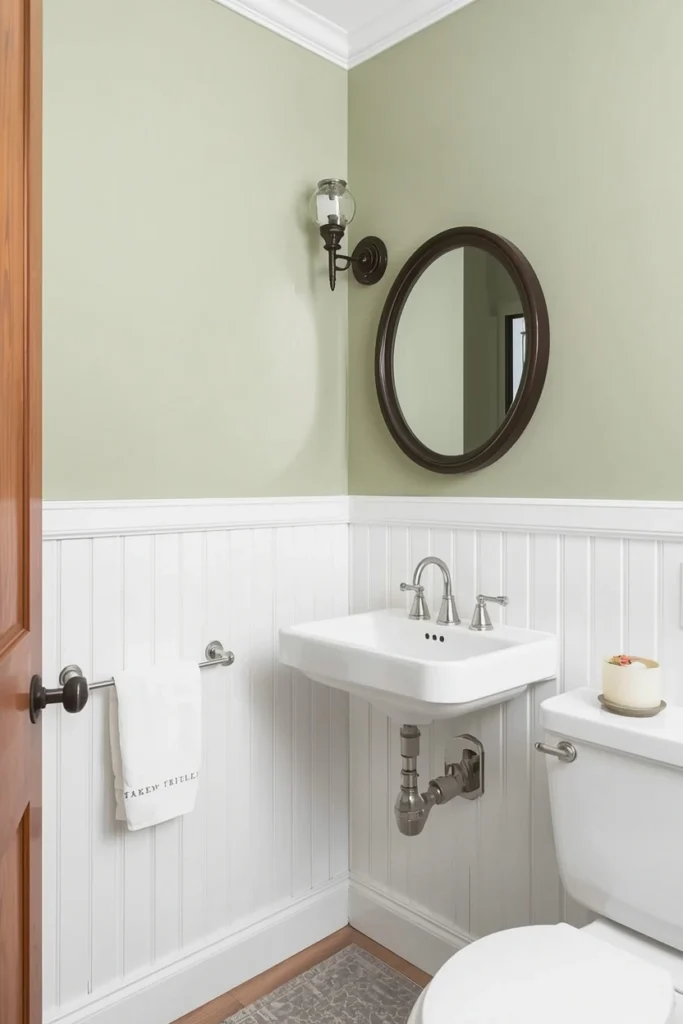
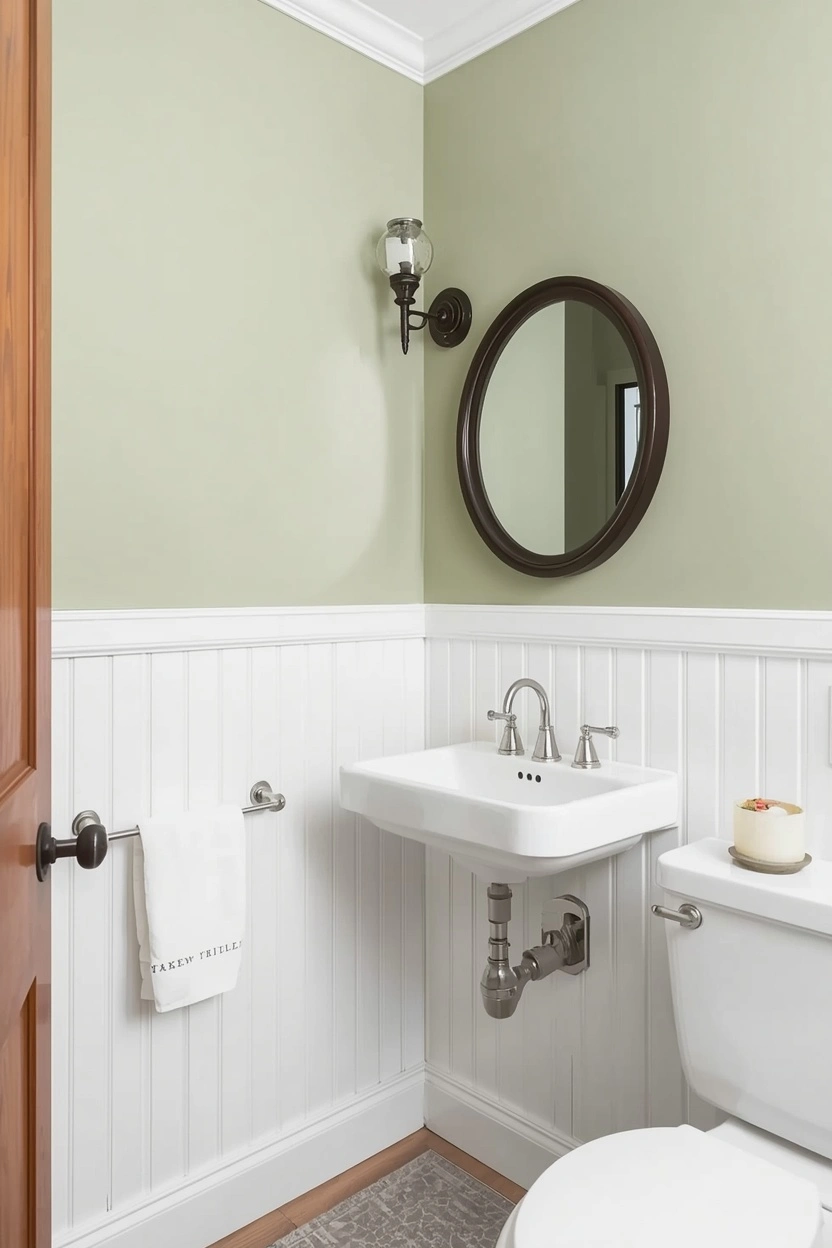
A bathroom where the lower half of the walls features crisp white painted wainscoting — classic board-and-batten panels running from floor to chair rail height. Above it, a soft sage green wall. The room feels warm, layered, and full of character without a single tile being changed.
Most people don’t know this — adding dimensional wall treatment to just the lower half of your bathroom walls is faster, cheaper, and more impactful than retiling.
Expert Tip: Use moisture-resistant MDF or PVC panels specifically designed for wet areas. Standard wood can warp and crack over time in a humid bathroom. Prime and paint with semi-gloss — it’s durable, easy to clean, and gives that clean, crisp look. Install the panels at 36–42 inches high for the classic wainscoting proportion.
Why it works: Texture and dimension make rooms feel finished in a way that flat painted walls never quite achieve. Wainscoting and shiplap add architectural interest that feels custom and considered. It also protects your walls from splashing around sinks and bathtubs, which is a genuine functional benefit. This is one of the easiest DIY-friendly renovations on this list — a weekend project with a big payoff.
The Bathroom Renovation Budget Breakdown (What You Actually Need to Know)
Before we keep going with the ideas, let’s talk money. Because the biggest reason people don’t renovate their bathrooms isn’t lack of inspiration — it’s fear of the bill.
Here’s a realistic breakdown of what different levels of bathroom renovation actually cost in 2025:
Budget Refresh ($500–$2,000) Everything cosmetic. New hardware, fresh paint, new mirror, updated lighting, new shower curtain and accessories, re-caulking. You’d be shocked how different a bathroom looks after hitting all of these. This level is 100% DIY-friendly.
Mid-Range Makeover ($2,000–$8,000) Add a new vanity, a tile accent wall, new faucets and showerhead, and potentially new flooring. May require a plumber for faucet or vanity work. Great ROI, especially if you’re prepping to sell.
Full Renovation ($8,000–$25,000+) Everything replaced — new tile floor-to-ceiling, new tub or walk-in shower, new vanity, new toilet, new lighting plan. This is the gut-renovation territory. Requires licensed contractors for plumbing and electrical.
The Most Cost-Effective Upgrades by Dollar Spent:
- Hardware swap: $150–$300 / Impact: High
- New lighting: $200–$600 / Impact: Very High
- Wainscoting: $300–$800 DIY / Impact: High
- Vanity: $400–$1,500 / Impact: Very High
- Accent tile wall: $500–$2,000 / Impact: Extremely High
The rule of thumb interior designers live by: spend your money on permanent finishes first (tile, vanity, lighting), then accessories last. Accessories are easy to swap out as trends change.
Now, avoid this mistake — don’t cheap out on the grout. Grout is the most visible sign of age and neglect in any bathroom. Spending an extra $50 on premium epoxy grout in a current color (warm gray, not white) can make new tile look 10x better and keep it looking new for years.
6. Create a Walk-In Shower (Remove That Old Tub)
What You’re Looking At
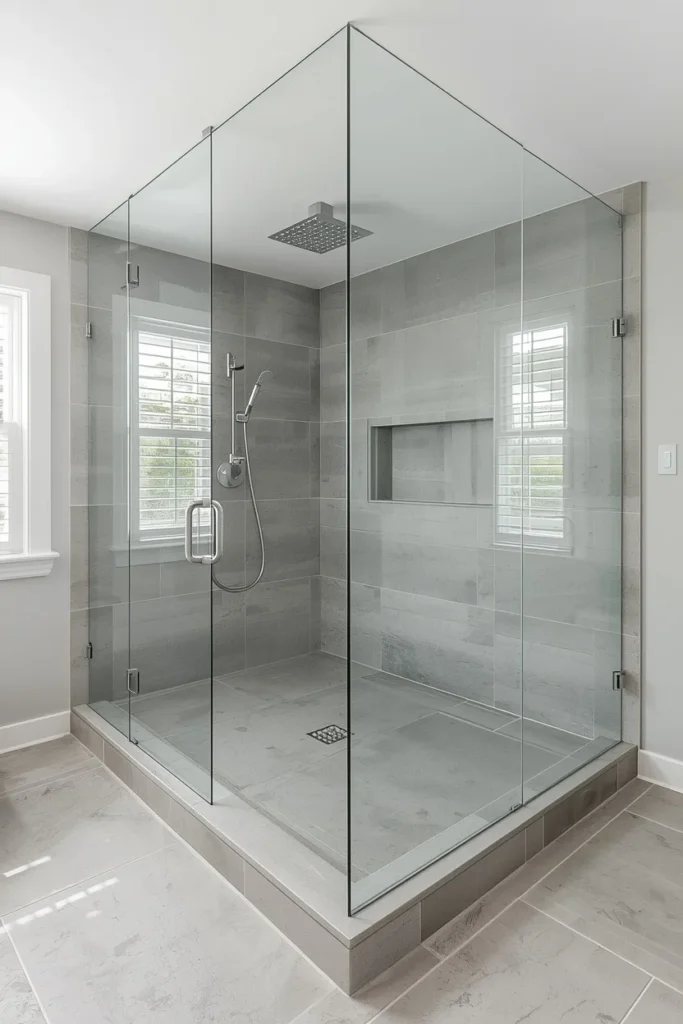
A master bathroom where the old corner tub — barely used, hogging 25 square feet — has been replaced with a large walk-in shower. Frameless glass panels. Large-format concrete-look porcelain tile. A built-in niche for shampoo bottles. A rain showerhead overhead. The room feels like a completely different space.
Walk-in showers are one of the top 3 renovation requests in the US right now, and for good reason.
Expert Tip: If you’re keeping one bathroom with a tub (important for families with young kids and for resale), this is the one to convert. The steam shower upgrade — adding a steam generator to an enclosed walk-in — is surprisingly affordable at $500–$1,500 for the unit and transforms your shower into a home spa experience. A built-in niche costs almost nothing extra if you’re already tiling.
Why it works: Walk-in showers reclaim lost square footage and make a bathroom feel dramatically more open and modern. The transition from a closed tub surround to frameless glass is like removing a wall — natural light flows through, the floor tile reads as continuous, and the whole space expands visually. It’s the renovation that gets the most “wow” from guests.
Check out our full roundup of spa bathroom ideas for even more walk-in shower inspiration
7. Upgrade Your Flooring With Large-Format or Patterned Tile
What You’re Looking At
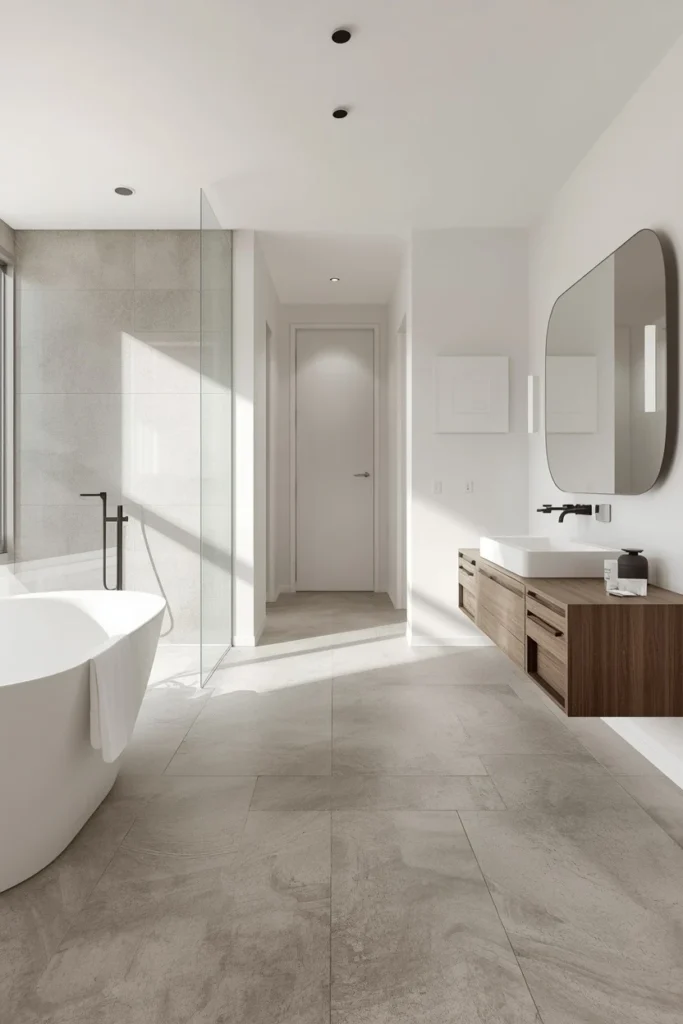
Here’s where it gets interesting — the floor is the most underestimated design element in a bathroom. A bathroom with tiny dated white square tiles replaced with oversized 24×24 concrete-look porcelain. The room looks cleaner, bigger, and more expensive. Zero other changes made.
Or the opposite direction: small black and white encaustic-patterned floor tiles, reminiscent of old European farmhouses. Bold, charming, and completely timeless.
Expert Tip: For small bathrooms, large-format tiles (anything 18×18 or bigger) visually expand the space because fewer grout lines mean less visual “noise.” For bigger bathrooms, patterned tiles add personality without requiring a full renovation. Go with rectified tiles (machine-cut to precise dimensions) for cleaner, tighter grout lines — they look more custom.
Why it works: We’re hardwired to look at floors. The floor tile is often the first thing we notice in a new space, even if we don’t consciously register it. Old, discolored, small-scale tile reads as dated instantly. Fresh, thoughtfully chosen flooring anchors every other design decision in the room and makes inexpensive finishes look significantly more high-end.
Heated floors are worth mentioning here too. If you’re already replacing the floor tile, adding electric radiant heat beneath it adds only $5–$10 per square foot and delivers a luxury experience that is absolutely addictive in winter months.
What’s your dream bathroom floor — bold patterned encaustic, sleek concrete-look porcelain, or classic marble? Tell us in the comments!
8. Add a Freestanding Tub as a Focal Point
What You’re Looking At
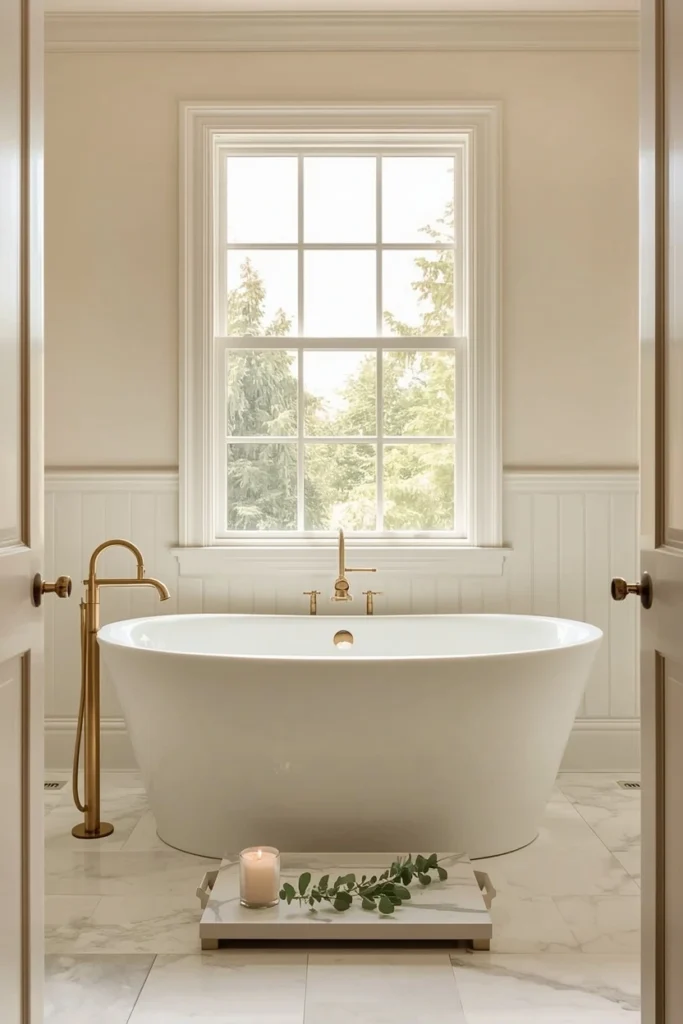
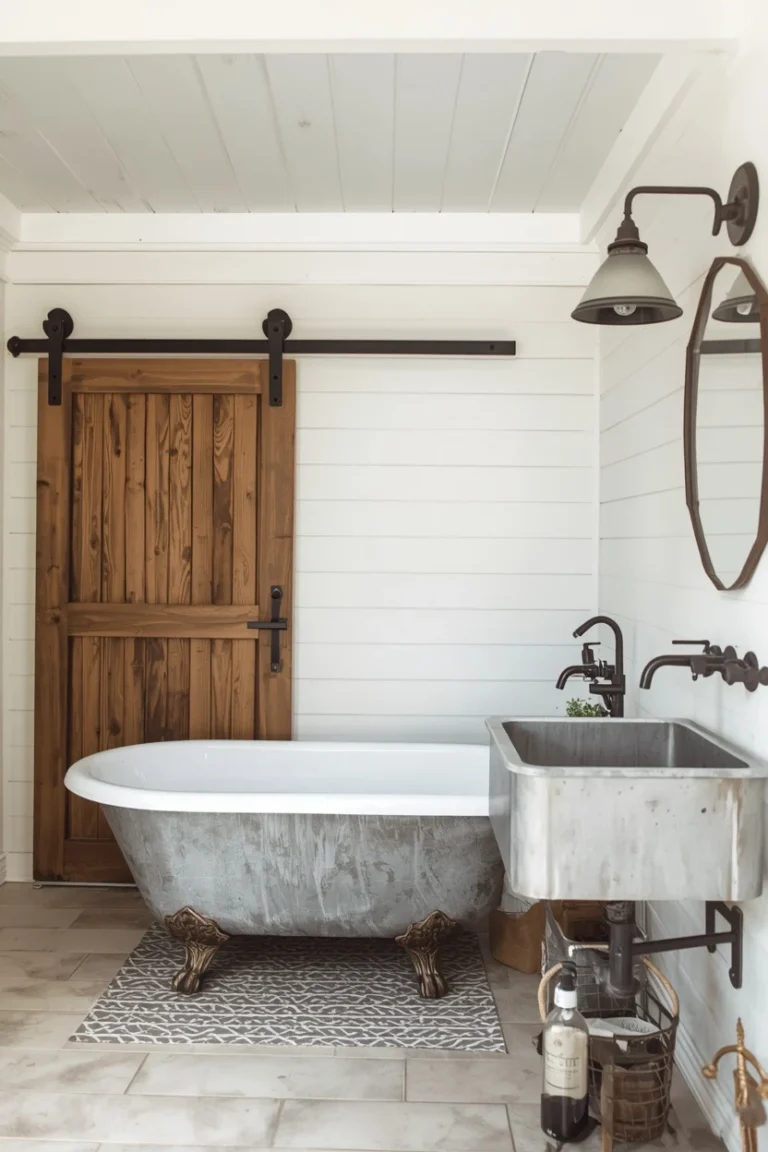
A master bathroom with a sculptural oval freestanding soaking tub positioned beneath a large window. Warm afternoon light streaming in. A floor-mount faucet in brushed brass. A marble tray resting across the tub with a candle and a glass of wine. It looks like a magazine. It feels like a retreat.
Most people don’t know this — freestanding tubs are more accessible than ever. Entry-level acrylic models start around $600, and installation is simpler than a built-in tub in most cases.
Expert Tip: Position your freestanding tub as the clear focal point of the room — centered under a window, against a feature tile wall, or visible from the doorway. The placement matters as much as the tub itself. A floor-mount faucet gives the cleanest, most sculptural look but requires planning before your floor goes in. Wall-mount faucets are a more flexible alternative.
Why it works: A freestanding tub has a sculptural quality that no other bathroom element can match. It signals luxury and intention. Even in a modest bathroom, a beautiful soaking tub elevates every other element around it. It also photographs beautifully — important if you’re staging your home for sale or just want to enjoy it on Instagram.
9. Introduce Natural Materials — Wood, Stone, and Plants
What You’re Looking At
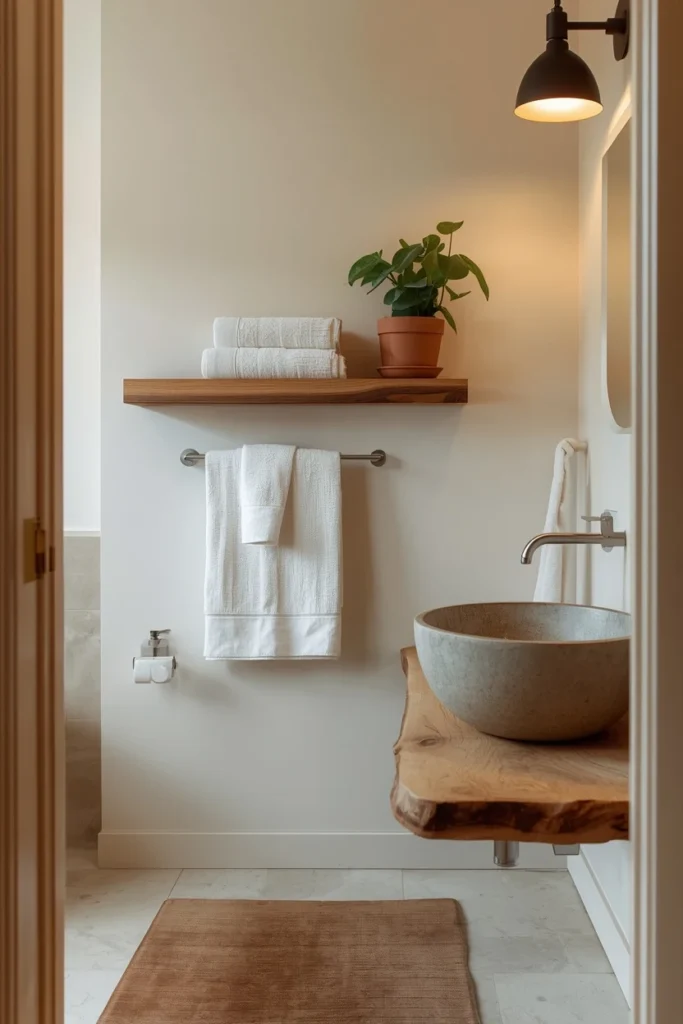
A bathroom where the standard all-tile, all-chrome aesthetic has been softened with organic materials. A teak bath mat on the floor. An oak floating shelf holding linen towels and a small potted fiddle-leaf plant. A concrete vessel sink on a live-edge wood vanity. The room feels warm, alive, and calming in a way cold tile never does.
Expert Tip: In a wet environment, stick to teak and white oak for any wood elements — they’re naturally water-resistant. Seal all wood thoroughly with a marine-grade or bathroom-specific sealant. For plants, stick to humidity-loving varieties: pothos, peace lily, snake plant, or Boston fern. They thrive in bathroom steam and add genuine air-purifying benefits.
Why it works: Biophilic design — the idea that humans feel better when connected to natural materials — is one of the most research-backed principles in interior design. Introducing wood grain, stone texture, and living plants into a bathroom reduces perceived stress and creates a spa-like atmosphere that all-synthetic materials simply can’t replicate. This is the secret behind why those high-end resort spas feel so calming — they bring the outside in.
[Love natural materials in home design? Don’t miss our rustic kitchen ideas for more organic-inspired spaces → trendsoraa.com/rustic-kitchen-ideas/]
10. Design a Functional, Beautiful Storage System
What You’re Looking At
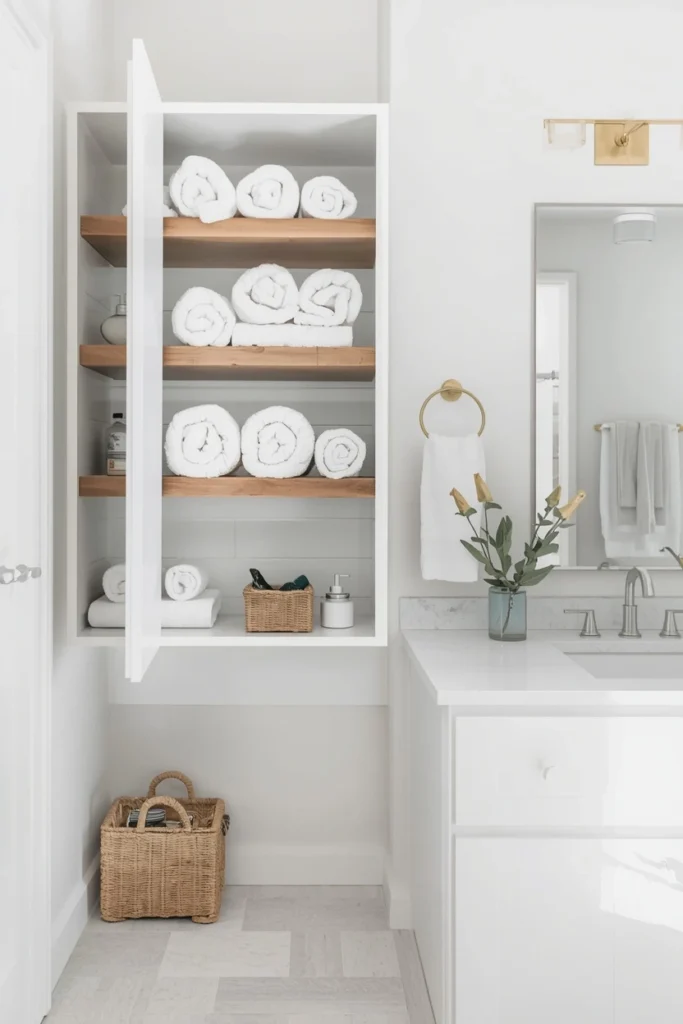
A bathroom where clutter has been completely eliminated — not by removing anything, but by building smart, beautiful storage. Open floating shelves with neatly rolled white towels. A recessed medicine cabinet flush with the wall. Small woven baskets corralling toiletries. A magnetic strip inside a cabinet door holding bobby pins and nail files. Every single thing has a home.
Expert Tip: The recessed niche is the most underused storage upgrade in bathrooms. A 3.5-inch-deep niche built between wall studs (which you already have) creates built-in shelving for shampoo, soap, and razor without extending into the shower space at all. It’s a zero-footprint upgrade. Plan two niches per shower wall — one for taller bottles, one for shorter items.
Why it works: Clutter is the number one reason a bathroom feels smaller than it is. Our brains register exposed clutter as visual noise, which increases stress and makes spaces feel chaotic. Intentional storage design doesn’t just look better — it changes how you feel every morning. A calm, organized bathroom creates a calm, organized start to your day. That’s a renovation that pays back in mental energy every single time you use the space.
For the vanity area, drawer organizers and pull-out tray inserts transform a junk-drawer situation into something genuinely satisfying. They cost $20–$50 and are entirely DIY-friendly.
What’s your biggest bathroom storage struggle — under-sink chaos, countertop clutter, or shower organization? Let us know below!
Final Thoughts: Your Dream Bathroom Is Closer Than You Think
You don’t need a six-figure budget or a complete gut renovation to fall in love with your bathroom again. Start with one idea from this list — the hardware swap, the lighting upgrade, or a statement tile wall — and watch how quickly your perspective shifts.
The best bathroom renovations are the ones that match your life, your budget, and your style. Whether that’s a sleek modern walk-in shower or a warmly layered farmhouse-inspired space with natural wood and potted plants, there’s no wrong answer. There’s only your answer.
One more thing — once you’ve nailed your bathroom, the natural next step is looking at your bedroom. Your whole home can feel like a boutique retreat with the right updates.
Ready to keep the momentum going? Explore our most-loved bedroom decor and design ideas.
[And for more bathroom-specific inspiration, don’t miss our modern bathroom ideas guide.
Bookmark this page, pin your favorite ideas, and come back when you’re ready for the next room. We’ll be here with more ideas to make your home the place you never want to leave.