10 Creative DIY Vegetable Garden Ideas That Actually Work (Even If You’re a Total Beginner)
This article was created in line with Trends Oraa’s research and content standards.
My tomatoes used to die. Every single year. I’m not exaggerating.
I’d buy the cute little seedlings, plant them with so much hope, and then… nothing. Wilted leaves. Sad, empty pots. A whole lot of “what did I do wrong this time?”
But here’s the thing nobody tells you: most failed vegetable gardens aren’t a “you” problem. They’re a setup problem.
Once I changed how I built my garden (not just what I planted), everything shifted. Suddenly I had more tomatoes than I knew what to do with, herbs I couldn’t kill if I tried, and a backyard that finally looked like something out of a Pinterest board.
So today, I’m sharing my favorite vegetable garden ideas — the kind that are budget-friendly, beginner-proof, and honestly… kind of addictive once you start.
You might also love our viral guide on 20 Brilliant DIY IKEA Dresser Hacks — turns out one of these hacks doubles as the BEST raised planter I’ve ever used, and it’s idea #2 below
Stick around, because idea #7 completely changed how I think about small-space gardening, and I promise you’ll want to screenshot at least three of these.
Why Your Garden Setup Matters More Than You Think
Most people don’t know this… your soil quality and bed structure matter way more than which seeds you buy.
I learned this the hard way. You can read more about it in our deep dive on topsoil uses and benefits, but here’s the short version:
- The right base = healthier roots
- Healthier roots = bigger harvests
- Bigger harvests = you actually want to keep gardening
Okay, with that out of the way… let’s get into the good stuff. 👇
1. Pallet Vertical Garden
What You’re Seeing
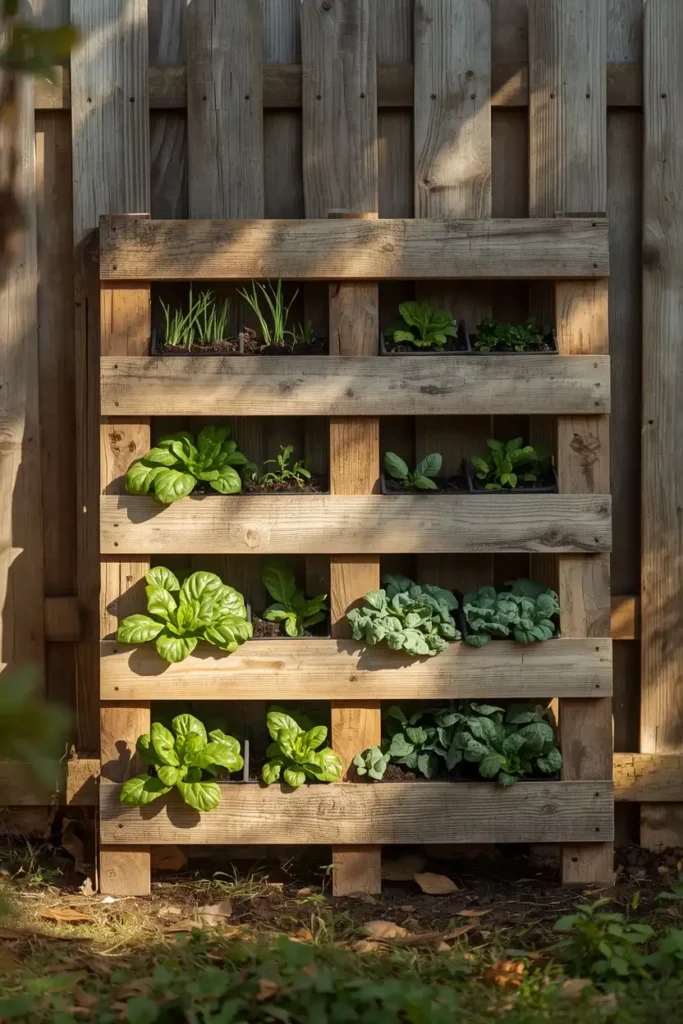
A reclaimed wooden pallet, stood upright against a sunny fence, with small pockets of soil tucked between the slats. Each pocket holds a different leafy green — lettuce, spinach, kale — creating a living wall of texture and color.
Expert Tip: Line the back and bottom of each pocket with landscape fabric before adding soil. This keeps everything from spilling out the first time you water, which (trust me) is a mess you don’t want to clean up twice.
Why It Works: Vertical gardens take up almost zero floor space, which is huge if you’re working with a tiny yard or patio. They also make watering and harvesting incredibly easy since everything is at eye level — no more bending over and squinting to find your lettuce.
2. Repurposed Dresser Planter Box
What You’re Seeing
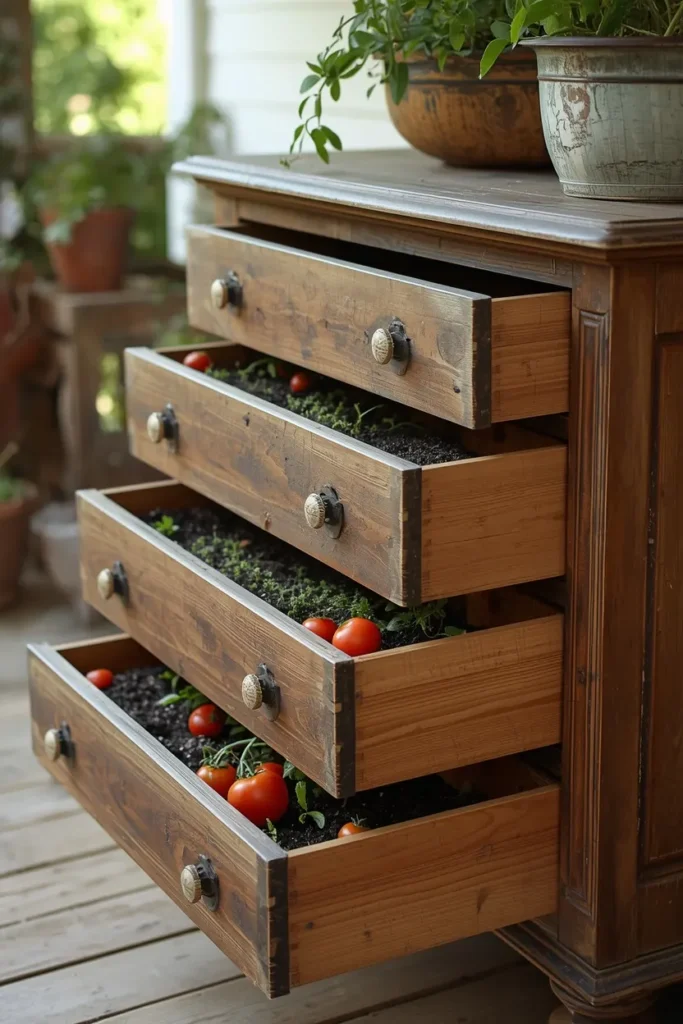
An old wooden dresser, drawers pulled out at different heights, each one lined and filled with soil and thriving vegetable plants — think cherry tomatoes spilling over the edges and herbs tucked into the smaller drawers.
Expert Tip: Drill drainage holes in the bottom of every drawer before filling it. Skip this step and you’ll end up with root rot faster than you’d think.
Why It Works: This is upcycling at its finest — you’re keeping furniture out of the landfill and getting a tiered, eye-catching planter for free. The staggered drawer heights also create natural visual interest, which is exactly why this idea performs so well on Pinterest. If you’re into this kind of furniture flip, you’ll want to bookmark that IKEA dresser hacks guide I mentioned earlier.
3. Cedar Raised Planter Box
What You’re Seeing
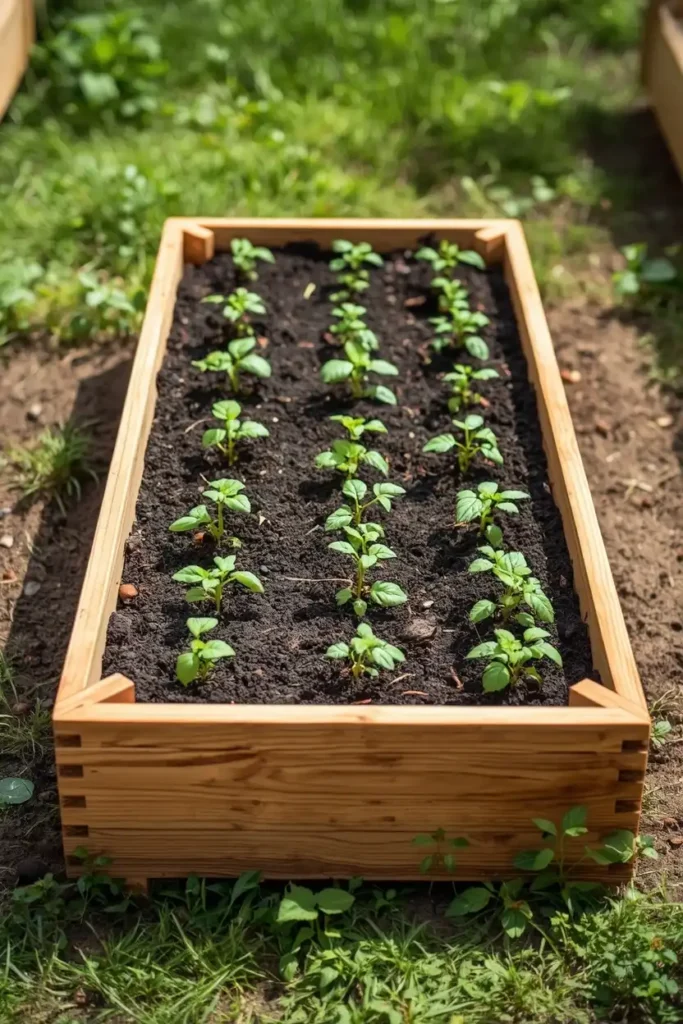
A clean, rectangular cedar box sitting a few inches off the ground, filled with rich dark soil and neat rows of young vegetable seedlings — peppers, carrots, and herbs all sharing the space.
Expert Tip: Cedar naturally resists rot, so you don’t need to seal or paint it. Honestly, leave it raw — it’ll weather into a gorgeous silvery-gray over time.
Why It Works: Raised beds warm up faster in spring, drain better, and keep soil loose and easy to work with (no more fighting compacted dirt). Plus, they look incredibly polished without much effort. If you want the exact build I used, our cedar planter box guide breaks it down step by step — and yes, it really can be done for under $5 in materials if you’re resourceful.
4. Elevated Garden Bed on Legs
What You’re Seeing
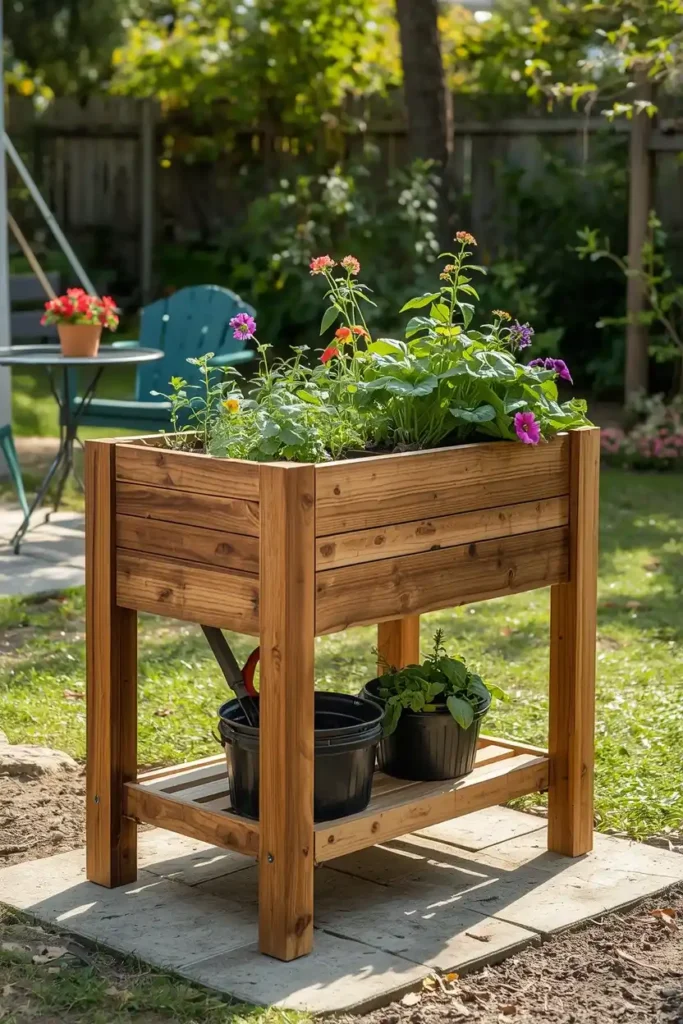
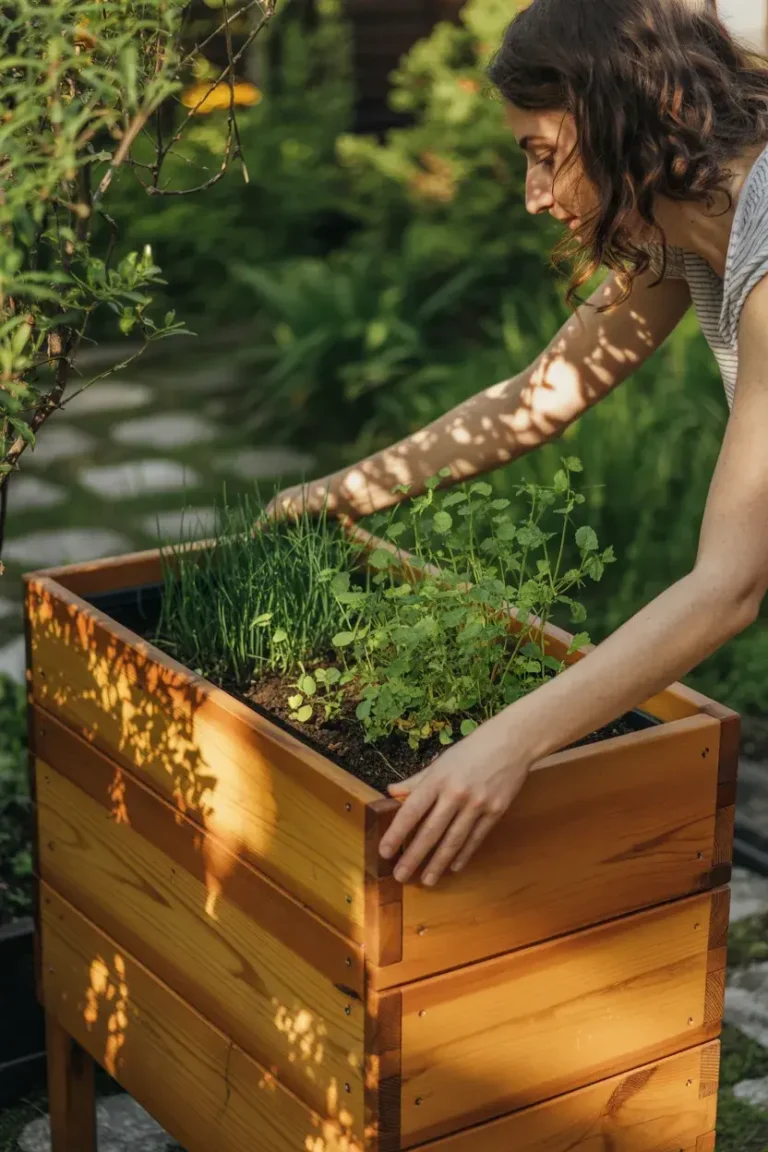
A waist-high wooden garden bed standing on four sturdy legs, packed with a mix of vegetables and flowers. The height makes the whole thing look like a piece of outdoor furniture rather than “just a garden bed.”
Expert Tip: Add a small shelf underneath the bed for storing pots, gloves, and tools. It’s the kind of detail that makes a setup feel intentional instead of thrown together.
Why It Works: This one’s a total game-changer if you have back or knee issues — no more kneeling in the dirt. It also keeps curious pets and rabbits out, which, if you’ve ever lost an entire row of lettuce overnight, you’ll appreciate immediately. For the full plans, check out our elevated garden bed guide.
Quick question for you: Are you team raised bed or team in-ground garden? Drop your answer in the comments — I’m genuinely curious which camp most of you fall into!
5. Ladder Herb Garden
What You’re Seeing
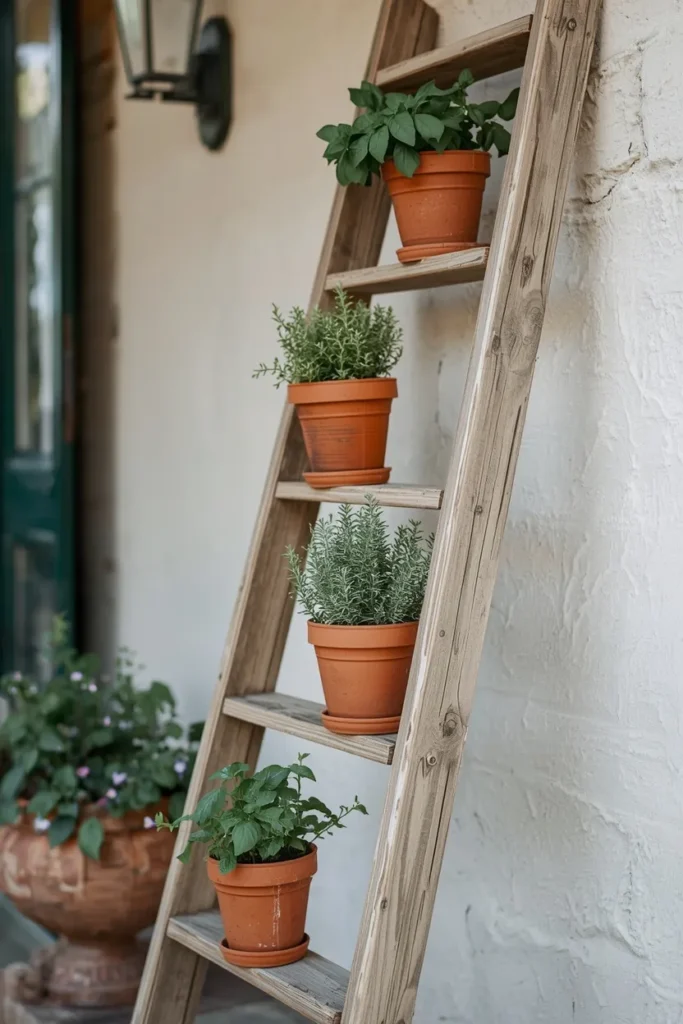
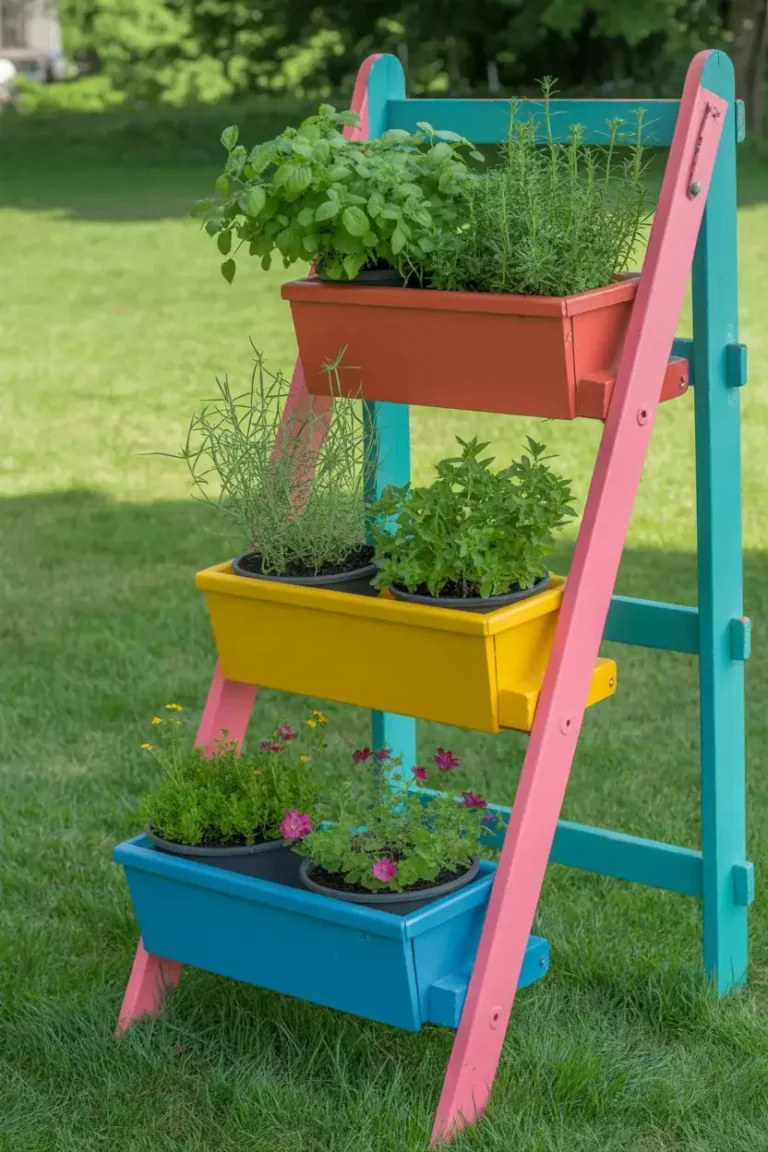
An old wooden ladder, leaned against a wall and turned sideways, with small pots of basil, thyme, mint, and rosemary nestled on each rung. It’s rustic, charming, and somehow always looks “finished” even on a busy day.
Expert Tip: Group herbs by water needs — rosemary and thyme like it dry, while basil and mint want more moisture. Keep those two groups on separate ends of the ladder so you’re not over- or under-watering one side.
Why It Works: This is one of the cheapest ideas on this list (hello, thrift store ladders for $5-10), and it instantly adds a cottage-core charm to any porch or patio. Want even more inspiration like this? Our ladder herb gardening ideas post has a ton of variations.
6. Galvanized Tub Garden
What You’re Seeing
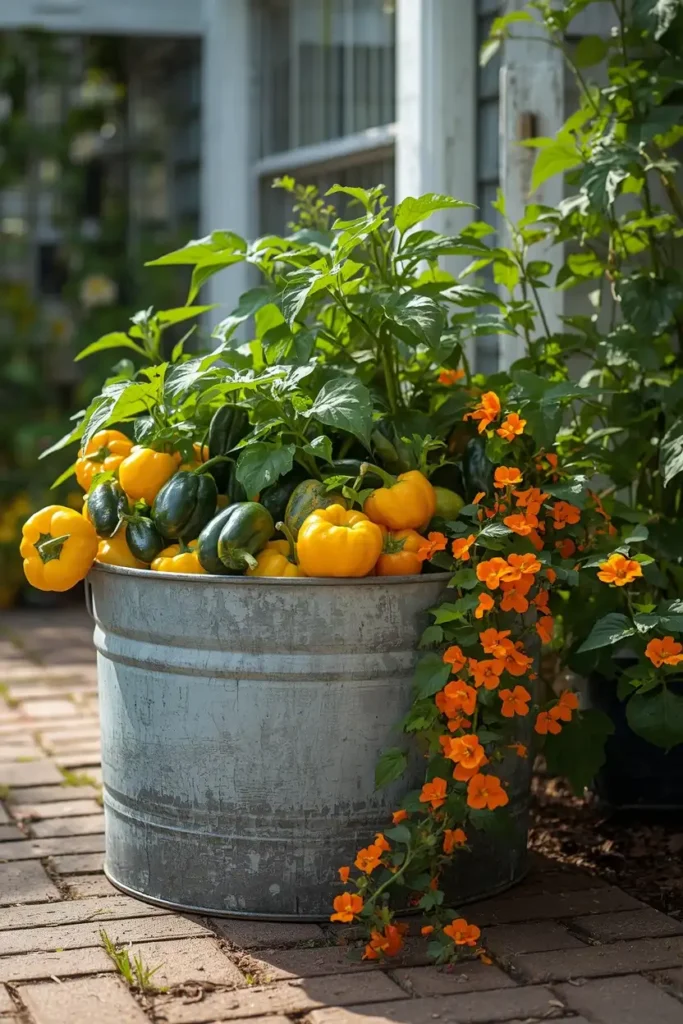
A large, round galvanized metal tub — the kind you’d normally see used for ice and drinks at a backyard party — filled with soil and overflowing with squash, peppers, and trailing nasturtiums.
Expert Tip: Metal tubs heat up fast in direct sun, which can literally cook your roots in summer. Drill drainage holes, then elevate the tub slightly on bricks or pavers to improve airflow underneath.
Why It Works: There’s something about that farmhouse-meets-modern look that photographs beautifully, which is probably why this idea blows up every spring on Pinterest. It’s also a fantastic option if your soil is rocky, sandy, or just plain bad — you’re essentially creating a perfect little ecosystem from scratch.
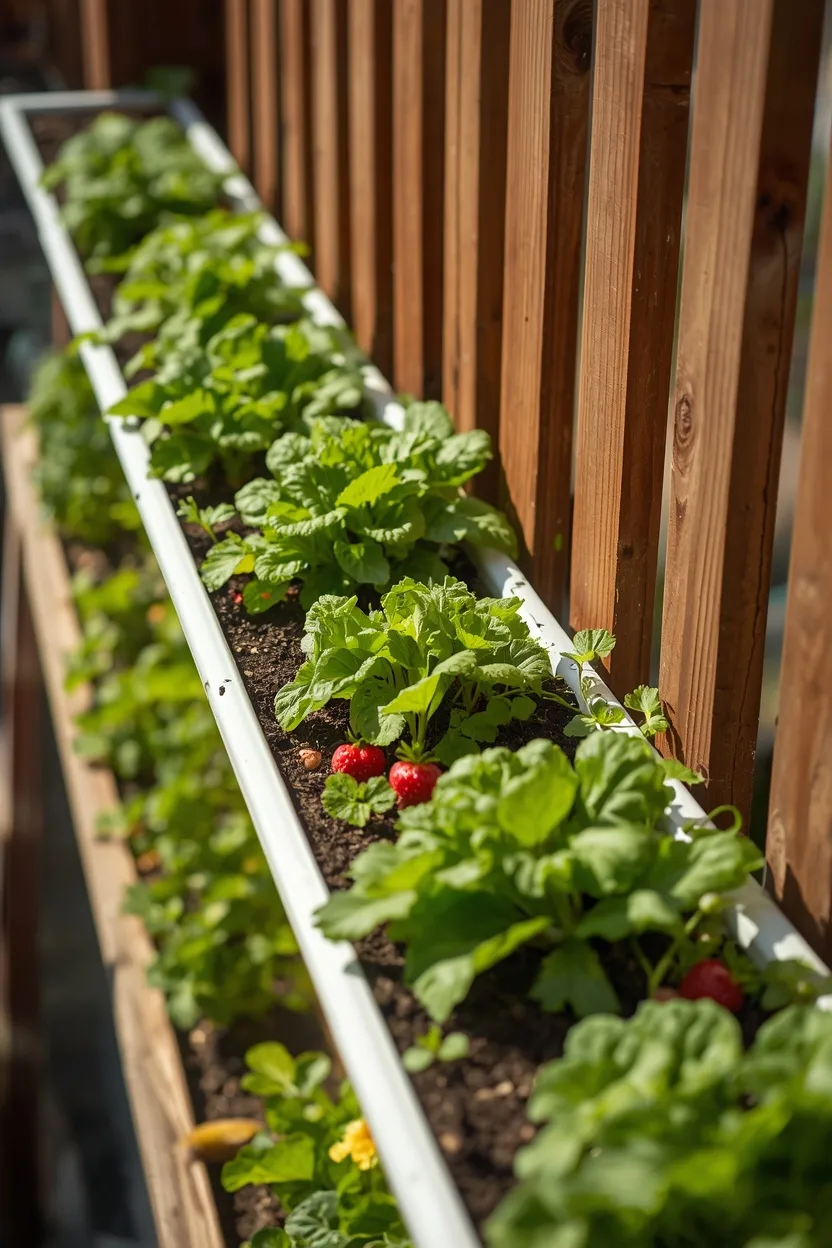
7. Hanging Gutter Garden
What You’re Seeing
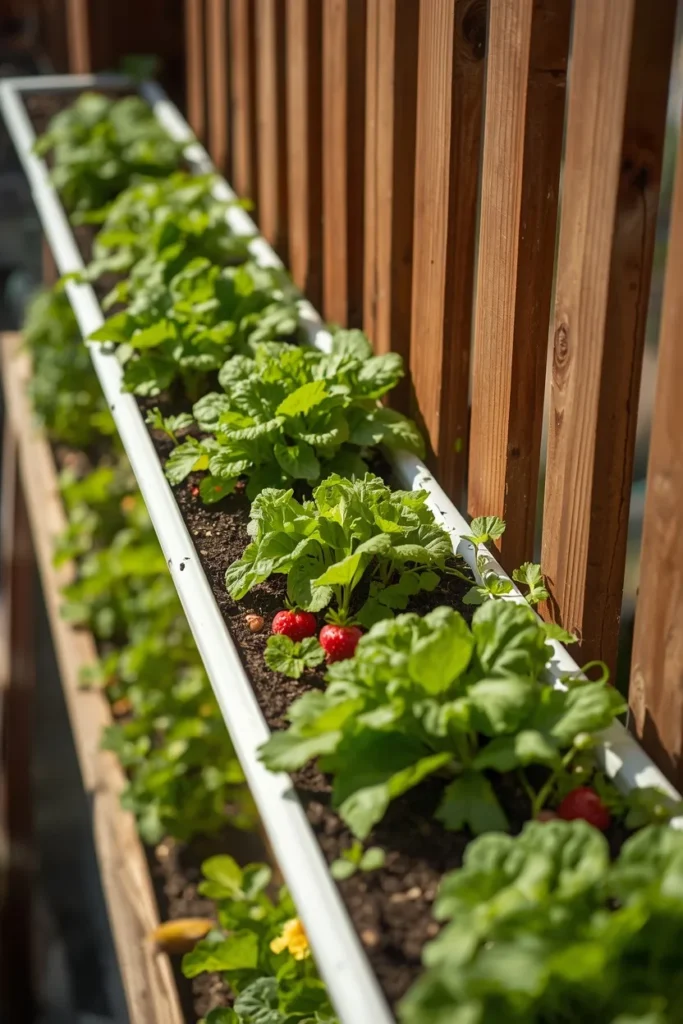
Sections of rain gutter mounted horizontally along a fence or wall, each one filled with soil and planted with shallow-rooted veggies like lettuce, radishes, and strawberries.
Expert Tip: Cap both ends of the gutter sections and drill a few small drainage holes along the bottom — too few and you get standing water, too many and your soil dries out in an afternoon.
Why It Works: Here’s where it gets interesting… this idea is perfect for renters or anyone with almost zero usable ground space. You can mount these on a balcony railing, fence, or even the side of a shed. If you’re working with limited outdoor space in general, our balcony garden ideas post pairs really nicely with this one.
8. Tire Stack Potato Tower
What You’re Seeing
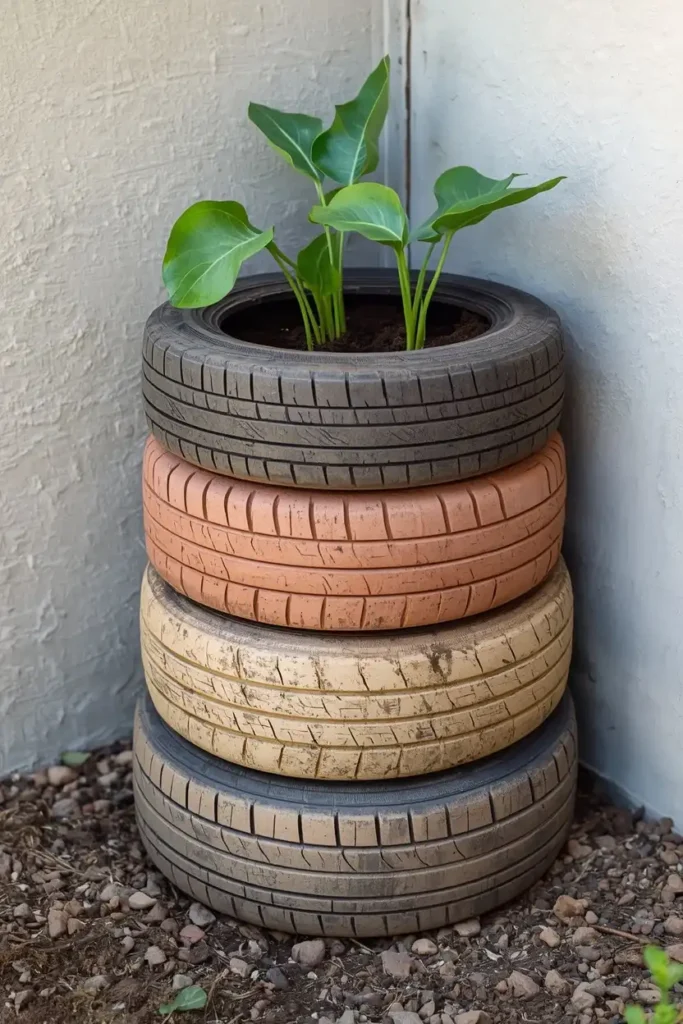
Three or four old tires stacked on top of each other, each layer filled with soil as potato plants grow upward. As the plants get taller, you add another tire and more soil, eventually “hiding” a surprising number of potatoes inside.
Expert Tip: Use a heavy-duty rubber paint or liner inside the tires before adding soil — this is a small extra step that keeps things food-safe and gives you peace of mind.
Why It Works: This is the kind of “wait, that’s genius” idea that makes people stop scrolling. It’s also incredibly space-efficient: you’re growing vertically instead of spreading out, which means a small footprint can produce a surprisingly large harvest.
9. A-Frame Trellis Tunnel
What You’re Seeing
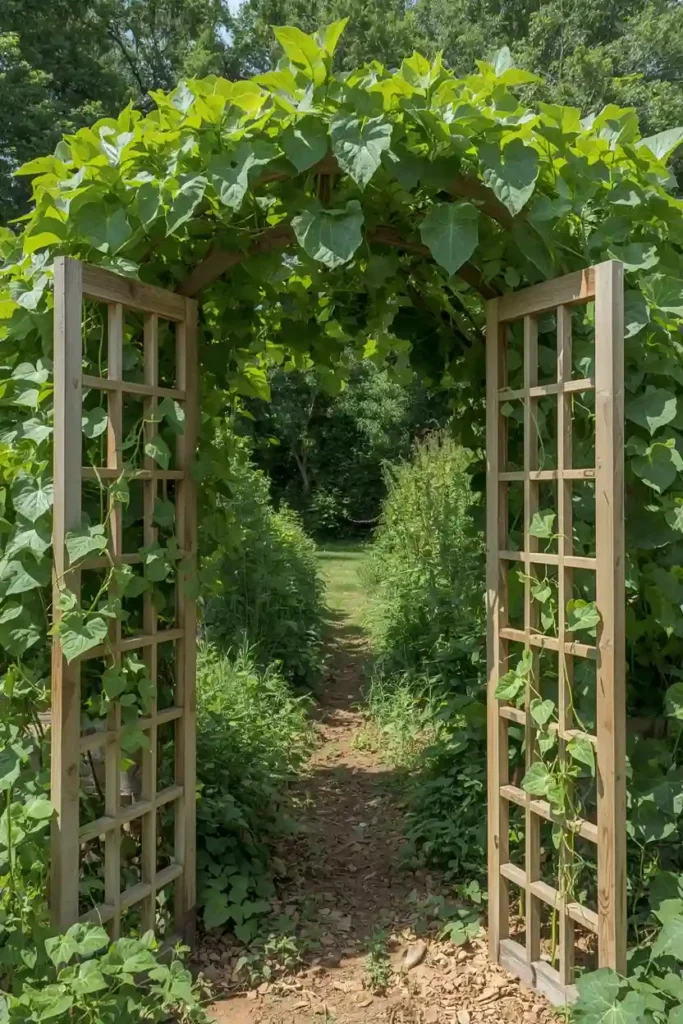
Two trellis panels leaned together to form an upside-down “V” or tunnel shape, with cucumber, pea, or pole bean vines climbing up both sides and meeting in the middle.
Expert Tip: Plant your climbing veggies on the outside of each panel, not the inside. They’ll naturally grow toward the light and create a fuller, more even tunnel shape.
Why It Works: Now, avoid this mistake — a lot of people skip vertical structures entirely and end up with sprawling vines that take over the whole garden bed. A trellis tunnel solves that instantly, creates a magical little walkway (kids especially love this), and dramatically increases airflow around your plants, which helps prevent disease.
10. Straw Bale Garden
What You’re Seeing
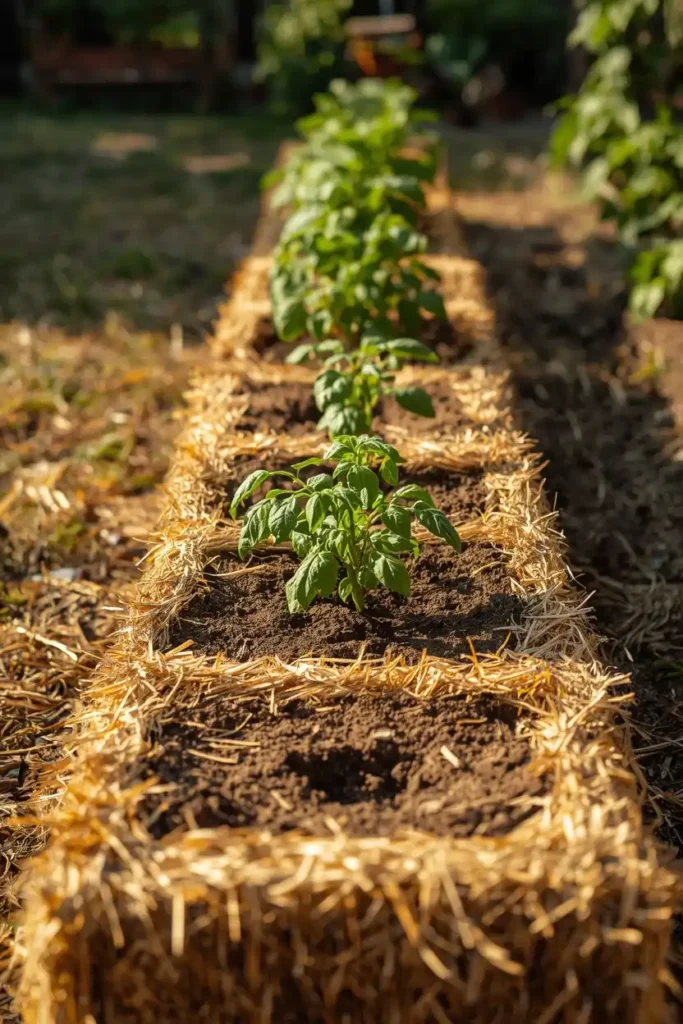
A row of straw bales lined up in a sunny spot, each one with small pockets cut into the top and filled with soil, then planted with tomatoes, peppers, or zucchini directly into the bale itself.
Expert Tip: “Condition” your bales for about two weeks before planting by watering them daily and adding a bit of nitrogen fertilizer. This kickstarts the decomposition process, which actually generates gentle heat and nutrients for your plants.
Why It Works: No digging, no weeding, no soil prep — and at the end of the season, the decomposed bale becomes amazing compost for next year. It’s one of the most beginner-friendly methods out there, and it looks rustic and charming while it’s doing all the work for you.
What Will This Actually Cost You?
Okay, let’s talk money — because I know that’s the part everyone’s curious about.
Here’s roughly what each idea costs to set up, based on materials I’ve personally priced out:
- Ladder Herb Garden: $10-25 (thrifted ladder + small pots)
- Hanging Gutter Garden: $20-40 (a few gutter sections + end caps)
- Tire Stack Potato Tower: $0-15 (often free from tire shops)
- Straw Bale Garden: $25-50 (bales + minimal fertilizer)
- Galvanized Tub Garden: $30-60 per tub
- Pallet Vertical Garden: $0-30 (free pallets are everywhere)
- Cedar Raised Planter Box: $40-80 depending on size
- Repurposed Dresser Planter: $0-25 (often free on curbs or thrift stores)
- A-Frame Trellis Tunnel: $50-100 for two panels
- Elevated Garden Bed on Legs: $80-150 (most expensive, but built to last years)
Most people don’t know this… but soil is usually where your budget disappears the fastest, not the structure itself. Good soil isn’t optional — it’s the difference between a garden that thrives and one that limps along all summer. If you want to avoid wasting money on soil mistakes (I definitely made a few), this topsoil mistakes guide is worth a quick read before you buy anything.
My honest recommendation? Start with one or two of the cheaper ideas — the ladder herb garden or a pallet vertical garden are both fantastic “test the waters” projects. Once you see how satisfying it is to walk outside and pick your own dinner ingredients, you’ll be ready to invest in something bigger.
Which budget range fits your situation best right now? I’d love to know if you’re working with a tight budget or ready to go all-in — it helps me know what to write about next!
A Few Final Thoughts Before You Go
So… which one of these is calling your name?
Honestly, you don’t need to do all 10 at once (please don’t — I tried that my first year and it was chaos). Pick one idea, build it this weekend, and let it teach you what your space and your plants actually need.
Here’s the important part — gardening isn’t about getting it perfect the first time. It’s about building something, watching it grow (sometimes literally), and tweaking it as you go. Every single idea on this list started as someone’s “let’s just try it” project.
And if you’re already dreaming about what else you can do with your outdoor space, don’t stop here. Our vintage garden decor ideas post is the perfect next stop — it’s full of charming little touches that’ll make your new vegetable garden feel even more like you.
Happy planting, friends. I can’t wait to hear which idea you try first! 🌱