10 Creative Apartment Small Balcony Garden Ideas That Will Make Your Neighbors Jealous
This article was created in line with Trends Oraa’s research and content standards.
Your balcony is tiny. Your plant dreams are not.
You’ve been staring at that bare concrete slab for months, wishing it looked like something out of a Pinterest board. The good news? It absolutely can — even if you’re working with just 30 square feet.
In this guide, I’m walking you through 10 creative small balcony garden ideas that actually work in real apartments. No massive budget. No landscaping degree. Just smart, beautiful ideas you can start this weekend.
You might also love our viral guide on 10 Apartment Balcony Decorating Ideas — packed with styling tips to pair with your new garden setup!
Keep reading, because idea #6 completely changed how I think about vertical space — and it costs less than $40.
Why Small Balcony Gardens Are Having a Massive Moment
Apartment living used to mean giving up on greenery. Not anymore.
Urban gardening has exploded — and honestly, some of the most stunning outdoor spaces I’ve ever seen have been under 50 square feet. The trick isn’t more space. It’s smarter use of the space you already have.
Here’s the open loop you need to know: most people design their balcony garden from the floor up. The real magic happens when you flip that thinking entirely. But we’ll get to that.
First, let’s dig into the ideas.
1. The Vertical Wall Garden — Grow Up, Not Out
What You’re Seeing
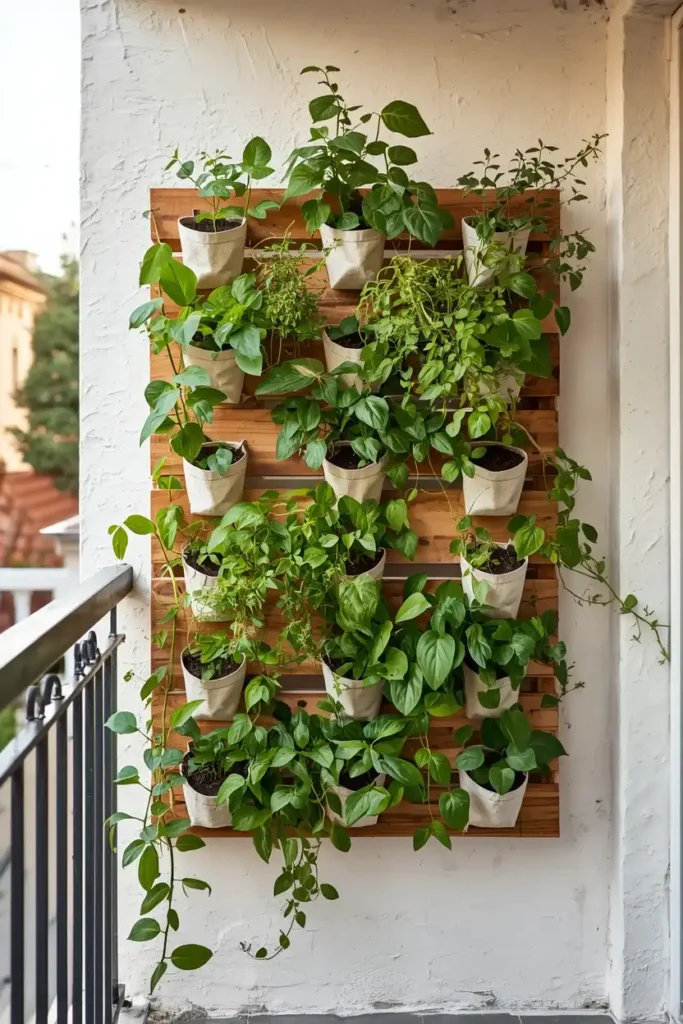
Imagine a full living wall of herbs, trailing pothos, and compact ferns mounted on a simple wooden pallet or modular pocket planter system. The greenery cascades floor to ceiling, turning a blank stucco wall into something that looks like it belongs in a boutique hotel lobby.
Why It Works
Vertical gardens are the single best thing you can do for a small balcony. They take zero floor space while creating the illusion of a lush, layered garden. The eye travels upward, which makes your entire balcony feel bigger — a psychological trick that interior designers use constantly.
You can buy pre-made vertical pocket planters on Amazon for under $25, or DIY one from a reclaimed pallet for almost nothing. Pair it with easy-care plants like pothos, mint, or succulents, and you’ve got a low-maintenance green wall that looks ridiculously good year-round.
Expert Tip: Mount your vertical planter on the wall that gets the most indirect light — usually the side wall rather than the railing-facing wall. This protects delicate herbs from harsh afternoon sun and gives them a longer growing season.
Why It Works for Engagement: Every guest who visits your balcony will immediately comment on the wall. It becomes the focal point of the entire space and makes even a sparse balcony look intentional and styled.
2. The Rail Planter Setup — Dead Space Turned Into a Garden
What You’re Seeing
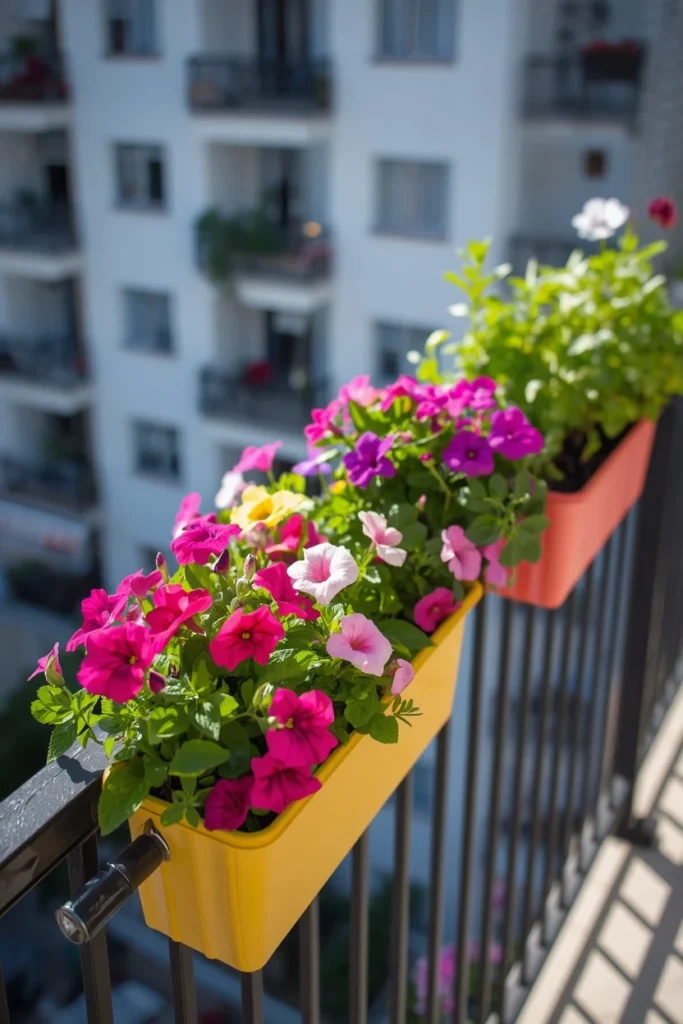
Long rectangular planters hooked directly onto the balcony railing, filled with a mix of trailing flowers like lobelia and petunias alongside upright herbs like basil and rosemary. The planters hang both on the interior and exterior of the railing, doubling your growing capacity without touching the floor.
Why It Works
Your railing is already there. It’s sturdy. And most people completely ignore it as a gardening opportunity.
Rail planters are one of the cheapest, most impactful upgrades you can make to a small balcony garden. A set of four good-quality rail planters typically runs between $30–$60, and they install in minutes with no tools. Fill them with herbs you actually use — basil, chives, parsley — and suddenly your cooking game levels up too.
Most people don’t know this: the weight distribution on railing planters matters a lot. Always check your balcony railing’s weight capacity before loading up heavy ceramic pots. Lightweight plastic or fiberglass planters are your safest bet here.
Expert Tip: Choose planters with built-in water reservoirs. On a sunny balcony, small pots dry out within 24 hours in summer. Self-watering rail planters cut your maintenance time in half and keep plants healthier through heat waves.
Why It Works: It adds color at eye level, creates privacy (especially if you use trailing plants), and makes the entire balcony feel more enclosed and cozy.
3. The Folding Potting Bench + Garden Station
What You’re Seeing
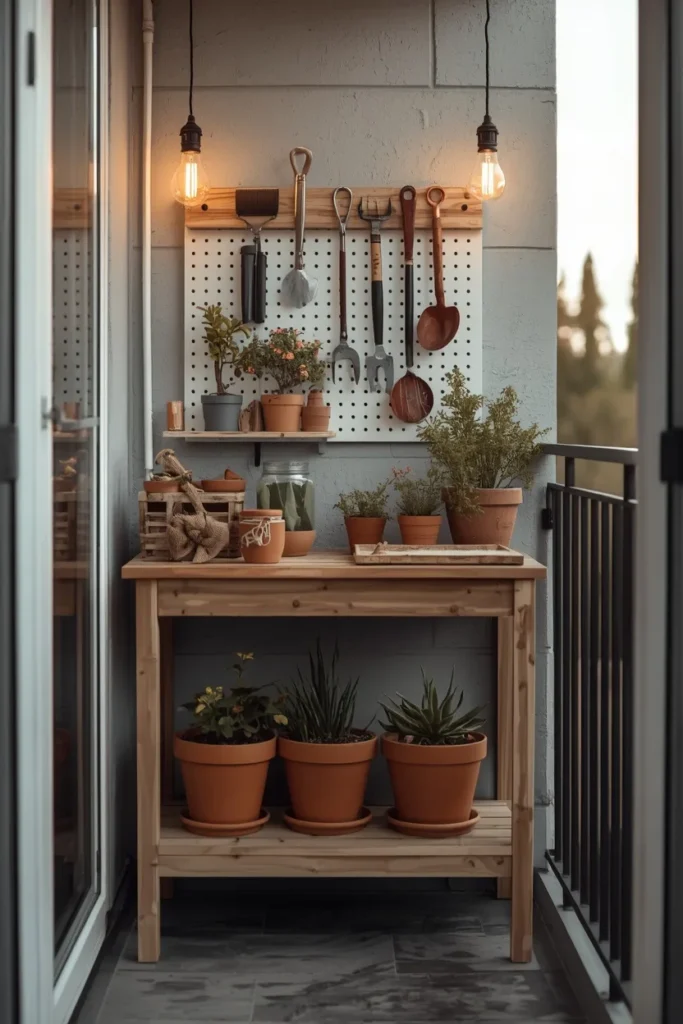
A slim, wall-mounted folding potting bench against one side of the balcony, with hooks above it holding small hanging pots, garden tools, and a string of warm Edison lights. Below the bench, a tiered shelving unit holds a collection of terracotta pots in varying sizes.
Why It Works
A dedicated garden station does something clever: it organizes all your garden clutter while making the space feel intentional rather than chaotic. When everything has a home, your balcony goes from “messy plant collection” to “curated outdoor studio.”
Folding benches are brilliant for tight spaces because they collapse flat against the wall when you’re not using them. This gives you square footage back whenever you want to sit outside or entertain. It’s the ultimate small balcony multitasker.
Expert Tip: Add a pegboard above your potting bench instead of individual hooks. Pegboard lets you rearrange your tool layout constantly as your garden grows and changes — no new holes in the wall required.
Why It Works: This setup creates a sense of purpose and personality on your balcony. It doesn’t just look good — it makes you want to spend time out there.
Which of these first three ideas would fit your balcony’s vibe best? Drop it in the comments — I genuinely love hearing what direction people take their spaces!
The Small Balcony Garden Budget Breakdown (A Realistic Guide)
Before we keep going, let’s talk money — because this is where most balcony garden plans fall apart.
Here’s the honest breakdown of what a well-done small balcony garden actually costs:
Budget Tier: Under $100
- Vertical pocket planter: $20–$30
- Rail planters (set of 4): $30–$45
- Starter herb plants from a nursery: $15–$25
- Basic potting mix: $10–$15
- Total: roughly $75–$115
Mid-Range Tier: $100–$300
- Everything above, PLUS:
- A small bistro table and folding chair: $60–$120
- Weather-resistant outdoor rug: $35–$60
- String lights for ambiance: $20–$35
- A few statement ceramic pots: $30–$60
Investment Tier: $300+
- Everything above, PLUS:
- A custom-built raised planter box (cedar or cedar-stained pine): $80–$150
- Drip irrigation system for hands-free watering: $50–$100
- Premium outdoor furniture: $150–$400+
Pros of Starting Small:
- You learn what plants actually thrive in your specific light conditions before spending big
- You can rearrange and experiment without feeling locked in
- Low-cost plants and planters are easy to replace if something doesn’t work
Cons of Going Too Cheap:
- Very cheap plastic planters crack in one season
- Skimping on potting mix leads to poor drainage and dead plants
- Low-quality railing hooks can fail, sending plants onto someone’s head below
The sweet spot for most apartment renters? Start in the $100–$150 range, see what works, then invest in upgrades the second season.
Now, avoid this mistake: buying ALL your plants at once on day one. Stagger your purchases over a few weeks. This lets you see which spots get the most sun, which areas dry out faster, and which plants actually thrive before you commit to a full setup.
4. The Herb Ladder Garden — Functional Beauty
What You’re Seeing
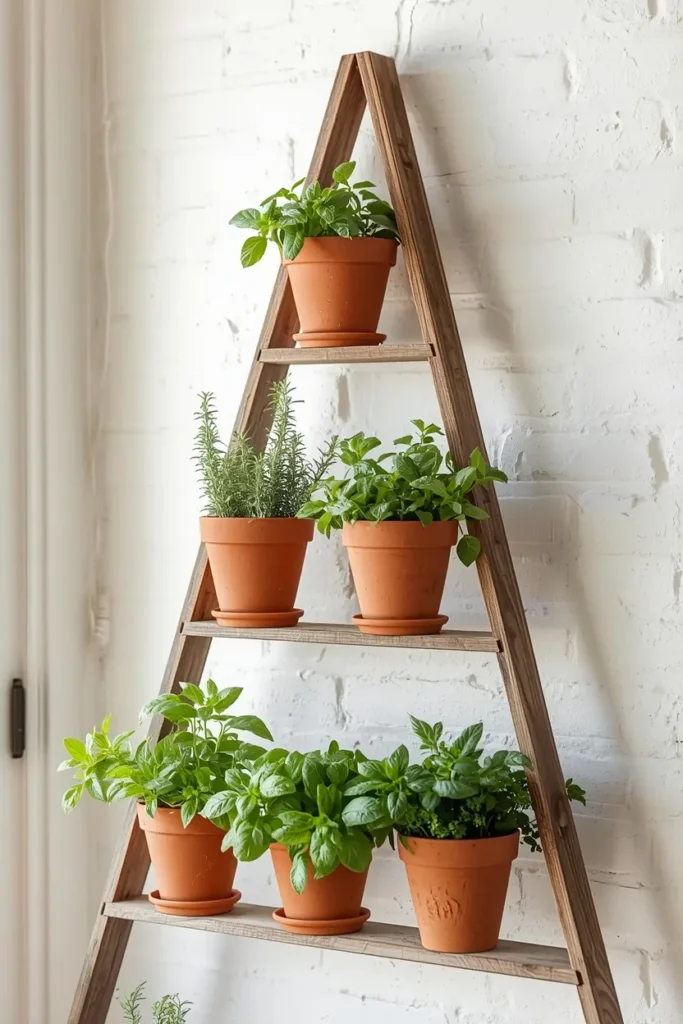
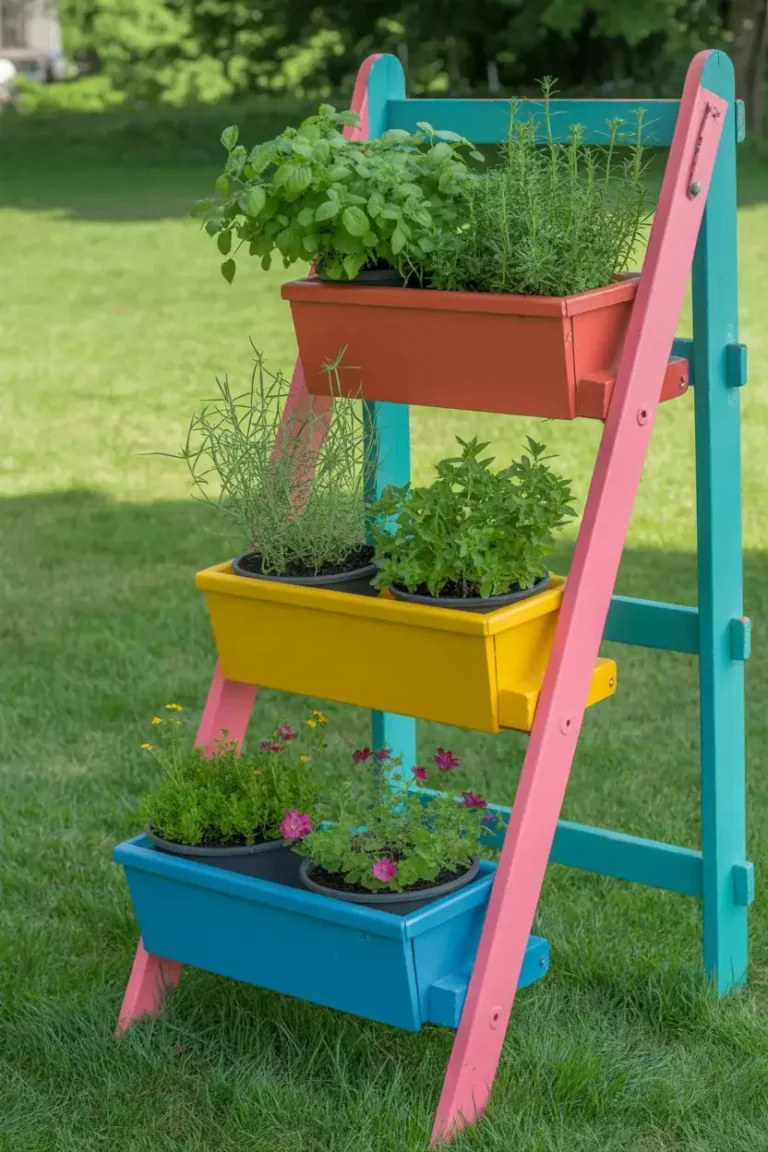
A classic A-frame wooden ladder leaned against the balcony wall, with plank shelves at each rung holding a carefully curated collection of herb pots — rosemary on top in full sun, mint and basil mid-level, shade-loving parsley near the bottom. The look is cottage-farmhouse chic without being fussy.
Why It Works
Ladder gardens are having a serious moment right now, and for good reason. They’re incredibly inexpensive (a simple wooden ladder costs $20–$40 at a thrift store or hardware store), they don’t require any wall mounting, and they’re genuinely beautiful in a way that feels handmade and personal rather than mass-produced.
The tiered structure also solves a real problem: different herbs have different light requirements. The ladder naturally creates a sun gradient — full sun at the top, partial shade at the bottom — that lets you position plants exactly where they’ll thrive.
Expert Tip: Seal the wood ladder with an outdoor weatherproofing spray before you use it on the balcony. Untreated wood deteriorates fast with repeated watering. One coat of weatherproof sealant will triple the lifespan of your ladder planter.
Why It Works: It takes up about 2 square feet of floor space while giving you 8–10 individual growing spots. That’s an insane return on space investment.
Speaking of space-saving genius, check out our post on Space-Saving Furniture Ideas — some of these ideas translate beautifully to outdoor balcony setups too.
5. The Hanging Macramé Planter Cluster
What You’re Seeing
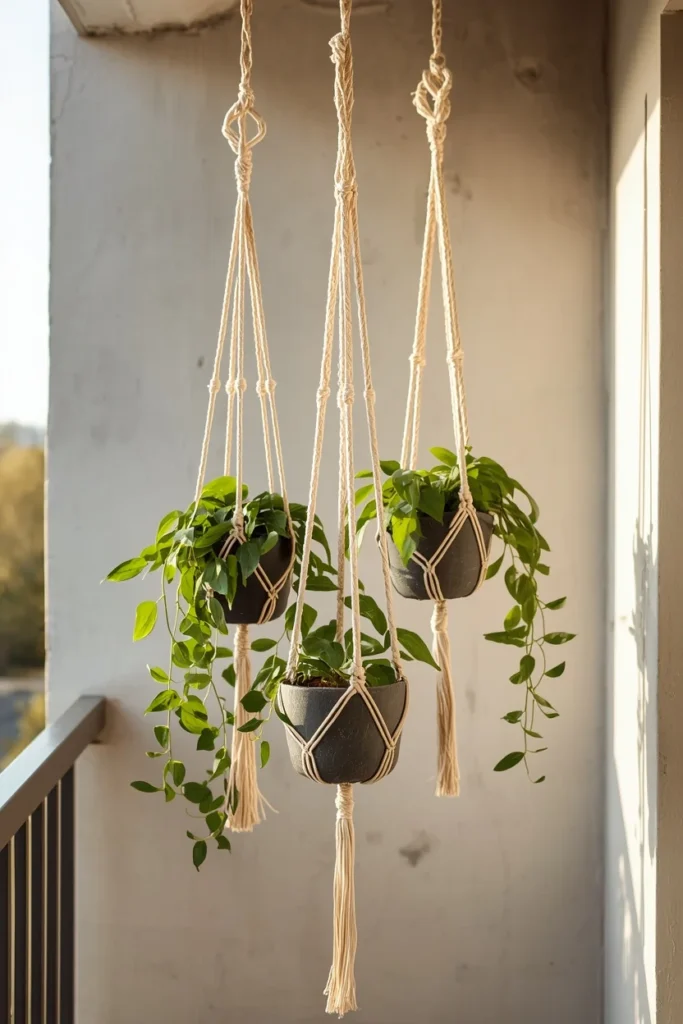
A collection of three to five macramé hanging planters at varying heights, suspended from a ceiling hook or a tension rod mounted between two walls. Each planter holds a different trailing plant — string of pearls, pothos, or spider plants — creating a layered, bohemian canopy of greenery.
Why It Works
Hanging planters are pure magic in a small space. They take up exactly zero floor space and zero wall space. All they need is a little ceiling real estate, which almost everyone ignores completely.
The secret to making a hanging planter cluster look intentional rather than random is the height variation. Hang them at three different lengths — short, medium, and long — so they cascade at different levels. This creates visual depth and makes the whole setup look like it was styled by someone with an actual eye for design.
Macramé planters are also incredibly on-trend right now and add a bohemian warmth to even the most bland apartment balcony. You can find beautiful ones for $8–$15 each on Etsy or Amazon.
Expert Tip: Use ceiling anchor bolts rated for at least 20 lbs per hook, even if your planters seem light. A fully watered ceramic pot can weigh 5–8 lbs, and you don’t want anything falling unexpectedly.
Why It Works: The trailing greenery creates a soft, organic ceiling effect that transforms the feel of the entire balcony from concrete box to garden retreat.
6. The Tiered Plant Stand Moment
What You’re Seeing
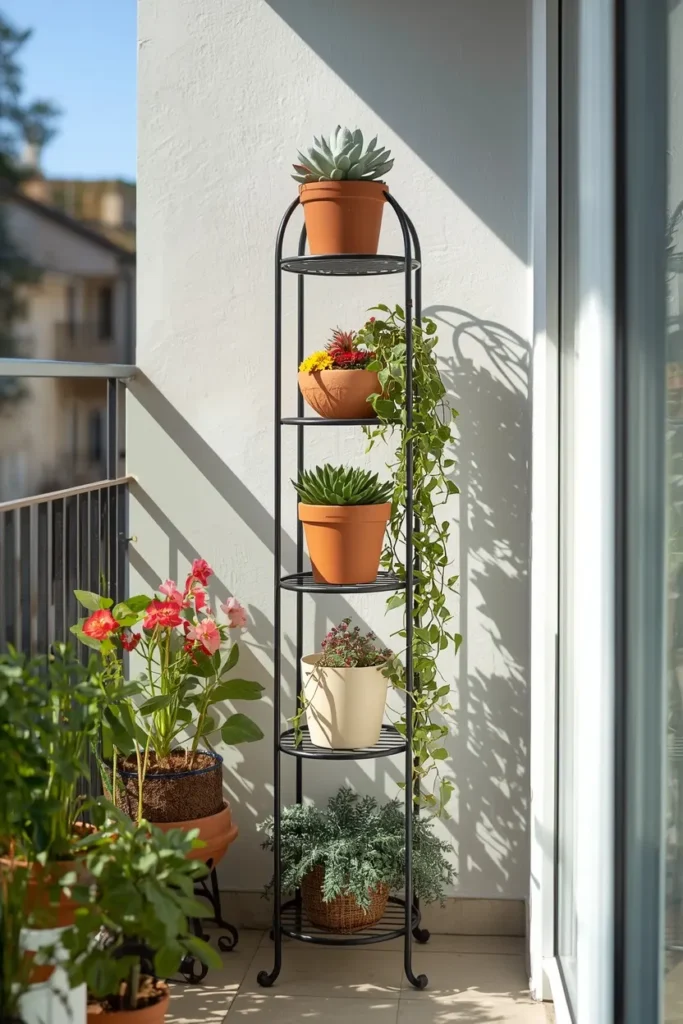
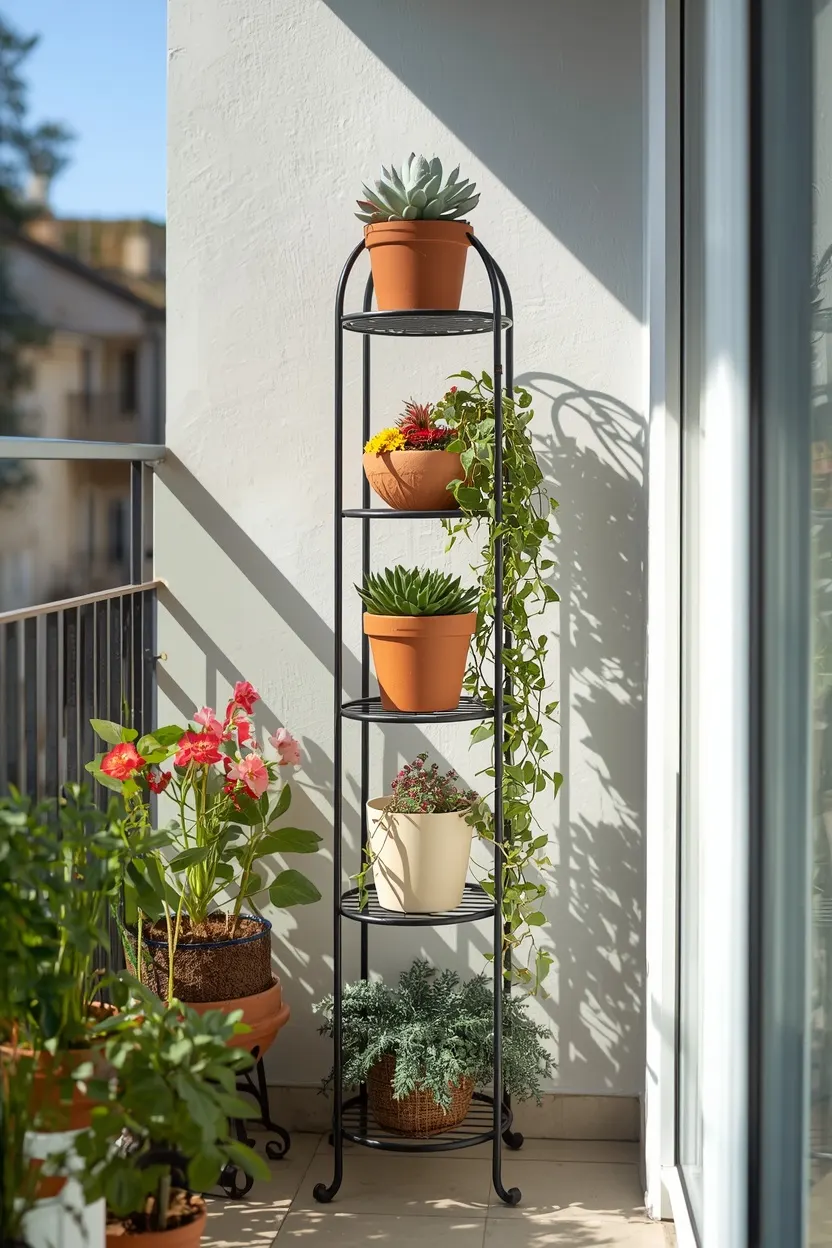
A three-to-five-tier metal or bamboo plant stand placed in the sunniest corner of the balcony, styled with a mix of succulents, flowering annuals, and compact vegetables. The varying heights of each tier create a miniature garden landscape in a footprint no bigger than a coffee table.
Why It Works
Here’s where it gets interesting: tiered plant stands give you the visual impact of a large garden in the footprint of a single pot. If you can only buy ONE thing for your small balcony garden, a tiered stand is it.
The key is styling it intentionally — don’t just cram any plants onto the tiers. Mix textures (chunky succulents with soft trailing plants), vary the pot colors (stick to two or three complementary tones), and put your tallest plants on the middle or back tiers for a layered look.
A quality tiered plant stand runs $35–$80 and will last years. Go with metal over wood for outdoor use — it handles rain and watering without warping.
Expert Tip: Place your tiered stand on a wheeled plant caddy. This lets you rotate it throughout the day to maximize sun exposure, and move it inside quickly when a big storm rolls in — which is a game changer for keeping delicate plants alive.
Why It Works: It creates the look of a full garden in one corner, leaving the rest of your balcony open for seating or other uses.
7. The Raised Planter Box Bench Combo
What You’re Seeing
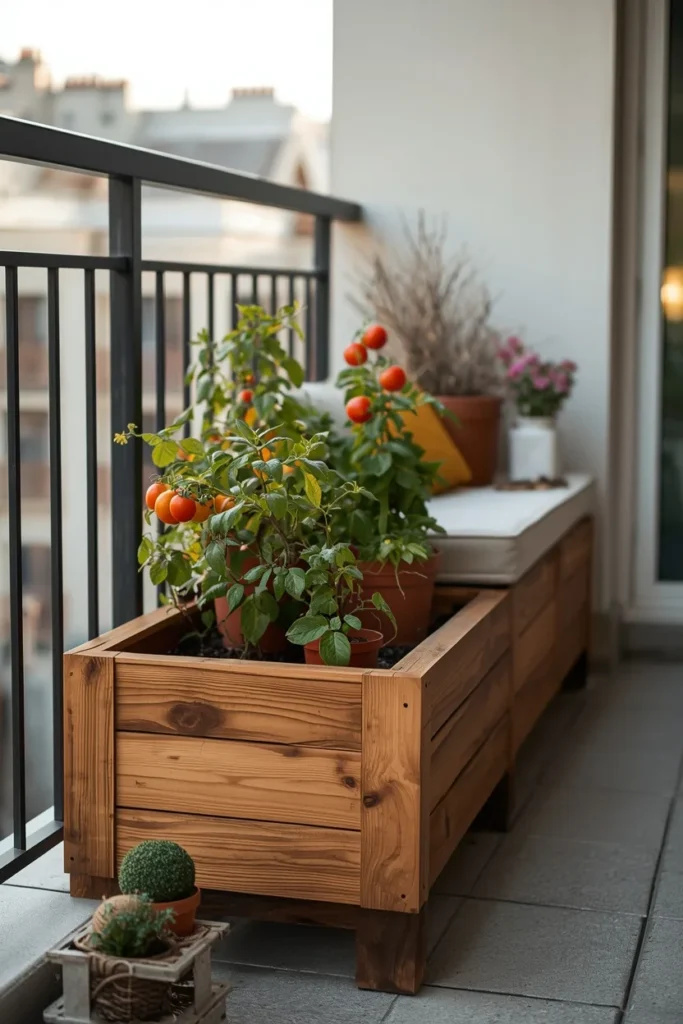
A cedar raised planter box built to bench height (about 18 inches), running along one side of the balcony. The top surface of the planter is wide enough to double as casual seating, with a cushion placed along the length. Inside the planter, a mix of tomatoes, herbs, and flowers grows together in a lush, productive display.
Why It Works
This idea is pure multitasking genius. You get a raised garden bed AND seating for your balcony in one piece of furniture. For apartment dwellers where every square foot matters, this is the holy grail.
Cedar is the best wood choice for this because it’s naturally rot-resistant and weathers beautifully to a silver-gray patina over time. You can buy pre-built cedar planter boxes in bench dimensions, or build a simple one yourself for around $50–$80 in lumber.
Fill the planter with a high-quality container mix (not regular garden soil — it gets too compacted in raised boxes), and you’ll have enough depth to grow real vegetables alongside your herbs and flowers.
Expert Tip: Line the inside of your planter box with landscape fabric before adding soil. This keeps the soil in while allowing drainage, and dramatically extends the life of the wood by keeping it from staying constantly wet.
Why It Works: It solves two problems at once — more garden space AND more seating — without taking up any additional square footage.
What’s your balcony situation? Are you working with a tiny 4×6 space, or do you have a bit more room to play with? Tell me in the comments — I’d love to help you figure out which combination of these ideas would work best for your specific setup!
8. The Cottage Garden in Pots Look
What You’re Seeing
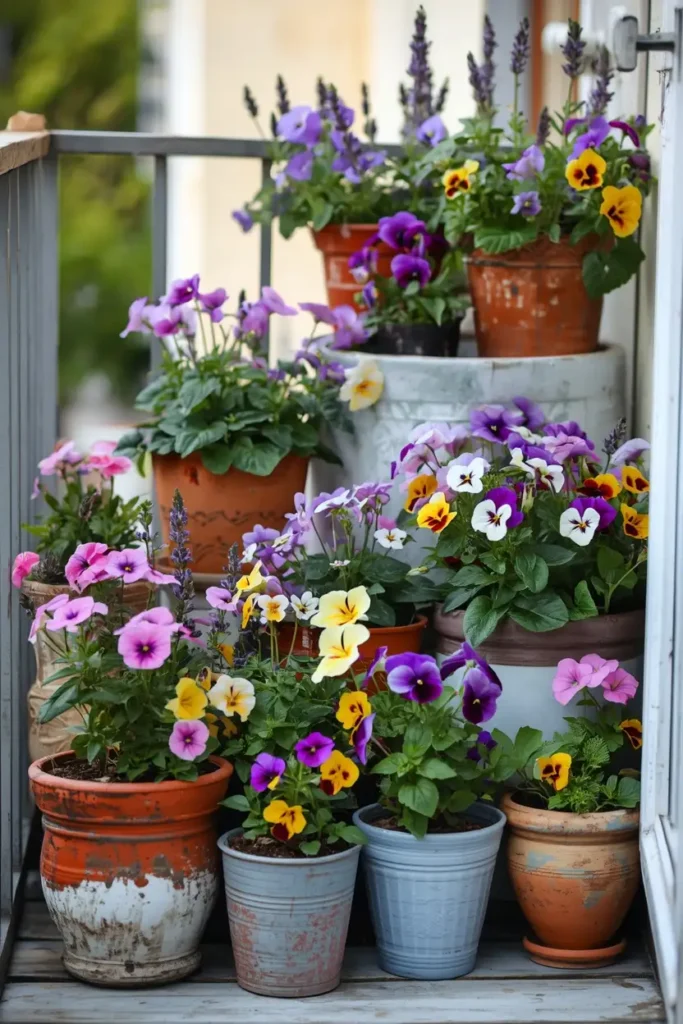
A collected, layered arrangement of mismatched terracotta and ceramic pots in different sizes, filled with an English cottage-style mix of lavender, sweet alyssum, pansies, and trailing geraniums. The pots are grouped in clusters of three and five for a natural, organic feel rather than a rigid symmetrical layout.
Why It Works
The cottage garden aesthetic is one of the most forgiving looks you can go for on a small balcony — because it’s supposed to look a little chaotic and overflowing. This is the style where more is more, and “imperfect” is exactly right.
The key is using an odd number of pots in each cluster (three or five, never four or six) and varying the heights dramatically. Put a tall statement plant — like a standard bay tree or a tall grass — in the center of a cluster, and let shorter, trailing plants spill out around the base.
Expert Tip: Unify mismatched pots by repainting them in the same two or three colors. A quick coat of terracotta-orange and cream transforms a jumble of random pots into a curated collection. Use outdoor-rated paint so it holds up to weather.
Why It Works: This style creates incredible richness and warmth on even the most bland balcony. It looks like it was collected over years rather than assembled in a weekend — which makes it feel genuinely personal.
9. The Urban Vegetable Micro Garden
What You’re Seeing
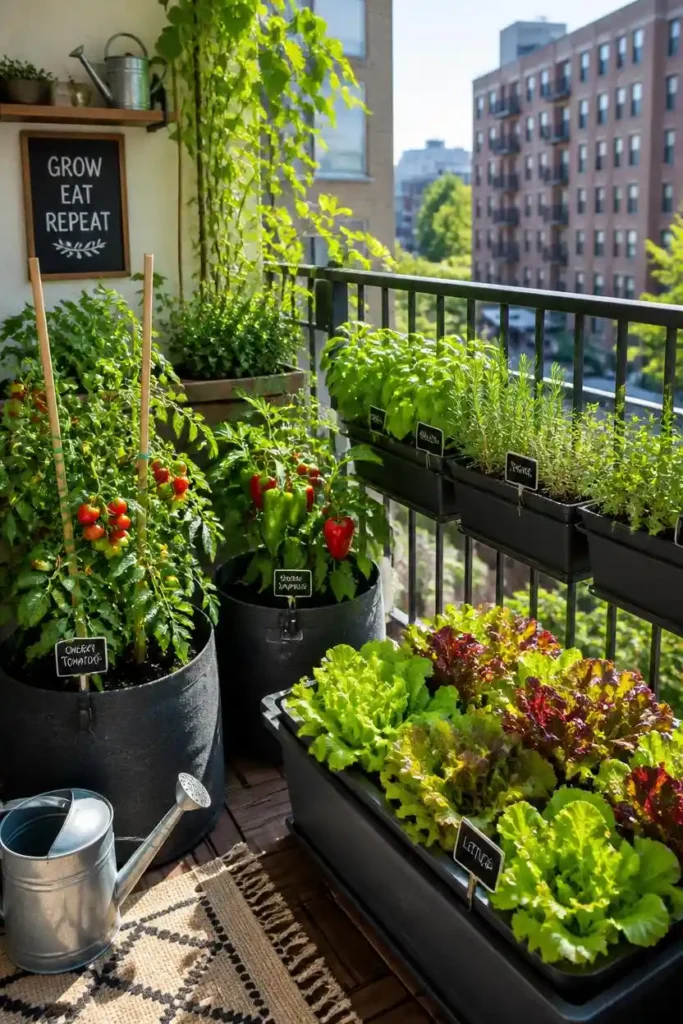
A practical, productive balcony setup dedicated entirely to growing food — cherry tomatoes in large fabric grow bags, a pepper plant in a five-gallon container, compact lettuce and spinach in a window box, and a string of herbs along the railing. The whole setup is intentional and organized, with bamboo stakes and plant labels giving it a tidy, market garden aesthetic.
Why It Works
Growing actual food on your balcony is one of the most satisfying things you can do as an apartment dweller. And yes, it absolutely works — even in a small space.
The secret is choosing the right varieties. Look for words like “compact,” “patio,” or “container” on plant labels. These are varieties specifically bred for small-space growing. Cherry tomatoes like ‘Tumbling Tom’ or ‘Tiny Tim’ are prolific producers in containers. Peppers love container growing. Lettuce and herbs are practically foolproof.
Expert Tip: Fabric grow bags are a game changer for balcony vegetable growing. They’re lightweight, fold flat for winter storage, and actually produce better results than plastic pots because the air-pruning action of the fabric encourages healthier root development.
Why It Works: There is nothing like walking out to your balcony to clip fresh herbs for dinner or pick cherry tomatoes for a salad. It transforms your relationship with your outdoor space from decorative to genuinely useful.
If you love the idea of growing things yourself, our guide on 10 Best Growing Peonies in Pots Ideas is full of tips that translate beautifully to balcony container growing.
10. The Moody Jungle Balcony — Dark, Lush, Dramatic
What You’re Seeing
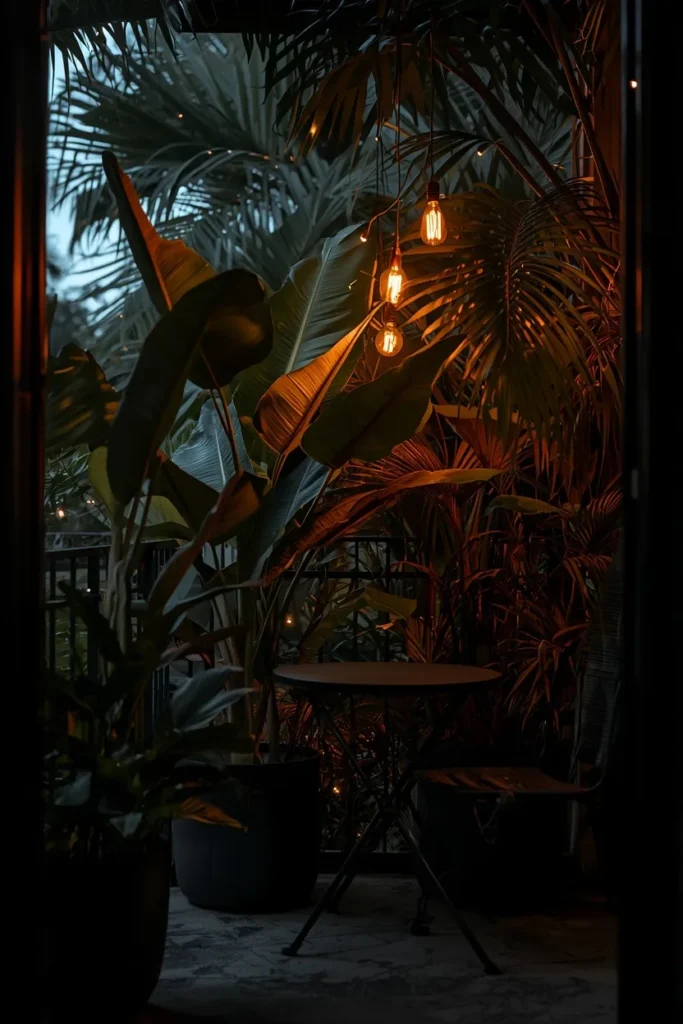
A balcony styled almost entirely in deep greens and blacks — large-leafed tropical plants like elephant ears, dark-leafed cannas, and dramatic monstera in matte black planters. String lights in warm amber weave through the foliage. A single black bistro chair and table complete the moody, sophisticated look.
Why It Works
This is the balcony idea most people are too afraid to try — and it’s absolutely stunning when it comes together. The moody jungle look leans into the drama of deep colors and lush foliage to create an outdoor space that feels like a secret garden or a chic hotel terrace.
The key to making this work is committing to the palette. Everything — planters, furniture, textiles — should be black, dark gray, or deep forest green. No pastels, no terracotta. The contrast between the dark containers and the vivid green foliage is what makes this look so arresting.
For plants, choose bold, large-leafed tropicals rather than delicate flowers. Elephant ears, canna lilies, and large-leafed philodendrons make an instant impact even in small spaces.
Expert Tip: In darker color palettes, lighting is everything. Warm amber Edison string lights threaded through the foliage will make your moody balcony look absolutely magical at night — like a place someone could spend hours. Avoid cool white or blue-tinted lights; they kill the vibe instantly.
Why It Works: This look photographs beautifully, creates a genuine sense of escape from apartment life, and feels unlike any other balcony you’ve ever seen. It’s the one your neighbors will be staring at from across the courtyard.
But Here’s the Important Part…
Before you start buying plants, spend one full week noticing your balcony’s sun patterns.
Walk out at 8am, noon, and 4pm on a sunny day and note where the light actually hits. You might discover you have full sun in the morning but full shade by afternoon — which means sun-loving herbs will struggle in places you’d expect them to thrive.
Matching your plant choices to your actual light conditions is the single biggest factor in whether your balcony garden succeeds or fails. Get this right, and everything else is easy.
Most People Don’t Know This: The Rule of Three for Balcony Garden Styling
Interior designers use the rule of three everywhere — and it works just as well outdoors.
Group your pots and plants in clusters of three. Use three different heights in each cluster. Stick to three main colors across your whole balcony garden palette.
This simple rule turns a random collection of plants into something that looks styled and intentional. It’s the difference between a beautiful balcony garden and just “some pots on a balcony.”
Final Thoughts: Your Dream Balcony Garden Is Closer Than You Think
You don’t need a big budget. You don’t need a big space. You just need a smart plan and a willingness to start.
Pick one or two ideas from this list that genuinely excite you. Start there. A vertical planter and a tiered stand might be all you need to completely transform your balcony. Add a rail planter for herbs, some string lights for ambiance, and suddenly you have an outdoor space you’re actually excited to spend time in.
Your small balcony garden is waiting to happen — and it’s going to be better than you imagined.
Now that you’re in full garden mode, don’t stop here. Head over to our Vintage Garden Decor Ideas for even more inspiration on styling your outdoor space, or check out our guide on Small Front Porch Ideas if you want to take the magic beyond the balcony.
Happy planting — I can’t wait to see what you create.