10 Summer Rock Painting Ideas That Will Transform Your Backyard (And Your Weekend)
This article was created in line with Trends Oraa’s research and content standards.
You’ve got a bucket of smooth rocks sitting in your garage. You keep telling yourself you’ll “get to it this summer.” But every time you sit down with a paintbrush, you freeze.
Sound familiar?
Here’s the good news: rock painting isn’t about being an artist. It’s about creating something small, joyful, and completely yours — with almost zero cost and zero pressure.
By the time you finish scrolling through these summer rock painting ideas, you’ll have more inspiration than you know what to do with. Some of these ideas are simple enough for a rainy afternoon with the kids. Others are the kind of statement pieces that stop neighbors mid-walk.
You might also love our guide on garden decor and outdoor styling ideas — it pairs beautifully with painted rocks scattered through flower beds and walkways.
Let’s get into the ideas that are about to make this your most creative summer yet.
Why Summer Rock Painting Ideas Are Having a Major Moment
Rock painting isn’t new, but it’s having a real resurgence this summer. Here’s why it’s caught on so fast.
- It costs almost nothing to start.
- It works for every age group, from toddlers to grandparents.
- It’s endlessly customizable to your home’s colors and style.
- It gives you a finished project in under an hour.
- It doubles as garden decor, gift-giving, and kids’ activities.
But here’s the important part: most people jump in with the wrong rocks, the wrong paint, or no plan at all — and end up with something that chips within a week.
That’s exactly what this guide fixes.
1. Sunset Ombre Rocks for a Coastal Garden Edge
What You’re Seeing
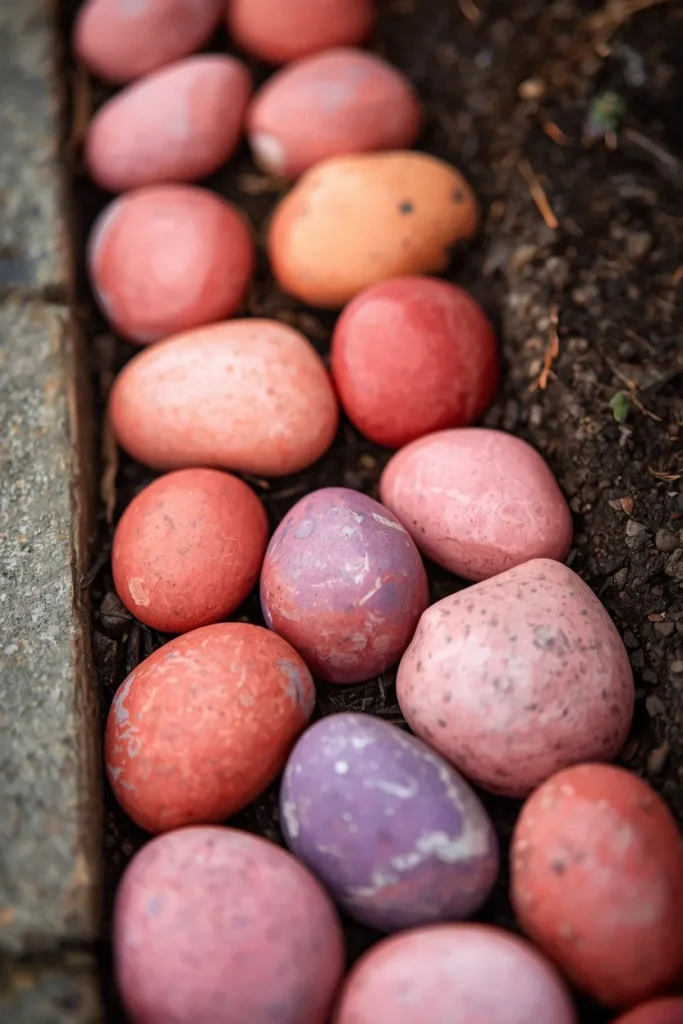
Picture a cluster of medium, oval river rocks lined along a garden bed, each one painted in a soft gradient of coral, peach, and lavender. The colors blend into each other the way a summer sky does right before dusk.
Design Breakdown
This idea uses an ombre blending technique where two or three acrylic colors are layered wet-on-wet directly on the rock, then softly blended with a dry brush before they dry. The result feels painterly rather than crafted, which is what makes it look intentional instead of amateur.
Expert Tip
Work in the shade, not direct sun. Acrylic paint dries fast outdoors, and you’ll lose your blending window in minutes if the rock is warm to the touch.
Why It Works
Warm gradients mimic natural light, which our brains read as calming and inviting. Lining a garden edge with them creates a soft visual transition between hardscape and greenery.
Best For
- Small spaces
- Budget makeovers
- Renters
Common Mistake To Avoid
Using too many colors at once. Three tones maximum keeps the gradient looking intentional instead of muddy.
Quick Wins
- Use a sea sponge for softer blending instead of a brush.
- Seal with a UV-resistant spray to prevent fading.
- Group rocks in odd numbers (3, 5, 7) for a more natural layout.
2. Mandala Stones for a Meditative Patio Corner
What You’re Seeing

Imagine a set of flat, round stones each painted with an intricate mandala pattern in metallic gold, deep teal, and white dot work, arranged around a small outdoor cushion or yoga mat.
Design Breakdown
Mandala rock painting relies on dotting tools (or the back of a paintbrush) to build symmetrical, radiating patterns from the center outward. Precision matters more than speed here.
Expert Tip
Sketch your pattern lightly in pencil first. Mandala work looks intimidating, but breaking it into rings makes it approachable for beginners.
Why It Works
Repetitive, symmetrical patterns are proven to have a calming effect on the brain, which is exactly why mandala designs show up so often in mindfulness spaces.
Best For
- Small spaces
- Luxury homes
- Renters
Common Mistake To Avoid
Rushing the dot spacing. Uneven gaps are the fastest way to make a mandala look sloppy instead of intentional.
Quick Wins
- Use a toothpick for the smallest inner dots.
- Start from the center ring and work outward.
- Rotate the rock as you paint instead of twisting your wrist.
One thing I’ve learned: the paint you choose matters more than the design itself. Cheap craft paint chips within weeks outdoors, no matter how good the artwork is. I always recommend outdoor-rated acrylic paint paired with a matte or gloss UV sealant. It costs a few dollars more per bottle, but it’s the difference between rocks that last one season and rocks that last five.
Which of these first two ideas would work best in your home?
3. Kindness Rocks for Community Sharing
Most people waste more space than they realize when it comes to small-scale garden decor — and kindness rocks fix that instantly.

What You’re Seeing
A small basket of rocks near a front porch, each hand-painted with a single encouraging word or simple image — a sun, a heart, a wave — ready to be hidden around the neighborhood for strangers to find.
Design Breakdown
Kindness rocks intentionally keep the design simple: one word, one color palette, one small icon. The goal isn’t complexity, it’s warmth and shareability.
Expert Tip
Write the hashtag or your city’s kindness rock group name on the back so finders know it’s part of a movement, not litter.
Why It Works
Small unexpected gestures create genuine emotional connection, and this project turns your driveway hobby into something that brightens a stranger’s entire day.
Best For
- Families
- Budget makeovers
- Renters
Common Mistake To Avoid
Using paint pens that aren’t waterproof. Rain will streak the message within a single afternoon if you skip the sealant step.
Quick Wins
- Keep the word count to one to three words max.
- Paint the back a solid color so the front pops.
- Involve kids in choosing the words — their ideas are usually the best ones.
You May Also Like:
- Patriotic Painted Rocks Ideas
- 10 Easy Pine Cone Crafts for Kids and Adults
- Driftwood Craft Ideas for Kids
- Homemade Squishy Ideas
- 17 Amazing DIY Birthday Gifts for Friends
4. Succulent-Shaped Rocks for a Faux Garden
What You’re Seeing
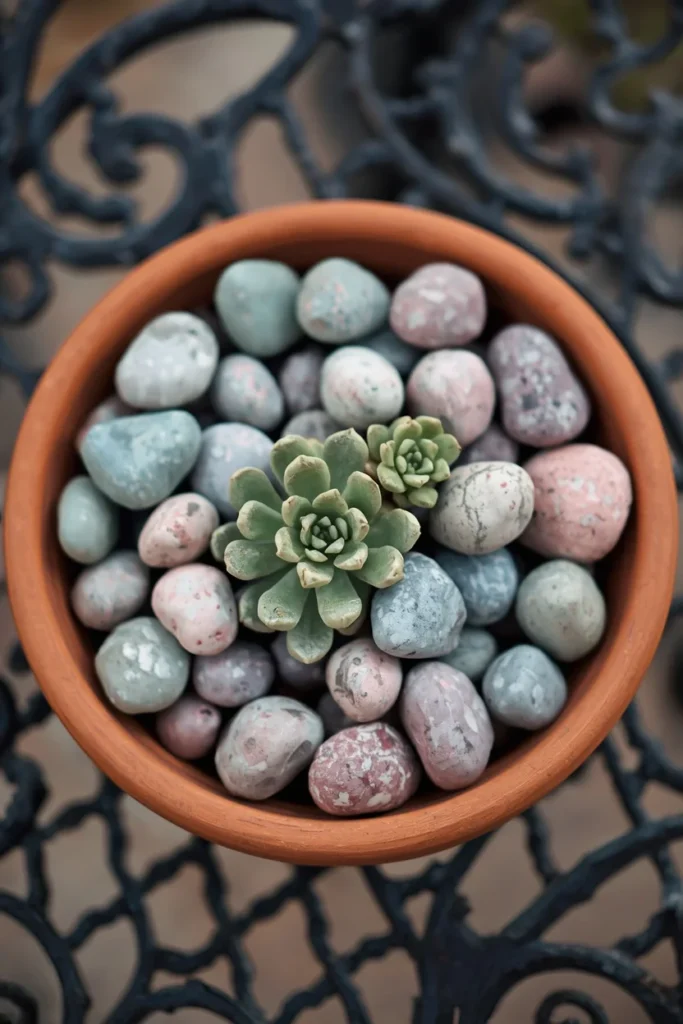
A cluster of small, rounded rocks painted to look like tiny succulents — soft greens, dusty blues, and blush tips — arranged in a shallow dish or scattered among real plants.
Design Breakdown
This trompe l’oeil technique uses layered brushstrokes to mimic the fleshy, overlapping leaves of real succulents. The rock’s natural shape often already resembles the plant, which makes this easier than it looks.
Expert Tip
Choose rocks that are already somewhat round or oval. Fighting an odd rock shape makes the succulent illusion much harder to pull off.
Why It Works
Faux succulents solve a real problem: they never wilt, never need water, and still deliver that lush, layered green look people love on a patio table or windowsill.
Best For
- Small spaces
- Budget makeovers
- Renters
- Families
Common Mistake To Avoid
Painting flat, single-tone leaves. Real succulents have subtle color variation at the tips — skip that and the illusion falls apart immediately.
Quick Wins
- Add a lighter dry-brush highlight to leaf tips for realism.
- Group rocks by size to mimic a real succulent cluster.
- Display in a shallow terracotta dish for the most convincing look.
Would you choose function or style for your outdoor decor this summer?
5. Watermelon Rocks for Playful Summer Color
What You’re Seeing
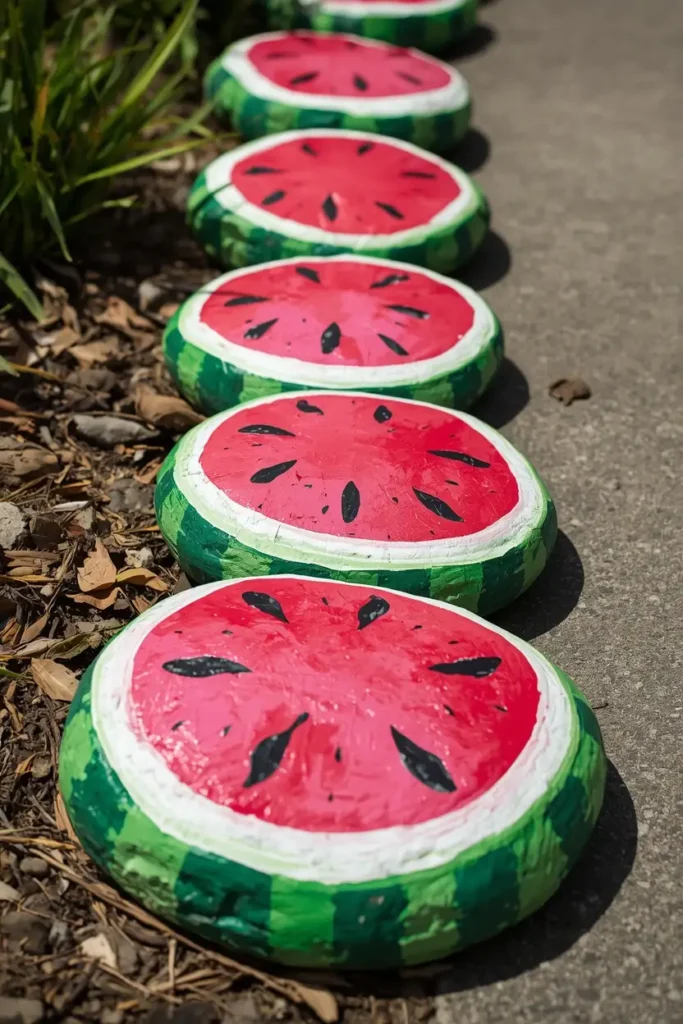
Picture rocks painted to look like sliced watermelon — bright green rinds, white pith, and deep pink centers dotted with black “seeds,” lined along a walkway or tucked into a kids’ garden bed.
Design Breakdown
This is one of the most beginner-friendly designs on this list because it uses flat color blocking rather than blending. Three colors, a few dots, done.
Expert Tip
Use painter’s tape to mask the rind line for a crisp, clean edge between green and white before adding the pink center.
Why It Works
Bright, food-inspired imagery instantly reads as playful and summery, making it a favorite for kids’ crafts and casual outdoor gatherings.
Best For
- Families
- Budget makeovers
- Small spaces
Common Mistake To Avoid
Skipping the tape line and trying to freehand the rind edge. It almost always comes out uneven and less polished.
Quick Wins
- Use a fine liner paint pen for the seeds.
- Seal thoroughly since bright colors fade fastest in direct sun.
- Make a whole “fruit bowl” set with painted oranges and limes too.
Here’s where it gets interesting: watermelon rocks are often the gateway project that gets reluctant kids (and adults) hooked on rock painting altogether. Because the technique is so forgiving, the finished product looks impressive almost immediately, which builds confidence fast. I’ve watched entire families end up painting for hours after starting with just one watermelon slice.
What’s your biggest challenge right now — finding time, or finding inspiration?
6. Fairy Garden Door Rocks for Whimsical Landscaping
The next idea is one designers secretly love, because it turns an ordinary garden bed into a tiny storytelling scene.
What You’re Seeing
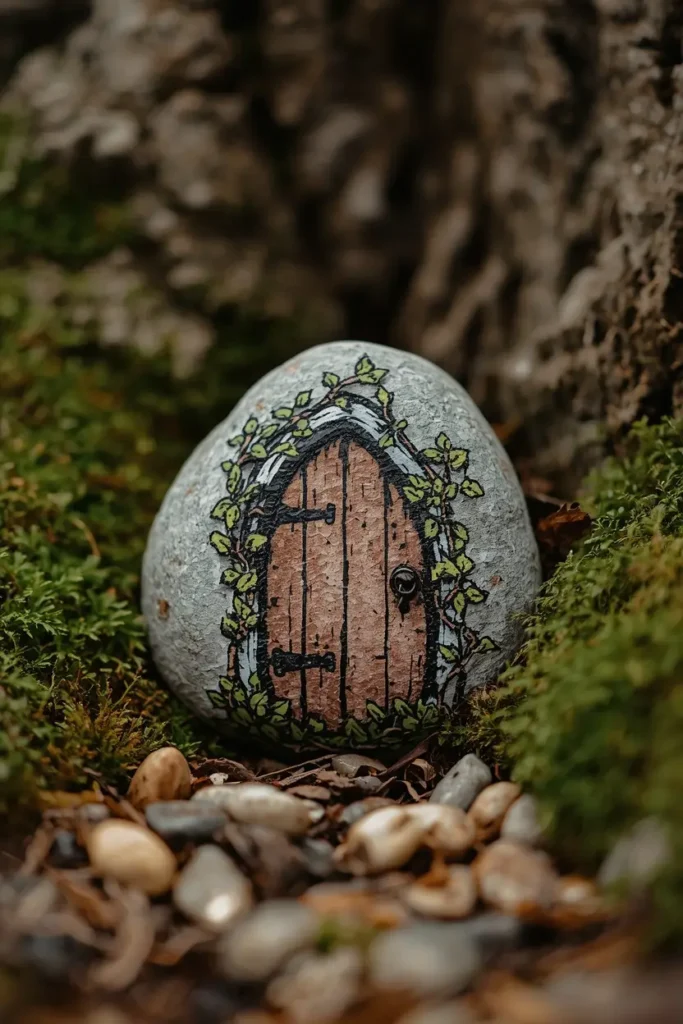
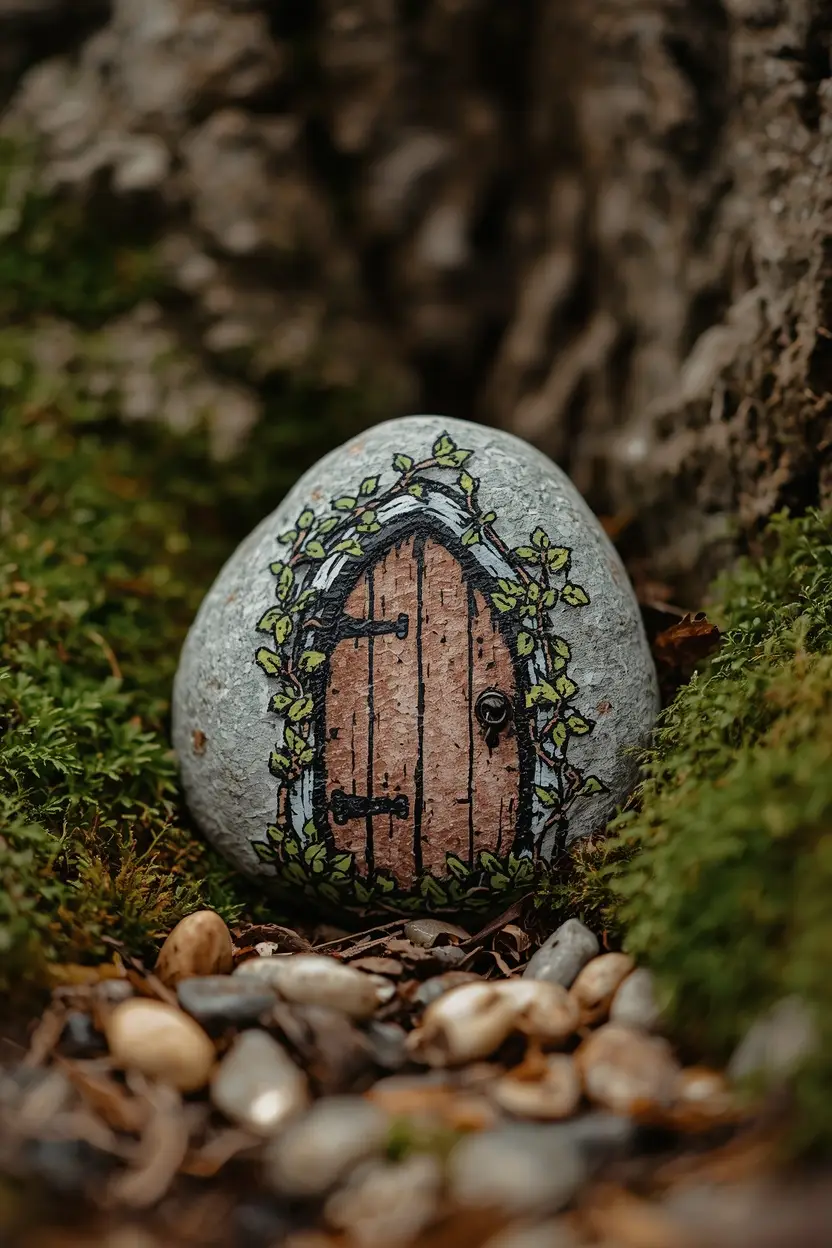
A flat rock painted to look like a miniature arched door — complete with a tiny painted window, doorknob, and climbing vine — tucked at the base of a tree or between garden plants.
Design Breakdown
The trick is perspective. A small amount of shading around the door frame creates the illusion of depth, making it look like the door is set slightly into the rock or tree trunk.
Expert Tip
Add real moss or small pebbles around the base of the painted door to blend it seamlessly into the landscape.
Why It Works
Fairy garden elements tap into nostalgia and imaginative play, which is part of why they’re such a hit with both kids and adults who want a little magic in their yard.
Best For
- Small spaces
- Families
- Large spaces
Common Mistake To Avoid
Placing the door too visibly. Half the charm comes from someone stumbling on it unexpectedly.
Quick Wins
- Use a toothpick dipped in white paint for tiny window “glass” reflections.
- Tuck it at the base of an established tree for instant realism.
- Pair with a tiny painted path of stepping stones leading to it.
The Complete Rock Painting Supplies Buying Guide
Before you go any further, let’s talk about what actually goes into your supply bucket — because this is where most people either save money smartly or waste it completely.
Choosing Your Rocks
- River rocks (smooth, flat) are best for beginners and detailed designs.
- Craggy garden rocks work better for abstract or textured looks.
- Avoid porous rocks like sandstone — paint soaks in unevenly and cracks faster.
- Wash and dry rocks completely before painting; leftover dirt causes peeling.
Paint Options and What They Cost
- Basic acrylic craft paint: budget-friendly, roughly $1 to $3 per bottle, fine for indoor display rocks.
- Outdoor-rated acrylic paint: around $4 to $8 per bottle, worth it for anything staying outside.
- Paint pens (fine tip): excellent for detail work, typically $2 to $5 each.
- Metallic and specialty paints: $5 to $10, best used sparingly as accents.
Sealants: Don’t Skip This Step
- Mod Podge Outdoor formula works well for casual, low-traffic display rocks.
- Clear acrylic spray sealant (matte or gloss) is the most durable option for rocks left outside year-round.
- Apply two to three thin coats rather than one thick one to avoid cloudiness.
Budget Breakdown for a Full Rock Painting Project
- Basic starter kit (paint, brushes, a dozen rocks): roughly $15 to $25.
- Mid-range setup with paint pens and sealant: roughly $30 to $45.
- Full luxury setup with metallics, multiple brush sizes, and premium sealant: $60 and up.
Common Mistakes to Avoid
- Skipping the sealant step entirely, which leads to fading and chipping within weeks.
- Painting on wet or dusty rocks, which prevents proper adhesion.
- Using too many colors on one rock, which muddies the design.
- Storing finished rocks in direct, prolonged sunlight before the paint has fully cured.
Think about how much easier your next project becomes once your supply bucket is actually dialed in. This is the section most people skip, and it’s exactly why so many painted rocks end up disappointing after a few weeks outside.
7. Ocean Wave Stones for a Beach-Inspired Patio
What You’re Seeing
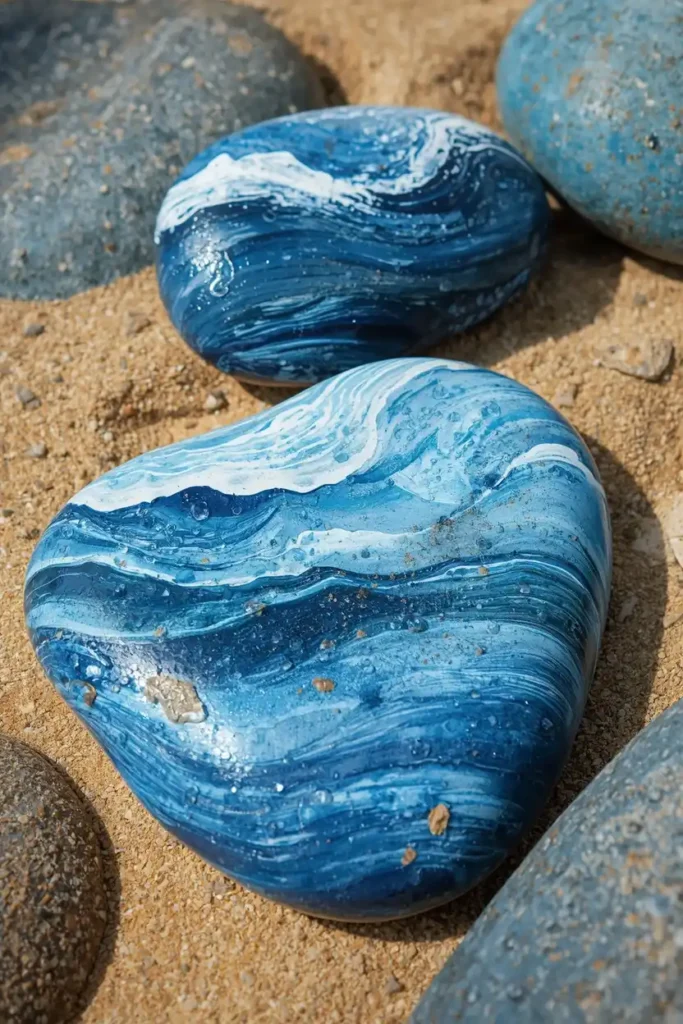
A set of rocks painted with layered blue and white waves, some finished with a glossy sealant that mimics wet sand and sea foam texture.
Design Breakdown
This design layers three to four shades of blue from dark to light, then finishes with white foam details using a dry-brush technique for texture.
Expert Tip
Flick a nearly-dry brush loaded with white paint across the top edge for realistic foam spray instead of painting solid white lines.
Why It Works
Blue tones are scientifically linked to feelings of calm and relaxation, making these a natural fit for a patio meant for unwinding.
Best For
- Large spaces
- Luxury homes
- Small spaces
Common Mistake To Avoid
Making every wave the same height and shape. Real waves are irregular — embrace that instead of fighting for symmetry.
Quick Wins
- Use a fan brush for more natural foam texture.
- Finish with high-gloss sealant to mimic wet stone.
- Group three to five rocks together to form a “wave set” along a walkway.
You May Also Like:
- Small Garden Design Ideas
- Tiny Garden Ideas
- Vintage Garden Decor Ideas
- Front Porch Flower Pot Ideas
- Cut Flower Garden Layout Ideas
8. Firefly Jar Rocks for Nighttime Garden Magic
What You’re Seeing
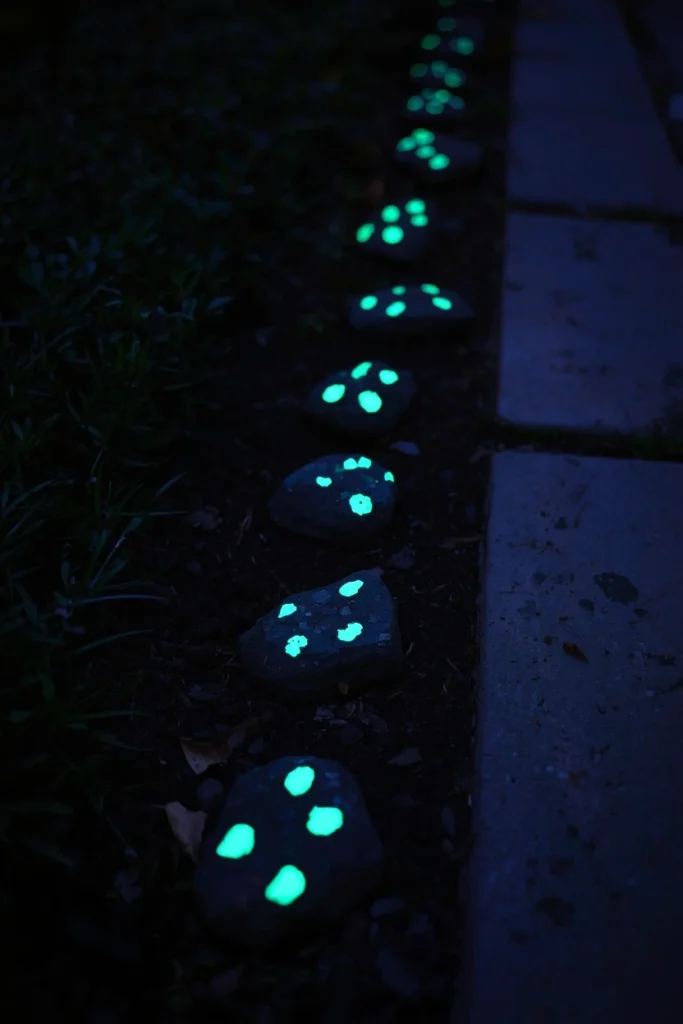
Small dark rocks painted with tiny glowing dots using glow-in-the-dark paint, arranged near a walkway so they seem to flicker like fireflies once the sun goes down.
Design Breakdown
This design uses glow-in-the-dark acrylic paint layered over a dark base coat. The dots “charge” during the day and softly glow after dusk.
Expert Tip
Apply at least two coats of the glow paint — a single thin coat rarely holds enough charge to glow noticeably after sunset.
Why It Works
Subtle nighttime lighting elements extend how long your outdoor space feels usable and magical, well past daylight hours.
Best For
- Families
- Large spaces
- Budget makeovers
Common Mistake To Avoid
Placing them in a spot that gets little direct sunlight. Glow paint needs UV exposure during the day to charge properly.
Quick Wins
- Cluster near a path edge for a subtle nighttime guide.
- Combine with solar lights for a layered lighting effect.
- Test glow strength before committing to a full batch.
Here’s where it gets interesting: this is the idea that surprised me the most when I first tried it. I expected a gimmick, but the actual glow at dusk genuinely stops people mid-conversation on the patio. It’s a five-dollar supply upgrade that reads as a much bigger design statement than it actually costs.
Which design would you try first — the calming ocean waves, or the playful fireflies?
9. Botanical Leaf Print Rocks for a Natural, Earthy Look
This simple change can completely transform the room, or in this case, the whole garden bed.
What You’re Seeing
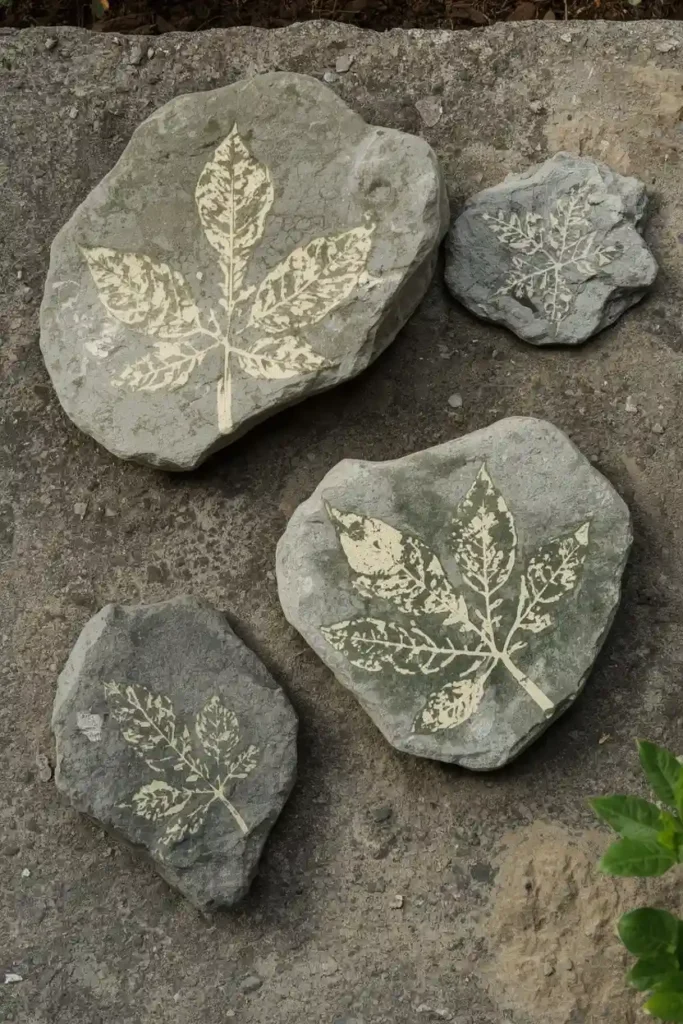
Rocks painted using real leaves as stamps, leaving delicate vein patterns and organic shapes in soft sage, olive, and cream tones across a matte stone surface.
Design Breakdown
Real leaves are coated lightly with paint on the underside (where the veins are most raised), then pressed onto the rock to transfer a natural, textured print.
Expert Tip
Use a foam roller to apply an even, thin paint layer to the leaf before pressing — too much paint blurs the vein detail completely.
Why It Works
Organic, nature-derived patterns feel less “crafted” and more curated, which appeals to anyone leaning into an earthy, minimalist outdoor aesthetic.
Best For
- Large spaces
- Luxury homes
- Budget makeovers
Common Mistake To Avoid
Pressing too hard or shifting the leaf during transfer, which smears the print instead of leaving crisp detail.
Quick Wins
- Test the technique on scrap paper before committing to a rock.
- Use real leaves from your yard for a print unique to your home.
- Finish with a matte sealant to preserve the natural, non-glossy look.
Let me know which one is your favorite so far.
10. Address Number Rocks for Functional Curb Appeal
What You’re Seeing
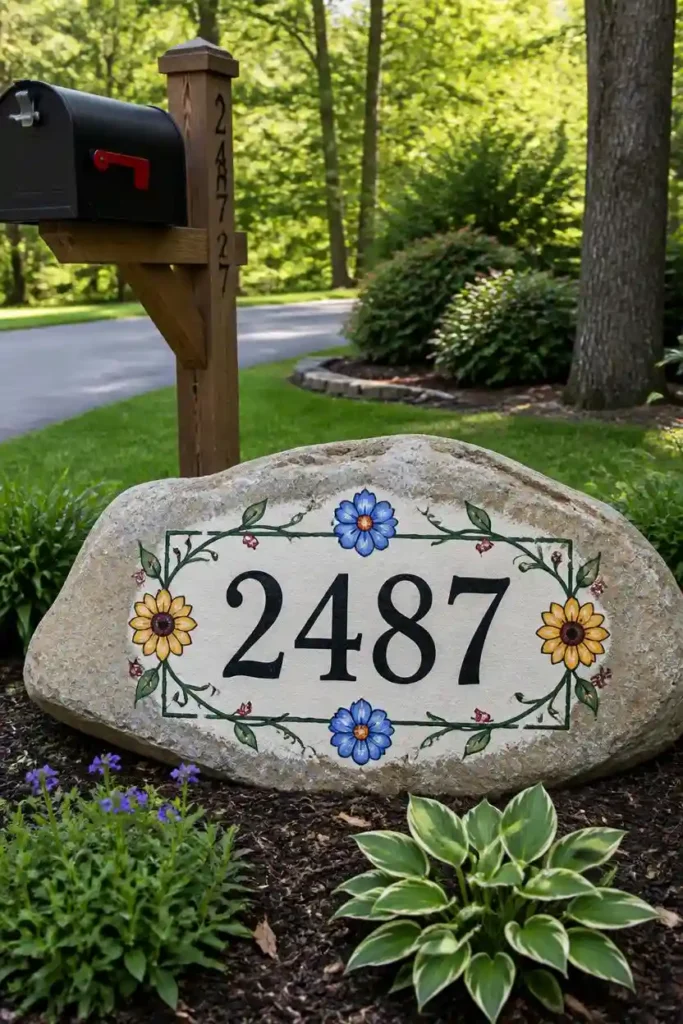
A large, flat rock near the base of the driveway or mailbox, painted with bold house numbers in a clean font, framed by a simple decorative border.
Design Breakdown
This design blends function and decor by combining hand-lettering with a simple geometric or floral frame that matches your home’s existing color palette.
Expert Tip
Use painter’s tape to keep number edges crisp, and always test your font spacing in pencil before committing to paint.
Why It Works
Clear, attractive house numbers genuinely help delivery drivers, guests, and emergency services find your home faster, while doubling as a decor moment.
Best For
- Renters
- Budget makeovers
- Families
- Small spaces
Common Mistake To Avoid
Choosing a font or paint color that blends into the rock instead of contrasting sharply enough to be legible from the street.
Quick Wins
- Use reflective paint if your address is hard to see at night.
- Match the border design to your existing landscaping colors.
- Reseal every season since these rocks get the most weather exposure.
Visualize the difference a single afternoon can make — ten different rocks, ten completely different moods, and every single one achievable with a $20 supply run and a free weekend.
Related Garden and Craft Ideas
If these summer rock painting ideas got your creative wheels turning, here’s where to go next.
- Garden Ideas
- Small Balcony Garden Ideas
- Vegetable Garden Ideas
- Garden Bird Feeders Ideas
- Outdoor Background Area for Kids Ideas
- Chalk Obstacle Course for Kids
- Patriotic Porch Ideas
- 10 DIY Rainbow Birthday Party Ideas and Decorations
Final Thoughts on Summer Rock Painting Ideas
If you take just one thing away from this list, let it be this: the sunset ombre rocks, the watermelon slices, and the firefly jars are the three ideas readers come back to try again and again, because they’re forgiving, fast, and genuinely satisfying to finish.
Don’t let this become another “someday” project. Pick one idea from this list — just one — and commit to trying it this week. Grab a handful of rocks on your next walk, or order a cheap bag online, and give yourself permission to make something a little imperfect.
Which of these summer rock painting ideas are you trying first? I’d genuinely love to know.
If you’re already thinking about what comes next for your outdoor space this season, our guide on garden decor ideas is the natural next stop — it’s full of ways to build on the personality you just added with your painted rocks.
And if you thought this project was satisfying, wait until you see the next category of budget-friendly backyard transformations we’ve got coming. It might just be the most requested guide on the entire site.
Frequently Asked Questions About Summer Rock Painting Ideas
1. What kind of paint works best for summer rock painting ideas? Outdoor-rated acrylic paint holds up best against sun and rain, especially when finished with a UV-resistant sealant.
2. Do I need to seal painted rocks if they’ll stay outside? Yes. Skipping the sealant is the single biggest reason painted rocks fade or chip within a few weeks.
3. What’s the best type of rock to use for painting? Smooth, flat river rocks are easiest for beginners and hold detailed designs the best.
4. Can kids safely take part in rock painting projects? Absolutely. Non-toxic acrylic craft paint is safe for children and makes for an easy, low-mess summer activity.
5. How long does painted rock design typically last outdoors? With proper sealant and occasional touch-ups, a well-painted rock can last multiple seasons outdoors.
6. What’s the easiest design for a complete beginner? Flat color-block designs like the watermelon slice rocks are the most forgiving for first-timers.
7. Can I paint rocks I already have in my yard, or should I buy new ones? You can absolutely use rocks you already have, as long as they’re clean, dry, and reasonably smooth.
8. What’s the best way to clean rocks before painting? A simple scrub with warm soapy water and a full day of drying time is usually enough.
9. How do I keep my painted rocks from fading in direct sunlight? UV-resistant spray sealant is essential, and rotating rock placement occasionally can help too.
10. Are painted rocks a good gift idea? Yes, especially personalized designs like address numbers, kindness words, or a family’s favorite colors and patterns.