
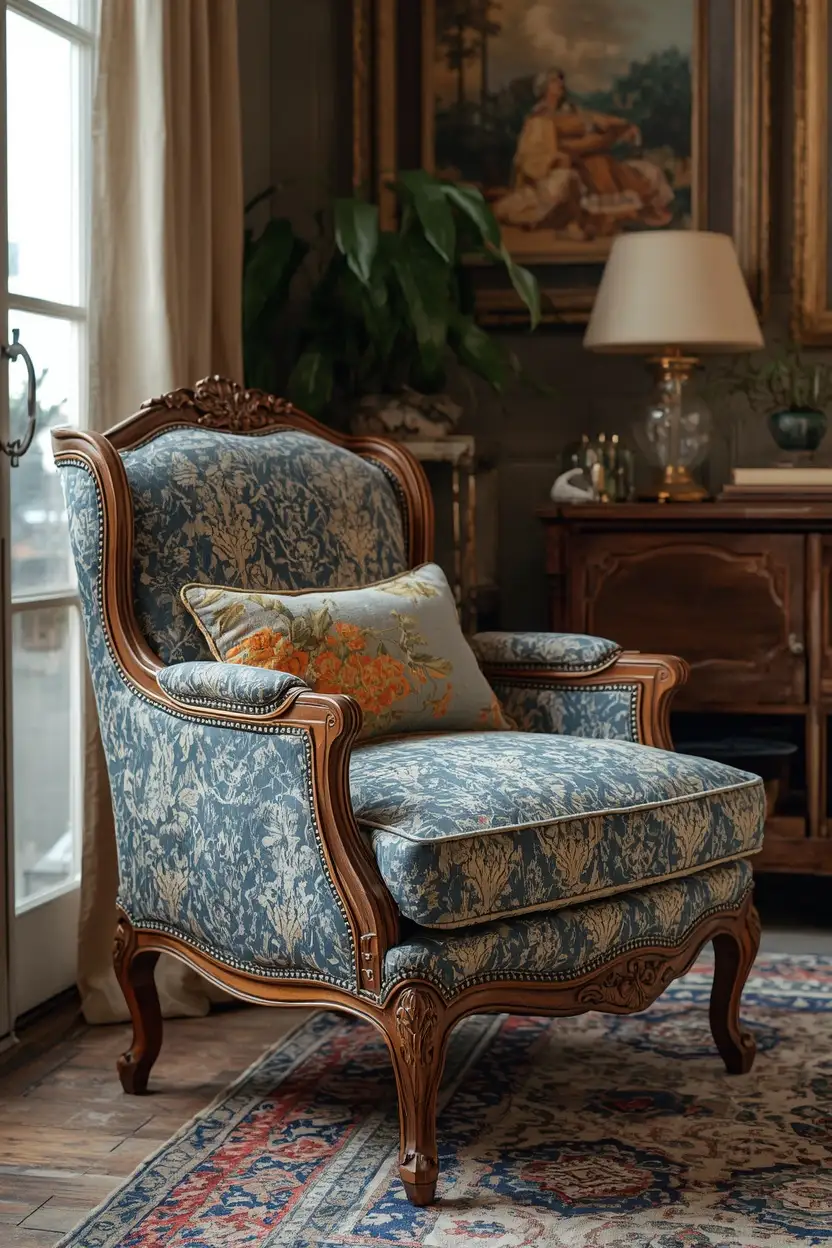
10 Accent Chair Ideas That’ll Make Your Living Room Look Designer-Approved
This article was created in line with Trends Oraa’s research and content standards.
Most people don’t realize this.
A room can have great paint, the right rug, even a gorgeous sofa — and still feel unfinished.
That’s why their space never feels complete, even after a full afternoon of rearranging furniture.
The missing piece is usually smaller than you’d think: it’s the accent chair sitting in the corner you keep ignoring.
These accent chair ideas are the easiest, fastest way to give any room a finished, intentional look — without a full renovation. You might also love our guide on small space furniture solutions if you’re working with a tighter floor plan, because a lot of these same tricks apply.
The good news? Fixing the “almost there” feeling in your living room is way easier than you think, and it usually comes down to one chair, placed the right way, in the right spot.
Keep scrolling, because idea #4 is the one I get asked about the most.
Why Accent Chair Ideas Matter More Than You’d Expect
Here’s where it gets interesting.
An accent chair isn’t just extra seating. It’s doing three jobs at once:
- Adding color, texture, or pattern without committing to a full redesign
- Creating visual balance in rooms that feel lopsided
- Giving you a flexible piece you can move between rooms as your needs change
Most people don’t know this, but designers often choose the accent chair before they choose the sofa fabric. The chair sets the tone for everything else.
But here’s the important part: not every chair works in every space. The shape, scale, and placement matter just as much as the style you pick.
That’s exactly what we’re breaking down below — ten accent chair ideas, each with a different personality, so you can find the one that actually fits your room (and your life).
1. The Curved Bouclé Chair for Soft, Cozy Corners
What You’re Seeing
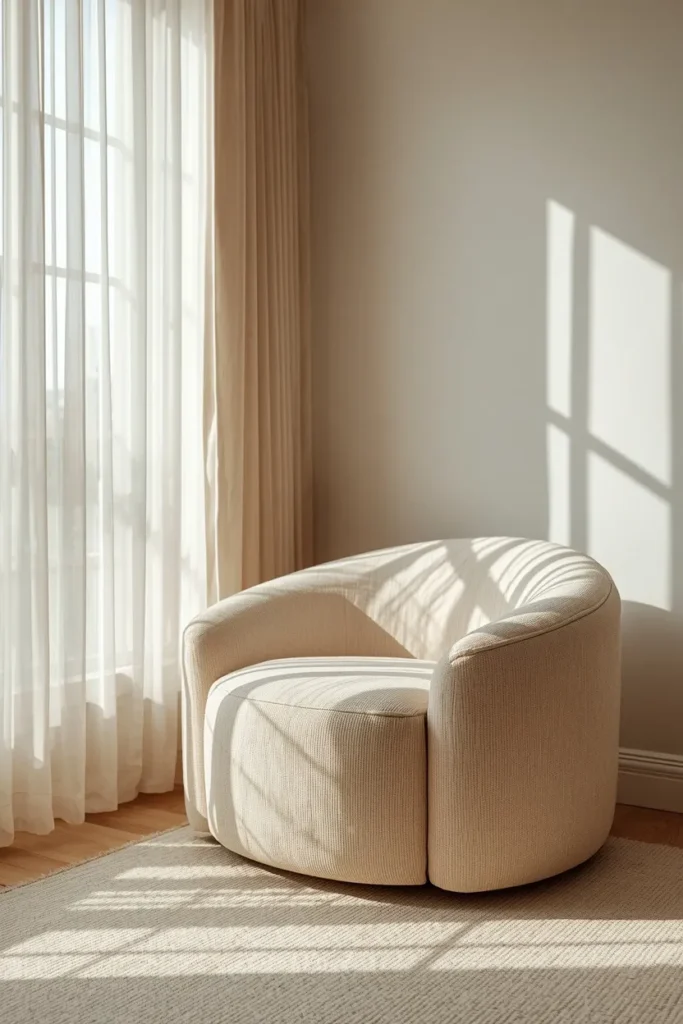
Picture a rounded, low-slung chair upholstered in cream or oatmeal bouclé fabric, tucked into a sunlit corner near a window. The curves are soft, almost cloud-like, with no sharp edges anywhere.
Design Breakdown
Curved furniture has become a defining shape of modern interiors because it softens a room visually. Bouclé fabric adds texture without adding visual noise, since it’s typically a neutral tone that reads as calm rather than busy.
Expert Tip
Pair a curved bouclé chair with a thin black or brass floor lamp behind it. The contrast between the soft curves and a slim, structured lamp creates instant visual interest.
Why It Works
Rounded shapes are processed by our brains as safe and comforting, which is part of why curved furniture feels so inviting. It also breaks up a room full of straight-edged furniture like sofas, coffee tables, and shelving.
Best For
- Small spaces
- Renters
- Families with young kids (no sharp corners)
Common Mistake To Avoid
Choosing a bouclé chair in a high-traffic spot without checking the fabric’s durability rating. Bouclé can pill and flatten quickly under heavy daily use.
Quick Wins
- Stick to neutral tones if this is your only accent piece
- Add a textured throw pillow for layered coziness
- Place it near natural light to highlight the texture
- Keep the surrounding furniture simpler so the chair stands out
2. The Bold Velvet Statement Chair
What You’re Seeing
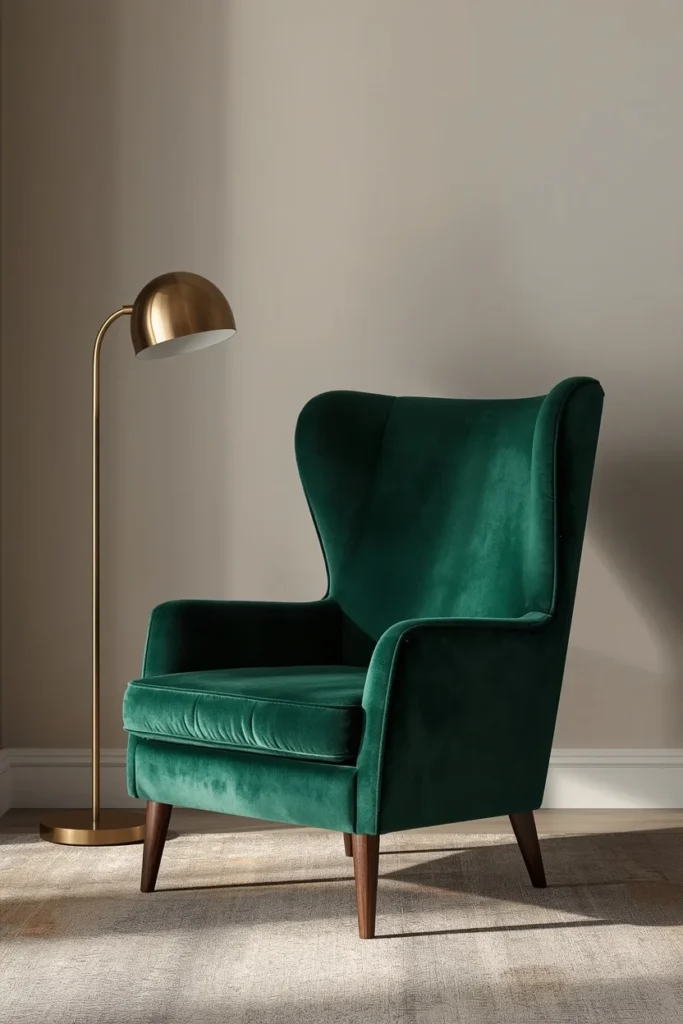
Imagine a deep emerald or sapphire velvet chair with a high back, sitting confidently against a neutral wall. It’s the kind of piece your eye goes to the second you walk into the room.
Design Breakdown
Velvet has a way of catching light differently depending on the angle, which gives the chair a slightly different look throughout the day. A jewel-toned velvet chair works as a true focal point, especially in an otherwise neutral room.
Expert Tip
If you’re nervous about bold color, start with one chair instead of a pair. One bold piece reads as a deliberate design choice; two can sometimes overwhelm a smaller room.
Why It Works
Color theory tells us that a single saturated hue against neutral surroundings draws the eye and creates a sense of intentional design. It’s the same principle museums use when spotlighting a single piece of art.
Best For
- Luxury homes
- Large spaces
- Budget makeovers (one chair, big impact)
Common Mistake To Avoid
Matching the chair color to something else in the room. A statement chair works best when it stands alone as the boldest element, not echoed elsewhere.
Quick Wins
- Choose a high-back style for extra drama
- Place it where it’s visible from the entryway
- Avoid pairing it with other bold patterns nearby
- Let the wall behind it stay simple
One thing I’ve learned after styling dozens of living rooms: people are way more afraid of color than they need to be. A single bold chair is low-commitment — if you don’t love it in six months, it’s one piece to swap, not an entire room to repaint. I always tell people to think of a statement chair the way they’d think of a great handbag or a pair of shoes: it’s the accessory that makes the whole outfit (or room) look pulled together, and it’s far easier to change than a sofa or rug.
Which of these ideas would work best in your home so far? Keep that in mind as we go, because the next few ideas build on these same principles in different directions.
Most people waste more space than they realize.
3. The Slipper Chair for Tight Spaces
What You’re Seeing
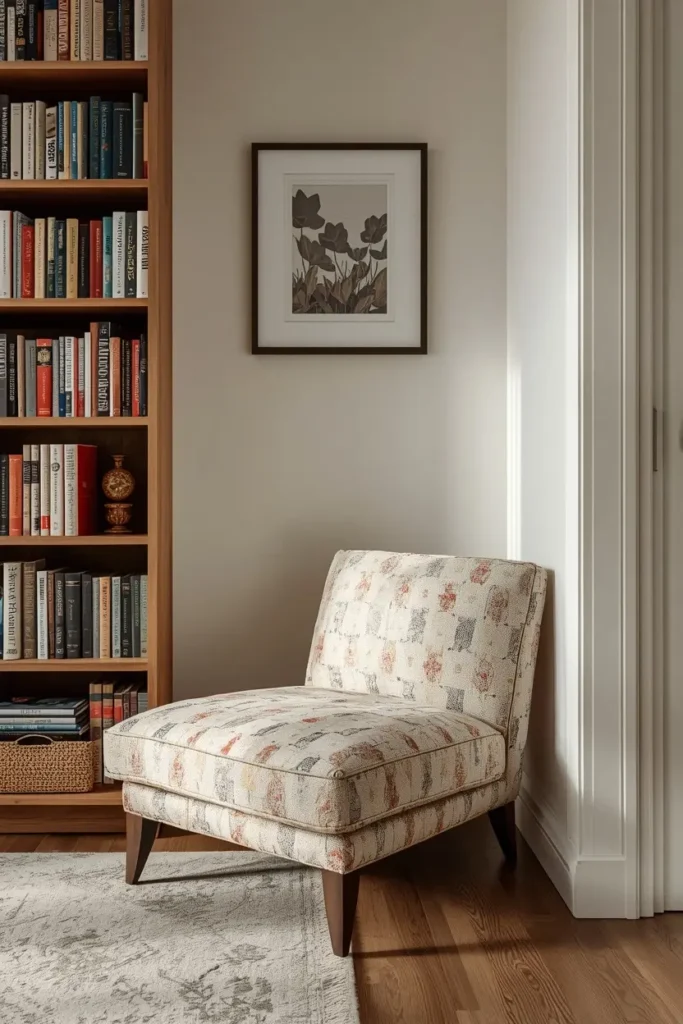
Visualize a low, armless chair with clean lines, tucked beside a bookshelf or in a narrow gap between a sofa and the wall. It barely takes up any floor space, but it doesn’t look squeezed in.
Design Breakdown
Slipper chairs were originally designed for small dressing rooms, which makes them perfect for apartments and tight floor plans today. Without arms, they read as more open and less bulky than a traditional accent chair.
Expert Tip
Use a slipper chair in pairs flanking a window or fireplace if you have the space. Two slim chairs together often take up less visual weight than one bulky armchair.
Why It Works
The lack of arms creates an illusion of more open floor space, which matters enormously in smaller rooms where every inch counts. It’s a practical solution that doesn’t sacrifice style.
Best For
- Small spaces
- Renters
- Budget makeovers
Common Mistake To Avoid
Picking a slipper chair that’s too low for the room’s other seating. If your sofa seat height is significantly taller, the chair can look like an afterthought instead of an intentional pairing.
Quick Wins
- Match the chair’s seat height to your sofa within a few inches
- Use a patterned fabric since the simple shape can handle it
- Place against a wall to save floor space
- Add a small side table for function
You May Also Like:
- Space-Saving Furniture Ideas for Small Rooms
- Small Console Table Ideas
- Empty Corner Decoration Ideas
- Studio Apartment Ideas
- Rectangle Living Room Ideas
This is where many homeowners make a mistake, so let’s talk through it before moving on.
The Real Accent Chair Buying Guide
Here’s where it gets interesting, because this is the part most blog posts skip entirely.
Before you buy any accent chair, there are a few decisions that matter way more than the fabric color. Let’s walk through them properly.
Step 1: Measure Before You Shop
This sounds obvious, but it’s the single most skipped step. Bring a tape measure (or your phone) and check:
- The width of the space where the chair will sit
- The clearance needed for walking paths (aim for at least 30 inches)
- The ceiling-to-armrest ratio if the room has low ceilings or sloped walls
Step 2: Decide on Function First, Style Second
Ask yourself honestly: will this chair actually get sat in, or is it mostly decorative? This changes everything about what you should buy.
- If it’ll be used daily for reading, prioritize a deep seat and supportive back
- If it’s mostly decorative, you have more freedom with shape and fabric durability
- If kids or pets are involved, performance fabric isn’t optional, it’s essential
Step 3: Understand the Real Cost Breakdown
Accent chairs vary wildly in price, and the difference isn’t always about quality. Here’s roughly what to expect:
- Budget range ($100–$300): Often fine for low-traffic decorative chairs, but check fabric quality and frame material before buying
- Mid-range ($300–$800): This is the sweet spot for most homeowners, usually solid wood frames with better-quality foam
- Investment pieces ($800+): Designer or vintage chairs, often built to last decades with reupholstering potential
Step 4: Common Mistakes People Make When Buying
- Buying based on a photo alone without checking real-world dimensions
- Choosing trendy colors that clash with existing furniture
- Skipping the fabric durability rating (double rub count) for high-traffic spots
- Forgetting to consider how the chair will be cleaned
Step 5: Questions to Ask Before You Click “Buy”
- Does this chair need to match my sofa, or just complement it?
- Will it survive daily use, or is it a special-occasion piece?
- Can I return it if it doesn’t fit the space the way I imagined?
Would you choose function or style if you had to pick just one? It’s worth sitting with that question, because it’ll guide almost every other decision in this guide.
This deep dive alone could save you from an expensive mistake, so bookmark this section before you go shopping.
4. The Wingback Chair for Classic Elegance
What You’re Seeing
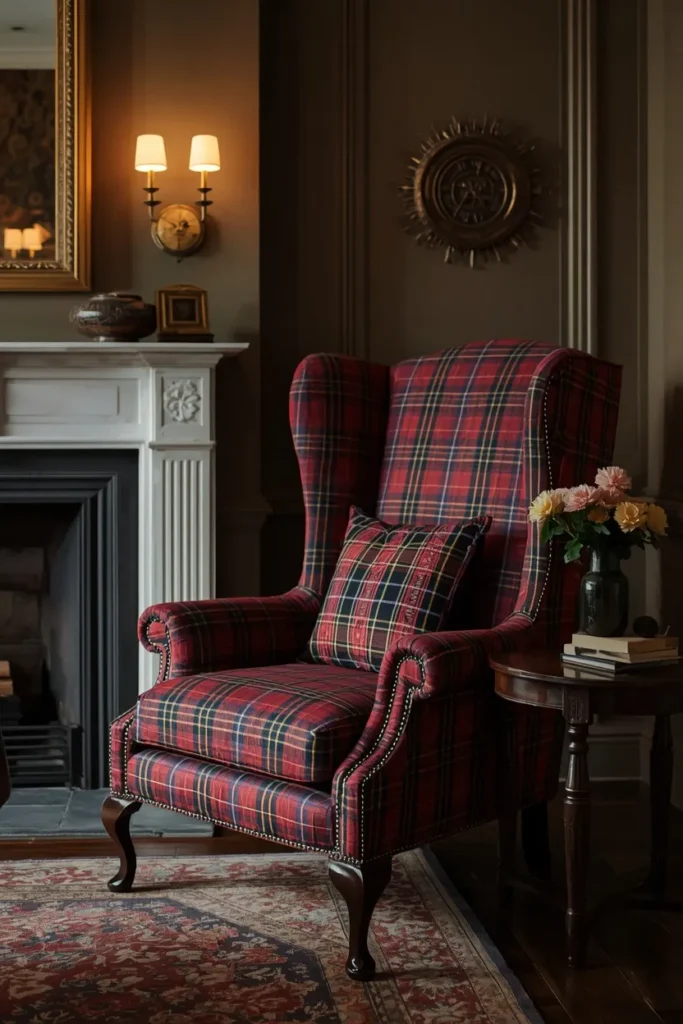
Imagine a tall chair with high, winged sides framing the face, upholstered in a rich plaid or solid fabric, positioned near a fireplace or a tall window.
Design Breakdown
Wingback chairs originated as a way to block drafts near fireplaces, and that history still shows in their tall, enclosing silhouette. They bring instant traditional elegance to a room.
Expert Tip
Balance a wingback chair’s formal feel by pairing it with something more casual nearby, like a slouchy linen sofa. The contrast keeps the room from feeling stiff.
Why It Works
The height and enclosing shape create a sense of privacy and grounding, almost like a little nook within the larger room. It’s part comfort, part visual anchor.
Best For
- Large spaces
- Luxury homes
- Families (great for reading nooks)
Common Mistake To Avoid
Placing a wingback chair in a room with otherwise ultra-modern furniture without any transitional pieces. The clash can feel accidental rather than intentional.
Quick Wins
- Use a wingback chair to anchor a reading corner
- Choose a fabric with some texture to soften the formal shape
- Add a small ottoman for extra comfort
- Position it at a slight angle rather than dead-on to the room
The next idea changes everything if you’ve been struggling with an awkward, empty corner.
5. The Rattan or Cane Chair for Natural Texture
What You’re Seeing
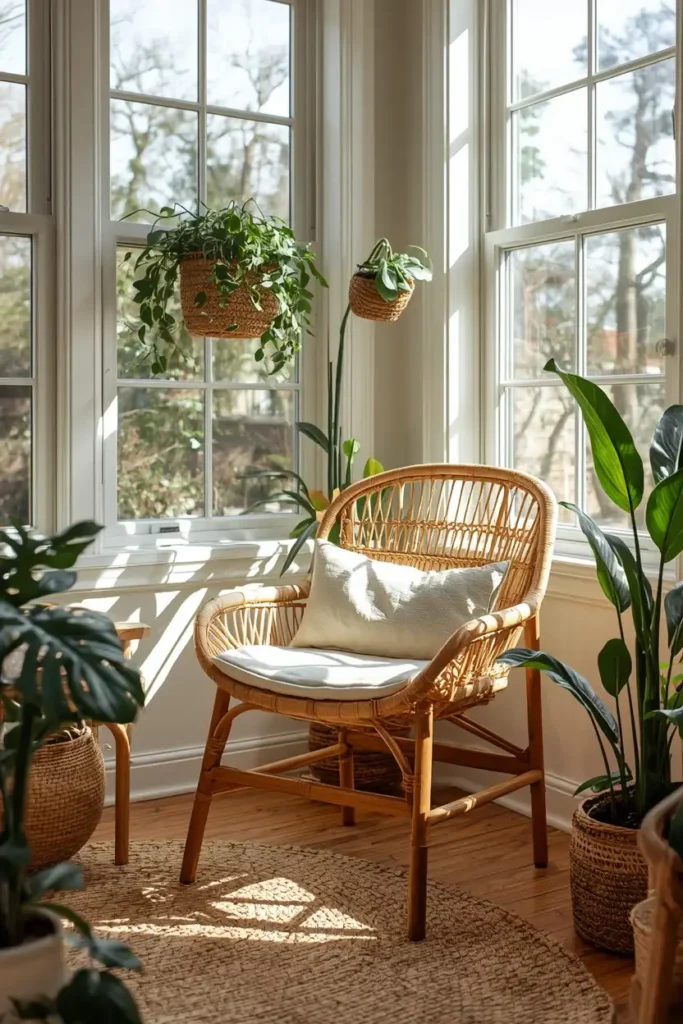
Picture a chair with a woven rattan or cane back and seat, paired with a simple wooden frame, sitting near indoor plants or a sunny reading spot.
Design Breakdown
Natural materials like rattan bring warmth and texture that fabric alone can’t replicate. They’ve become a staple in boho, coastal, and Scandinavian-inspired spaces for exactly that reason.
Expert Tip
Add a cushion in a solid, soft color to keep the woven texture from feeling too busy next to patterned curtains or rugs.
Why It Works
Natural textures create a grounding, organic feel that balances out harder materials like glass, metal, or polished wood elsewhere in the room.
Best For
- Renters
- Budget makeovers
- Small spaces
Common Mistake To Avoid
Skipping a cushion entirely. Rattan and cane can be uncomfortable for long sitting sessions without proper padding.
Quick Wins
- Pair with indoor plants for a cohesive natural look
- Add a soft cushion for comfort
- Use in a sunroom or reading nook
- Mix metals sparingly nearby, like brass accents
Most people don’t know this: rattan and cane furniture actually does better in humidity than most upholstered pieces, which is why you’ll see it so often in sunrooms and coastal homes. If you’re nervous about durability, look for chairs with a sealed or lacquered finish rather than raw cane, since it resists wear and yellowing far better over time.
What’s your biggest challenge right now when it comes to choosing accent furniture? If it’s matching styles across a room, the next idea might solve that for you.
6. The Mid-Century Modern Accent Chair
What You’re Seeing
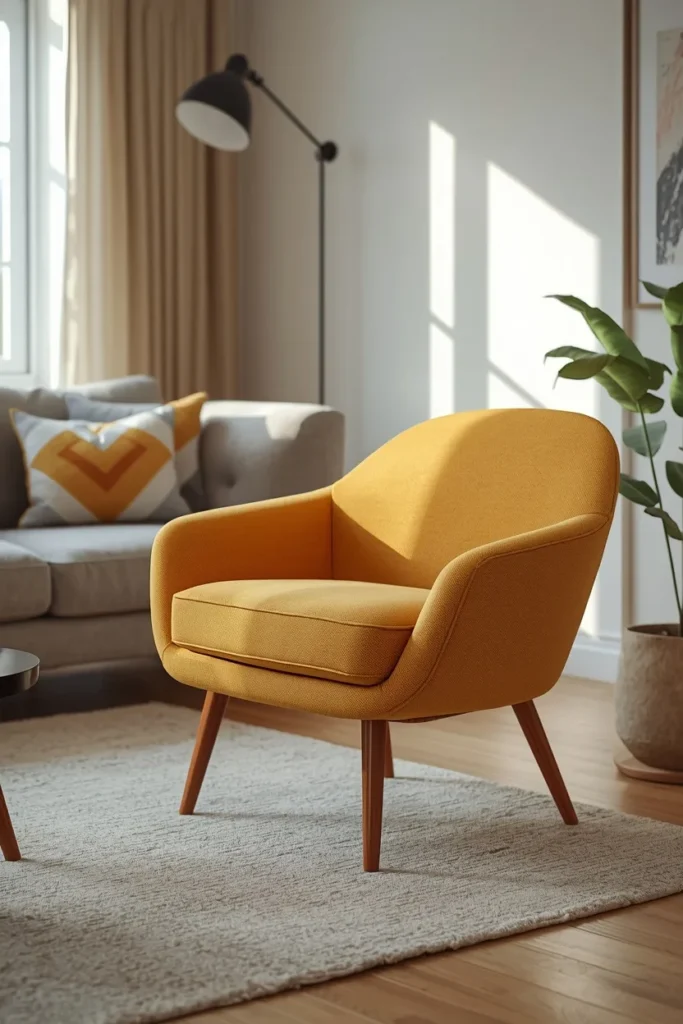
Visualize a chair with tapered wooden legs, a slightly angled backrest, and clean geometric lines, upholstered in a muted mustard, burnt orange, or olive green fabric.
Design Breakdown
Mid-century modern design emphasizes simplicity, function, and organic curves without excess ornamentation. The tapered legs in particular create a lighter, more open feeling underneath the chair.
Expert Tip
Look for solid wood legs rather than painted plastic versions, since the wood tone is often what makes this style feel authentic and high quality.
Why It Works
The visible legs and lifted silhouette make a room feel less cluttered because you can see floor space beneath the furniture, which is a subtle trick designers use constantly.
Best For
- Small spaces
- Budget makeovers
- Renters
Common Mistake To Avoid
Overcrowding a mid-century chair with too many busy patterns nearby. The style thrives on simplicity, so let the chair’s shape do the talking.
Quick Wins
- Choose warm wood tones for the legs
- Stick to one accent color per room
- Pair with simple, geometric throw pillows
- Avoid placing next to overly ornate furniture
The next idea is one designers secretly love, and it’s probably not what you’d expect.
7. The Oversized Lounge Chair for Ultimate Comfort
What You’re Seeing
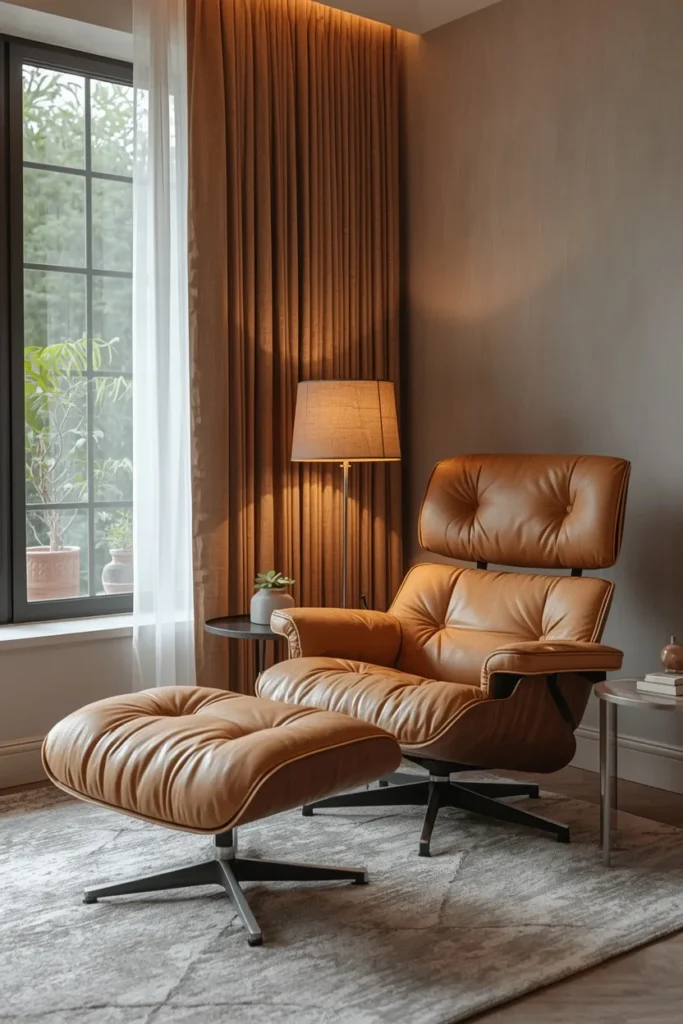
Imagine a deep, generously cushioned chair big enough to curl up sideways in, upholstered in a soft, durable fabric, positioned near a window with a small side table and a reading lamp.
Design Breakdown
Oversized lounge chairs prioritize comfort above all else, often featuring deep seats and high arms that practically invite you to sink in. They’ve become especially popular as dedicated “me time” furniture.
Expert Tip
If floor space allows, add a matching ottoman. It transforms the chair from a seat into a full lounging experience, and the two pieces together still take up less visual bulk than a loveseat.
Why It Works
Comfort-driven furniture taps into something psychological: when a chair looks soft and inviting, people are more likely to associate the entire room with relaxation, even subconsciously.
Best For
- Large spaces
- Families
- Luxury homes
Common Mistake To Avoid
Choosing an oversized chair without measuring doorways and hallways first. These chairs are notoriously tricky to move once delivered.
Quick Wins
- Add an ottoman if space allows
- Position near natural light for a true reading nook
- Choose a performance fabric if kids or pets are in the home
- Leave enough clearance around it so it doesn’t block walkways
You May Also Like:
- Window Seat Ideas
- Cozy Living Room Ideas
- Family Room Ideas
- Reading Corner Ideas
- Indoor House Plants Aesthetic Ideas
The following idea surprised me the most when I first started paying attention to it.
8. The Patterned Statement Chair
What You’re Seeing
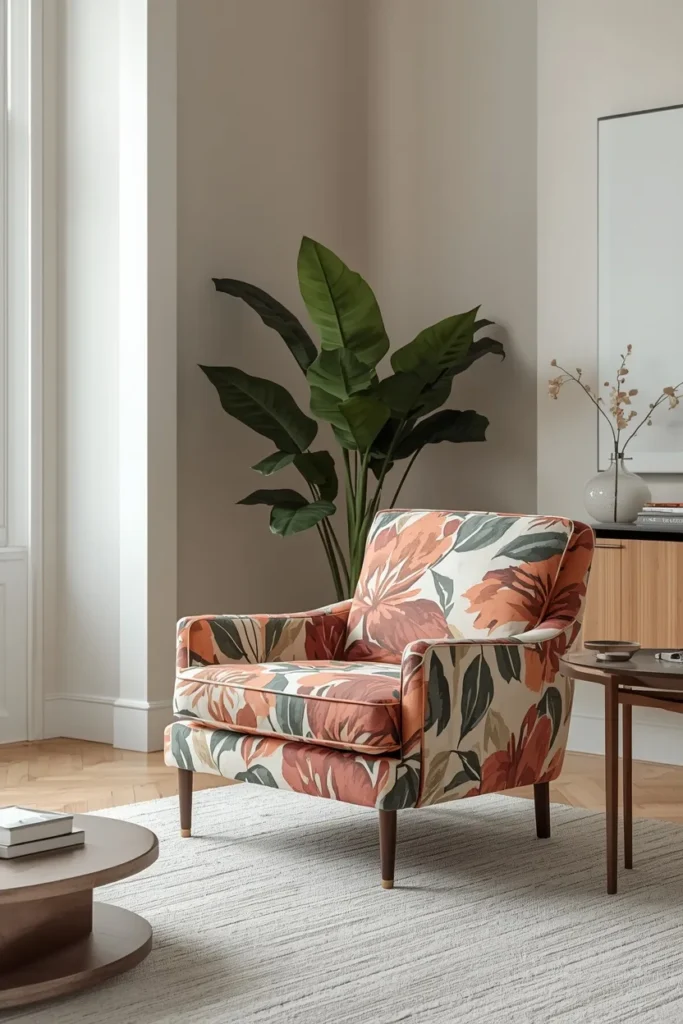
Picture a chair upholstered in a bold floral, geometric, or animal print fabric, placed somewhere it can be the unexpected highlight of an otherwise neutral room.
Design Breakdown
A patterned chair works almost like a piece of art. Because it’s smaller in scale than a sofa, a bold pattern feels playful rather than overwhelming.
Expert Tip
If you love a print but worry it’s “too much,” go for one with a smaller, more subtle pattern repeat. It reads as sophisticated rather than loud from across the room.
Why It Works
Pattern adds personality and visual interest in a way solid colors can’t, and because it’s contained to one piece of furniture, it never risks overwhelming the whole space.
Best For
- Budget makeovers
- Renters
- Large spaces
Common Mistake To Avoid
Pairing a patterned chair with another busy pattern nearby, like a heavily patterned rug. Let the chair be the star and keep everything else simple.
Quick Wins
- Pick one bold pattern, not two
- Keep surrounding textiles solid or subtle
- Use in a room that needs personality, not more chaos
- Consider a removable slipcover for flexibility
Here’s where it gets interesting: the chairs people compliment the most in my own home aren’t the neutral ones, they’re the patterned pieces that took the most courage to buy. There’s something about a bold pattern in a small dose that reads as confident design rather than risky design. If you’re on the fence, start with a chair that has a removable, washable cover. It takes the pressure off the decision entirely.
Let me know which one is your favorite so far. There are still two more coming that might just change your answer.
This simple change can completely transform the room.
9. The Swivel Accent Chair for Function and Flow
What You’re Seeing
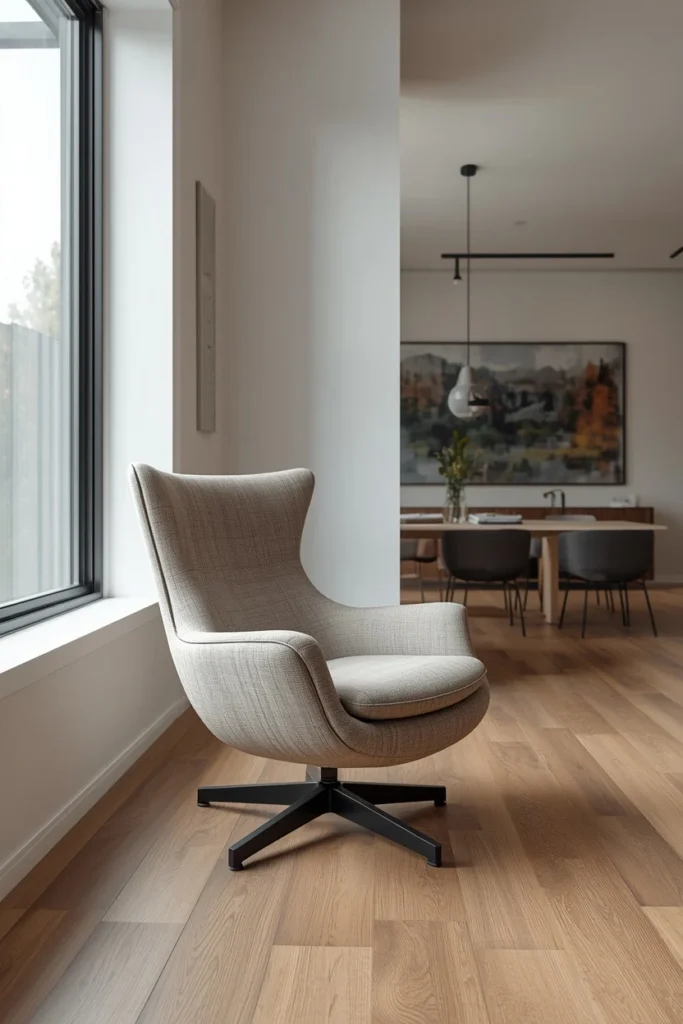
Visualize a chair on a rotating base, positioned in a spot where it can pivot between facing a TV, a conversation area, or a window depending on the moment.
Design Breakdown
Swivel chairs solve a problem most people don’t even realize they have: rigid furniture arrangements that only work for one type of activity. A swivel base adds flexibility without adding bulk.
Expert Tip
Use a swivel chair in open-concept spaces where the seating needs to “work” in more than one direction, like a living room that opens into a kitchen or dining area.
Why It Works
Flexibility in furniture mirrors flexibility in how we actually use our homes day to day, whether that’s watching TV, chatting with someone in the kitchen, or reading by the window.
Best For
- Families
- Large spaces
- Renters
Common Mistake To Avoid
Placing a swivel chair somewhere with no real reason to swivel. If there’s nothing interesting in more than one direction, the function goes to waste.
Quick Wins
- Use in open floor plans for maximum function
- Choose a durable, easy-clean fabric for high-use chairs
- Position near multiple “zones” of activity
- Avoid placing too close to sharp-cornered furniture
10. The Vintage or Thrifted Accent Chair
What You’re Seeing
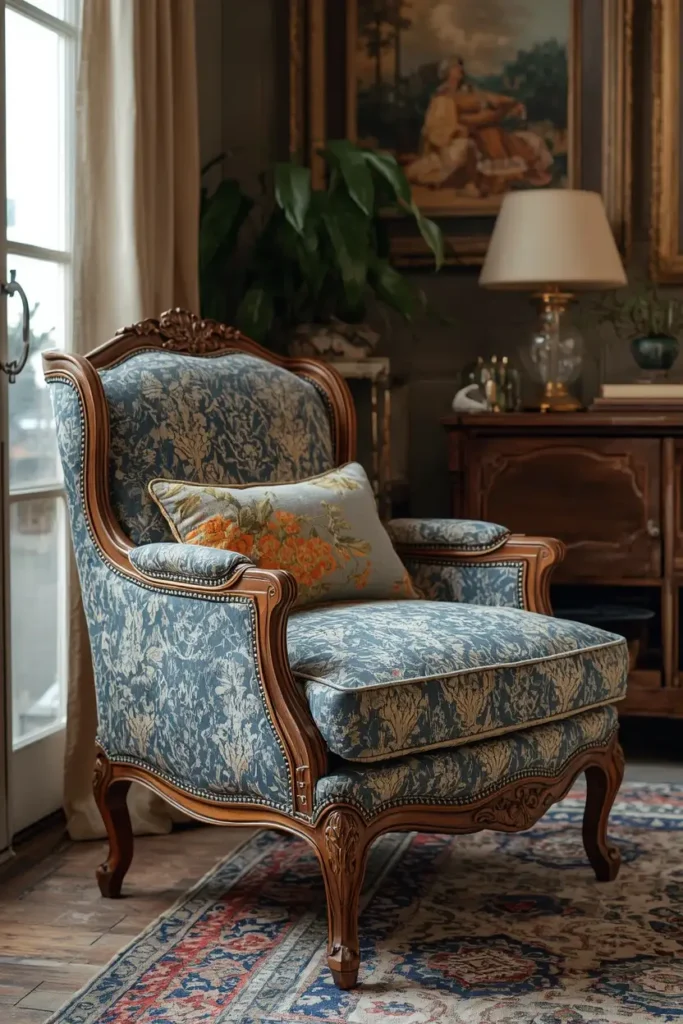
Imagine an older chair with a unique shape you won’t find in stores anymore, reupholstered in a fresh, modern fabric that makes it feel brand new while keeping its original character.
Design Breakdown
Vintage chairs often have details — carved wood, unusual proportions, interesting joinery — that newer mass-produced furniture simply doesn’t replicate. Reupholstering lets you keep the character while updating the look.
Expert Tip
Before buying secondhand, check the frame integrity first. A solid wood frame is almost always worth reupholstering, even if the fabric is outdated or damaged.
Why It Works
One-of-a-kind furniture adds a layer of personality and story to a room that brand-new pieces often can’t match, and it’s typically far more affordable than buying new high-quality furniture.
Best For
- Budget makeovers
- Renters
- Small spaces
Common Mistake To Avoid
Skipping a structural check and falling for the look alone. A wobbly frame or damaged springs can turn a “great deal” into a costly repair.
Quick Wins
- Always check the frame before buying
- Budget for reupholstering if the fabric is worn
- Look for solid wood over particleboard
- Embrace the imperfections, they add character
Related Accent Chair Ideas
Still scrolling for more inspiration? Here are a few more rooms and styles worth exploring next.
- Bedroom Chair Style Ideas
- Dorm Room Chair Ideas
- Hanging Chair Design Ideas
- Eames Chair Ideas
- Recliner Chair Ideas
- Camping Chair Design Ideas
- Living Room Remodel Ideas
- Cozy Living Room Ideas
Final Thoughts on Choosing the Right Accent Chair
If there’s one thing to take away from these accent chair ideas, it’s this: the right chair does more design work than almost any other single piece of furniture in your home.
A curved bouclé chair softens a room. A bold velvet piece anchors it. A slipper chair saves space without sacrificing style. Even a simple swivel base can completely change how a room functions day to day.
Don’t try to do all ten of these at once. Pick the one idea that matches your space and your lifestyle right now, and commit to trying it out this week. Sometimes one chair really is the difference between a room that feels “almost there” and one that feels finished.
Think about how much easier your living room will feel to relax in once that one missing piece is in place.
So, which of these accent chair ideas matches your space best? I’d genuinely love to know which one you’re leaning toward, especially if it’s one you hadn’t considered before reading this.
If you’re ready to keep transforming your space, take a look at our guide on Family Room Ideas next, since a lot of the same balance-and-flow principles apply there too.
And if you thought accent chairs were the small detail that changes everything, wait until you see what the right lighting can do. That one might just surprise you even more.