10 Electric Desk Design Ideas That Will Transform How You Work
This article was created in line with Trends Oraa’s research and content standards.
Most people don’t realize this.
Their desk is working against them, not for them.
That’s why their space never feels finished, no matter how many candles or desk plants they add.
The good news? Fixing it is easier than you think, and it starts with one simple upgrade: an electric desk.
If you’ve been scrolling Pinterest looking for electric desk design ideas that actually look good (not just sterile office-supply-store vibes), you’re in the right place. I’ve tested layouts, watched the trends shift, and pulled together the ten setups that consistently stop the scroll and get saved. You might also love our guide on home office ideas if you’re rethinking your whole workspace, not just the desk itself.
Electric desks (the standing, sit-stand, height-adjustable kind) have quietly become one of the biggest home design upgrades of the year. They’re not just for tech bros and corporate offices anymore. People are building entire aesthetics around them.
Let’s get into the ideas that are actually worth copying.
Why Electric Desk Design Ideas Are Taking Over Pinterest
Here’s the thing nobody tells you when you buy your first sit-stand desk: the desk itself is only half the equation.
The other half is everything around it.
The cable management. The lighting. The way the desk interacts with your chair, your walls, your natural light.
Get that right, and an electric desk becomes the centerpiece of a room people actually want to spend time in.
Get it wrong, and you’ve got an expensive slab of plastic buttons sitting in the corner.
This is where many homeowners make a mistake. They buy the desk first and plan the design second. Flip that order, and everything gets easier.
1. The Minimalist Floating Command Center
What You’re Seeing
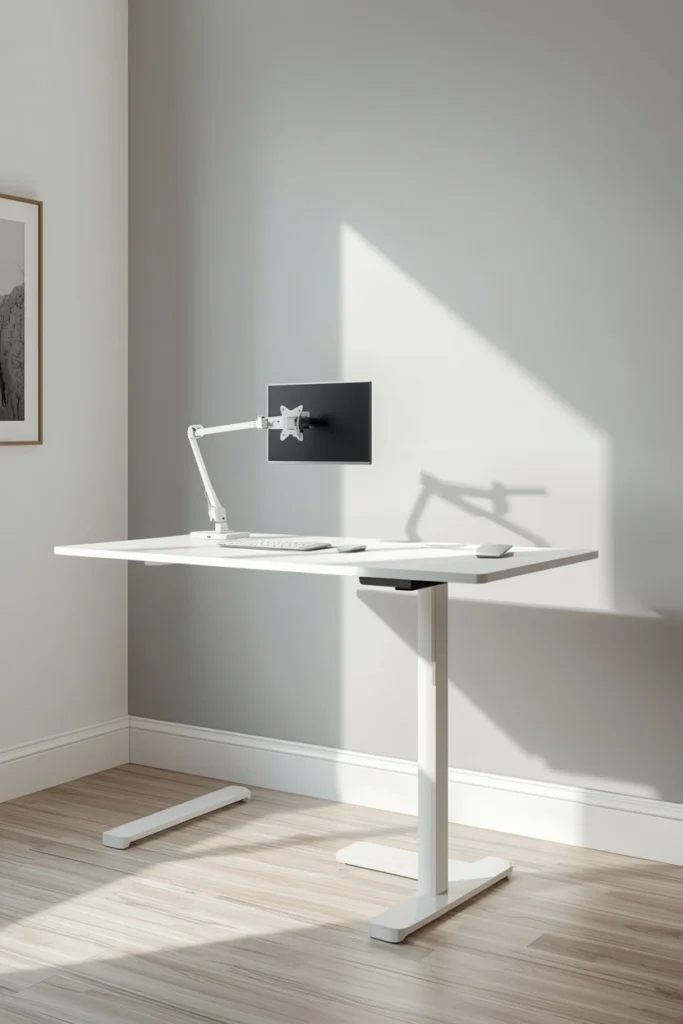
Picture a sleek white electric desk positioned against a single accent wall, completely clear except for a slim monitor arm, one small desk lamp, and a laptop. No cords in sight. The wall behind it is bare except for a single piece of framed art, and the floor beneath has just enough negative space to make the whole setup feel like it’s floating.
Design Breakdown
This look leans entirely on restraint. The electric desk’s control panel is usually tucked underneath, so the visual line stays clean from any angle. Designers love this style because the height-adjustable function becomes almost invisible until you need it.
Expert Tip
Mount your monitor on an arm instead of a stand. It frees up the entire desktop surface and makes the minimalist illusion actually believable.
Why It Works
Minimalism reduces visual noise, which research on workspace psychology consistently links to lower stress and better focus. When your eyes have fewer things to process, your brain has more room to actually think.
Best For
- Small spaces
- Renters
- Budget makeovers
Common Mistake To Avoid
People add too many “minimalist” accessories (a tray, a plant, a candle, a coaster) and suddenly it’s not minimalist anymore. Pick one hero object, max two.
Quick Wins
- Use a single cord clip system instead of a basket
- Choose a desk in matte white or warm wood, not glossy black
- Keep the wall behind the desk almost entirely empty
- Add one plant, nothing more
2. The Dual-Monitor Power Setup
What You’re Seeing
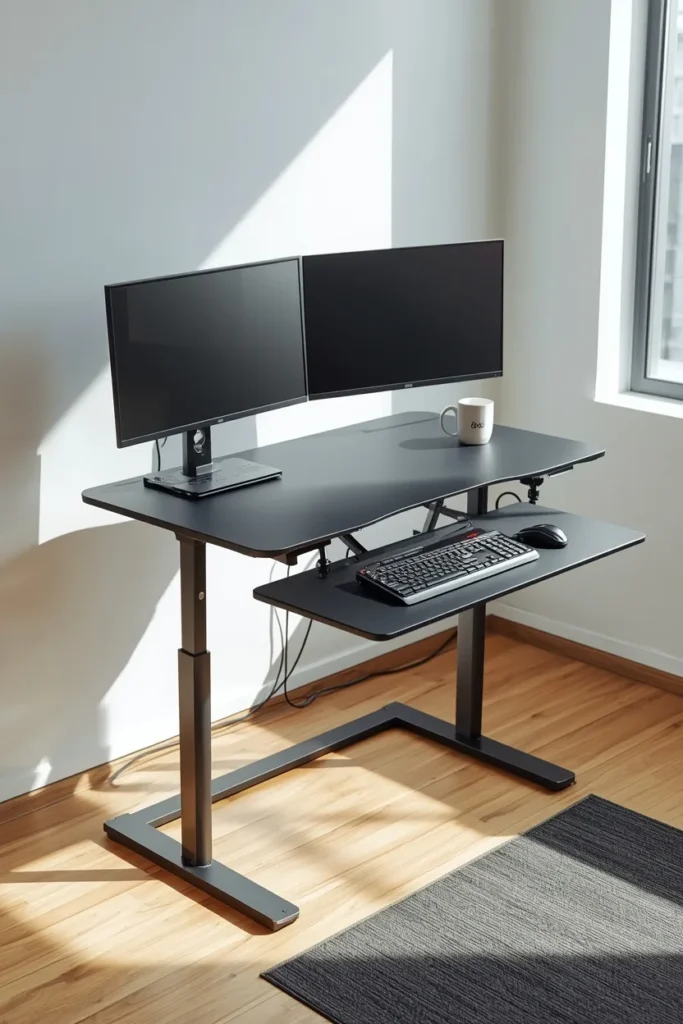
A wide electric desk holding two large monitors side by side, angled slightly inward, with a keyboard tray and a dedicated space for a coffee mug that’s clearly been thought through. The desk is raised to standing height in this shot, and there’s a anti-fatigue mat underneath.
Design Breakdown
This setup is built for people who actually work at their desk all day, not just for the photo. The electric height adjustment becomes a functional necessity here, letting you alternate between sitting and standing without disrupting your dual-screen workflow.
Expert Tip
Angle your monitors at roughly 15 degrees inward instead of placing them flat. It reduces neck strain more than most people expect.
Why It Works
Visualize the difference between hunching over one cramped laptop screen versus having two organized monitors that mirror how your brain actually splits tasks. The ergonomic gain is real, and so is the aesthetic payoff.
Best For
- Large spaces
- Families
- Luxury homes
Common Mistake To Avoid
Buying monitors that are too large for the desk depth. If your screen is closer than arm’s length, it’s too close.
Quick Wins
- Add a keyboard tray to free up desktop space
- Use an anti-fatigue mat for standing sessions
- Keep monitor height at eye level, not above or below
One thing I’ve learned after years of writing about workspaces: the desk height isn’t the most important number. The monitor height is. Most people nail the sit-stand mechanics and then completely ignore where their eyes land on the screen. If you’re looking down at your monitor for hours, that’s the thing causing your neck pain, not the chair. Before you spend another dollar on accessories, grab a stack of books or a monitor riser and get that top third of your screen level with your eyeline. It’s the cheapest fix that makes the biggest difference. </div>
Which of these ideas would work best in your home? I’d genuinely love to know, because the dual-monitor setup tends to split people right down the middle between “yes, finally” and “absolutely not, too much.”
Most people waste more space than they realize.
3. The Corner Nook Electric Desk
What You’re Seeing
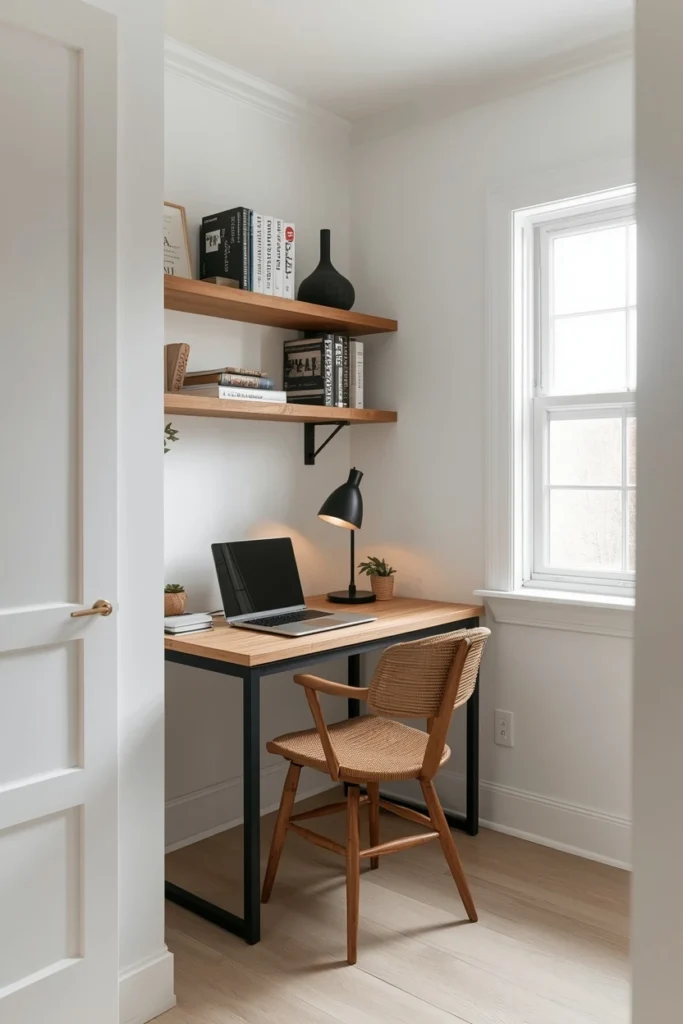
An L-shaped corner is transformed using a compact electric desk tucked into the angle of two walls, with floating shelves above holding books and a small lamp. Natural light spills in from a nearby window, and the desk’s slim profile makes the corner feel intentional instead of forgotten.
Design Breakdown
Corners are the most underused real estate in almost every home. An electric desk built for corner placement (or simply angled into one) turns dead space into a fully functional workstation without eating into your main floor plan.
Expert Tip
Measure your corner diagonally before buying. Standard desk dimensions often don’t account for how much depth a true corner setup actually needs.
Why It Works
This is where many homeowners make a mistake assuming corners are too awkward to use. In reality, corners offer built-in privacy on two sides, which naturally reduces distraction.
Best For
- Small spaces
- Renters
- Budget makeovers
Common Mistake To Avoid
Choosing a desk that’s too deep for the corner, which blocks walking paths and makes the whole room feel cramped.
Quick Wins
- Add floating shelves above instead of a bulky bookcase
- Use a desk lamp instead of relying on overhead lighting
- Keep the chair compact so it tucks fully into the nook
You May Also Like:
- Small Desk Ideas
- Home Office in Bedroom Ideas
- Cosy Home Office Ideas
- Space-Saving Furniture Ideas
- Wood Desk Ideas
4. The Warm Wood and Brass Aesthetic
What You’re Seeing
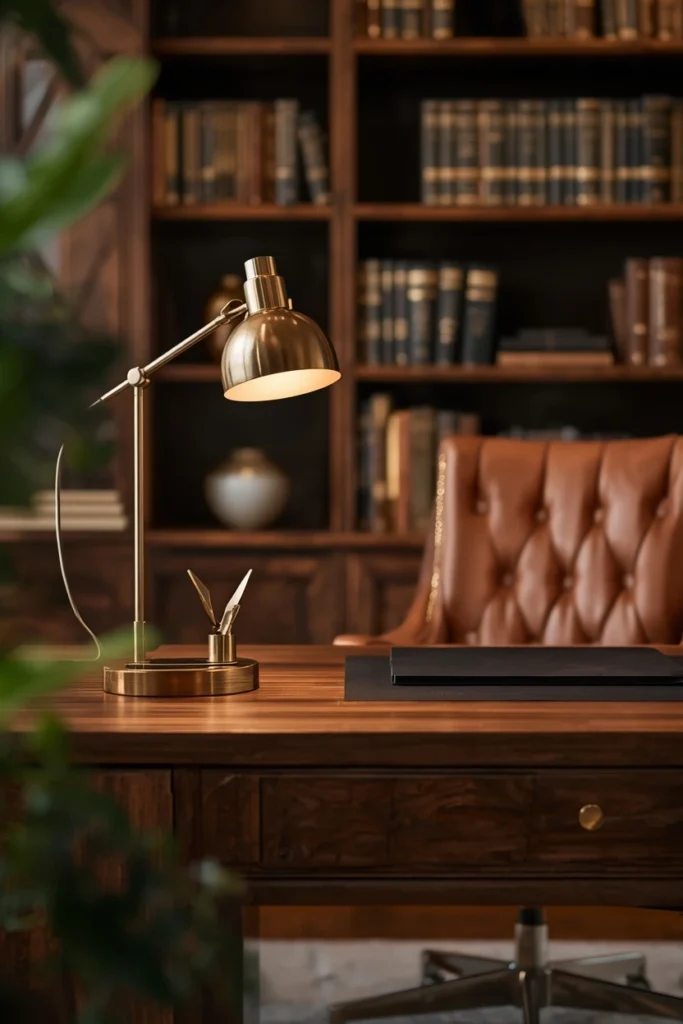
A walnut-finish electric desk paired with brass desk accessories, a leather chair, and a warm-toned task lamp. The whole vignette feels closer to a boutique hotel lobby than a typical home office, with the electric controls discreetly built into the desk’s side panel.
Design Breakdown
This idea proves electric desks don’t have to look clinical. Pairing the tech-forward function with traditionally warm materials (wood, brass, leather) creates a hybrid that feels both modern and timeless.
Expert Tip
Stick to two metal tones max in the same vignette. Brass and brushed gold work together; brass and chrome usually fight each other.
Why It Works
Imagine walking into a home office that feels more like a study in an old library than a tech startup. Warm materials trigger comfort and permanence, which counteracts the often sterile feeling of motorized furniture.
Best For
- Luxury homes
- Large spaces
Common Mistake To Avoid
Going too dark with the wood tone in a small room, which can make the whole space feel heavier and smaller than it is.
Quick Wins
- Choose a mid-tone walnut or oak finish over near-black wood
- Add one brass accessory, like a desk lamp or pen cup
- Use a leather desk chair to tie the materials together
The next idea changes everything if you’ve been stuck designing around a tiny apartment.
5. The Tiny Apartment Stealth Desk
What You’re Seeing
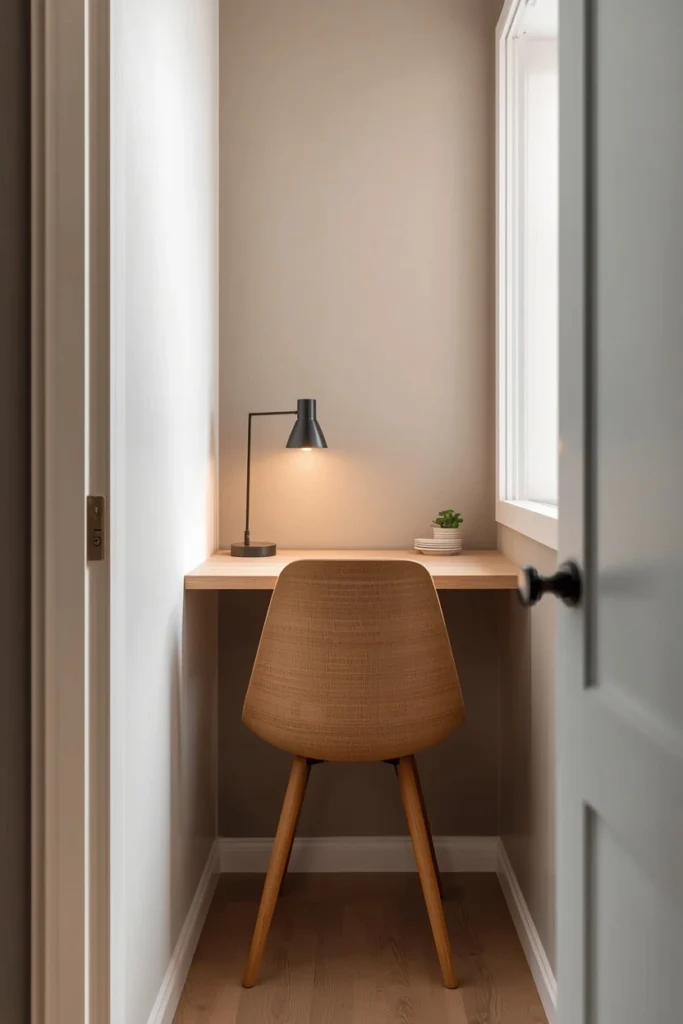
A narrow electric desk against a wall in what’s clearly a studio apartment, with a Murphy-style fold detail nearby and a desk depth of less than 20 inches. The desk blends almost seamlessly with the wall color, making it nearly disappear when not in use.
Design Breakdown
This is the setup for anyone working with genuinely limited square footage. The electric lift function matters even more here because it lets the same small footprint serve as both a sitting desk and standing desk, doubling its functional value without doubling its size.
Expert Tip
Paint your desk the same color as your wall (or close to it) to visually shrink its footprint in the room.
Why It Works
Think about how much easier daily life feels when your furniture isn’t constantly reminding you how small your space is. Color-matching and slim profiles do more for small-space psychology than people expect.
Best For
- Small spaces
- Renters
- Budget makeovers
Common Mistake To Avoid
Buying a desk based on price alone without checking the depth. Anything over 24 inches deep in a studio apartment eats up walking space fast.
Quick Wins
- Choose a desk under 20 inches deep for tight rooms
- Match the desk color to the wall behind it
- Use a wall-mounted shelf instead of a side table
Here’s where it gets interesting: most tiny-apartment dwellers assume an electric desk is off the table because of size constraints. It’s actually the opposite. A motorized desk in a small space does double duty as both your desk and your “stand up and stretch for five minutes” station, which matters more when you don’t have room for a separate reading chair or yoga mat. Don’t write off the electric feature just because your square footage is small. It’s often the small-space dwellers who benefit most.
Would you choose function or style if you had to pick just one? With a setup this tight on space, you usually can’t fully separate the two anyway.
The Real Buying Guide for Electric Desks
Let’s slow down for a second, because this is the part most articles skip.
Buying an electric desk isn’t like buying a regular desk. There are real differences in motor quality, weight capacity, and design flexibility that change how the finished space looks and functions. Here’s what actually matters.
Motor type and noise level
- Single-motor desks are cheaper but tend to tilt slightly under load.
- Dual-motor desks lift more evenly and handle heavier monitor setups.
- If you’re working near a sleeping baby, a shared wall, or on video calls all day, prioritize a dual-motor desk rated under 50 decibels.
Weight capacity
- Basic desks: typically handle 150-220 lbs, fine for a laptop and single monitor.
- Mid-range desks: 220-275 lbs, enough for dual monitors and a printer.
- Heavy-duty desks: 300+ lbs, needed if you’re adding a monitor arm, multiple machines, or a standing treadmill base.
Budget breakdown (approximate US pricing)
- Entry-level electric desks: $180 to $300
- Mid-range with memory height presets: $350 to $550
- Premium designer electric desks (real wood veneer, app controls, whisper motors): $600 to $1,200+
Frame material
- Steel frames are the most stable for heavier setups but can feel visually heavy in small rooms.
- Aluminum frames are lighter on the eyes and the floor plan but usually cost more.
Common mistakes people make when buying
- Buying based on looks alone and ignoring the weight capacity, which leads to wobbling under dual monitors.
- Skipping the memory preset feature to save money, then regretting it daily when re-adjusting height by hand.
- Choosing a desktop surface that’s too small for the frame’s lift capacity, wasting the investment.
- Not measuring ceiling height clearance, which matters more than people expect when the desk is raised fully.
Decision-making advice
If you work from home full-time, spend more on the motor and memory presets. You’ll use them daily, and cheap motors fail faster under repeated use. If this is a secondary or guest workspace, an entry-level model is genuinely fine.
This single section alone could save you from an expensive returns process, so bookmark it before you buy anything.
What’s your biggest challenge right now: budget, space, or just picking a style you won’t get tired of in six months?
6. The All-White Scandinavian Setup
The next idea is one designers secretly love.
What You’re Seeing
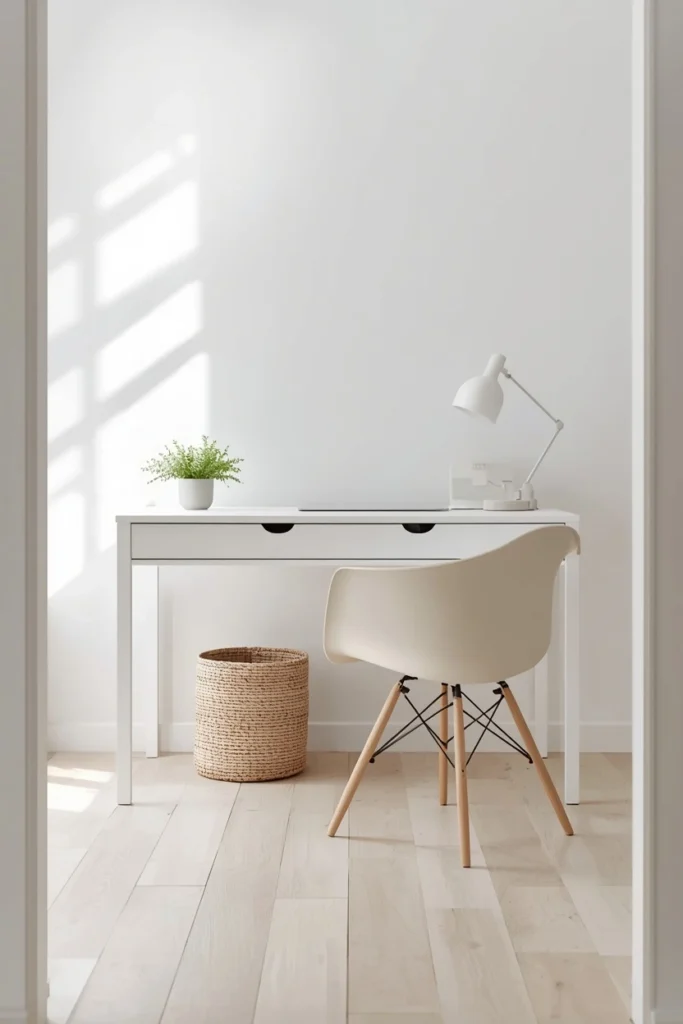
An all-white electric desk sits in a bright room with white walls, a light oak floor, and a single woven storage basket underneath. The chair is a simple molded design in cream, and the only color in the frame comes from a small green plant.
Design Breakdown
Scandinavian design philosophy is built on the idea that function and beauty aren’t separate goals. The electric desk fits naturally because its purpose (better posture, better health) aligns with the Scandinavian focus on wellbeing through design.
Expert Tip
Use textured materials like woven baskets or linen to keep an all-white room from feeling cold or clinical.
Why It Works
Light, neutral palettes reflect more natural light around a room, which makes spaces feel larger and calmer. This matters even more in home offices where stress levels are already elevated from work itself.
Best For
- Small spaces
- Renters
- Budget makeovers
Common Mistake To Avoid
Using all-white without any texture, which often ends up looking unfinished rather than intentional.
Quick Wins
- Add one woven or textured element to break up the white
- Choose a light wood floor or rug to warm the palette
- Keep the desk surface almost entirely clear
7. The Bold Statement Wall Behind the Desk
What You’re Seeing
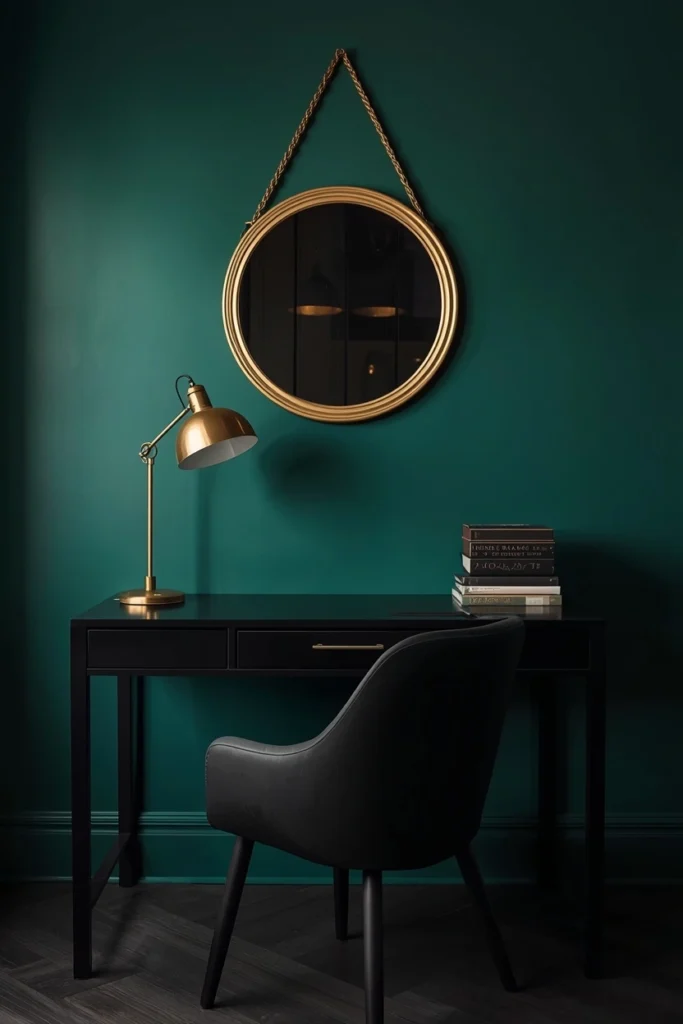
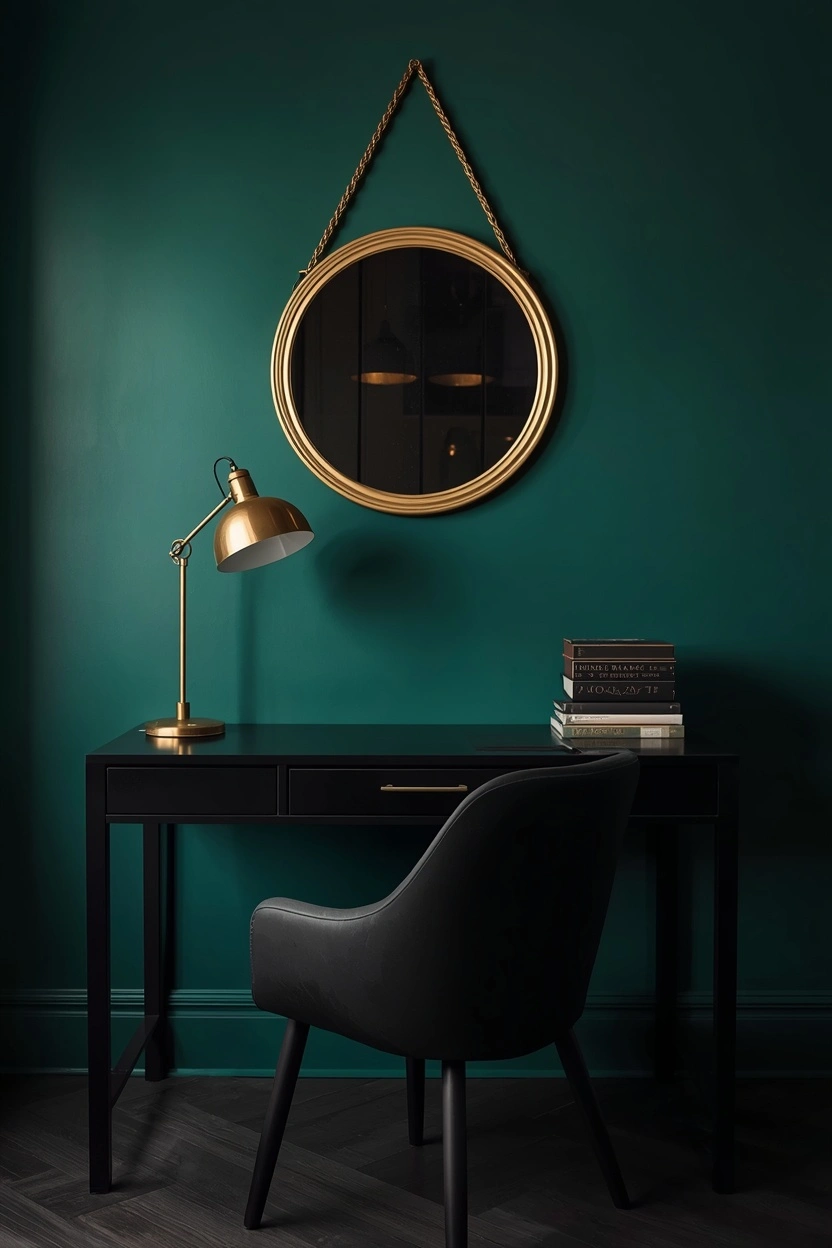
A black electric desk is positioned in front of a deep emerald green accent wall, creating dramatic contrast. A single gold-framed mirror hangs above the desk, and a brass task lamp adds another point of warmth against the cool wall color.
Design Breakdown
Most electric desk setups play it safe with neutral backgrounds. This idea flips that completely, using the desk as an anchor point for a genuinely bold color statement elsewhere in the room.
Expert Tip
If you’re nervous about a bold wall color, test it as a single accent wall behind the desk only, not the whole room.
Why It Works
Picture yourself enjoying a workspace that actually has personality instead of blending into beige nothingness. Bold colors in moderation create focal points that make a room memorable instead of forgettable.
Best For
- Large spaces
- Luxury homes
Common Mistake To Avoid
Pairing a bold wall with a busy desk setup. Bold backgrounds need simple, clean foregrounds to actually work.
Quick Wins
- Choose one bold wall, not the entire room
- Use a black or dark desk to anchor the contrast
- Add just one or two warm metal accents
You May Also Like:
- Home Office Ideas
- Modern Dark Living Room Ideas
- Empty Corner Decoration Ideas
- Gaming Desk Design Ideas
- Sit Stand Desk Ideas
This is where many homeowners make a mistake, assuming bold means busy. It doesn’t. Bold means one confident choice, not five competing ones.
8. The Family Command Station
What You’re Seeing
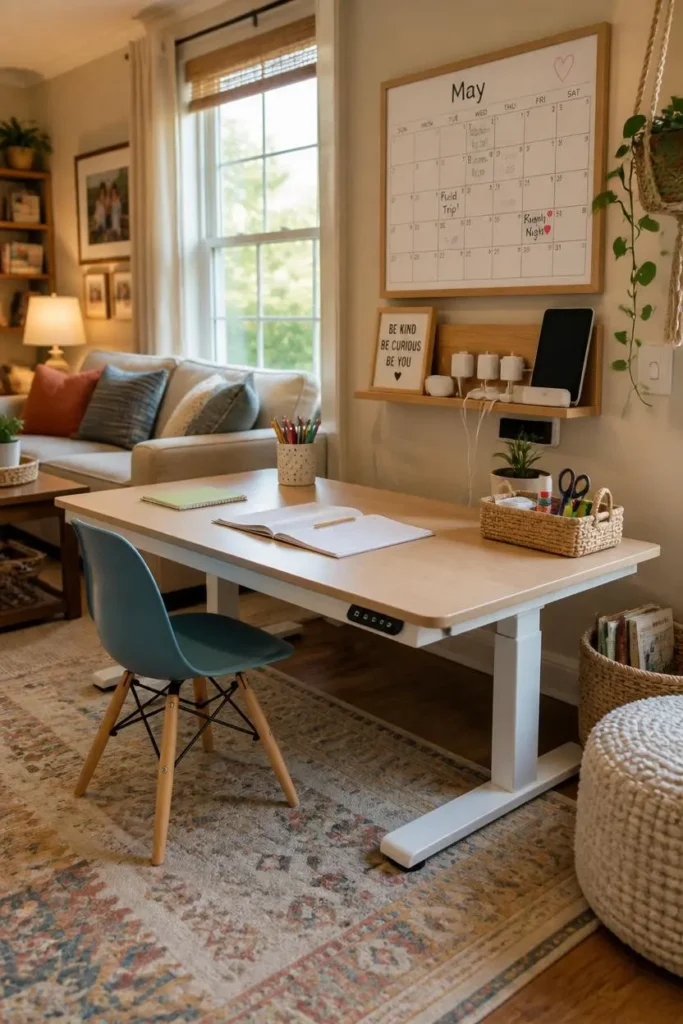
A wider electric desk in a shared family space, lowered to a height accessible for a child doing homework, with the option to raise it for an adult later in the day. A wall calendar, a charging station, and a small basket for school supplies sit nearby.
Design Breakdown
This setup solves a problem most families don’t think about until they’re living it: one desk, multiple users, completely different height needs. The electric adjustment becomes the actual solution, not just a comfort feature.
Expert Tip
Save two height presets on the desk’s memory function, one for each regular user, so switching takes seconds instead of manual adjustment.
Why It Works
Shared furniture that actually adapts to different bodies removes daily friction most families just accept as normal. Less friction means fewer small arguments about whose turn it is to use the “good” desk.
Best For
- Families
- Budget makeovers
Common Mistake To Avoid
Buying a single fixed-height desk for a multi-user household, which inevitably ends with someone uncomfortable every single day.
Quick Wins
- Use the memory preset feature for multiple users
- Add a shared charging station to reduce cord clutter
- Keep school supplies in a closed basket, not loose on the desk
Most people don’t know this: the memory height preset feature is the single most underused function on electric desks, and it’s usually included even on mid-range models. Families especially skip setting it up because it feels like an extra step on move-in day. But once it’s programmed, switching between a homework height and a work-from-home height takes one button press. Spend the ten minutes setting this up immediately after assembly. It pays off every single day after that.
Let me know which one is your favorite so far, because I have a feeling the family setup resonates with more readers than people expect.
This simple change can completely transform the room.
9. The Plant-Filled Biophilic Workspace
What You’re Seeing
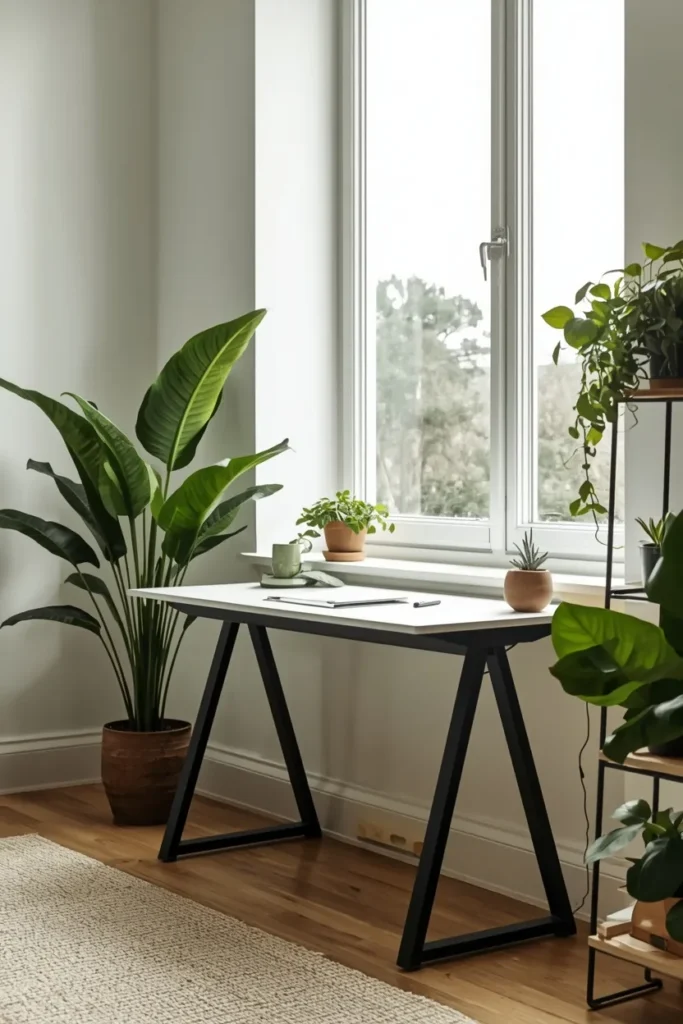
An electric desk surrounded by greenery: a tall plant in the corner, a trailing pothos on a nearby shelf, and a small succulent on the desk itself. The desk faces a window, and the overall feel is closer to a garden nook than a traditional office.
Design Breakdown
Biophilic design (incorporating natural elements into built environments) has been steadily gaining traction, and electric desks fit this trend well because the standing function encourages more natural movement throughout the day, echoing the “outdoor, active” feeling plants bring indoors.
Expert Tip
Position your desk perpendicular to a window rather than directly facing it, to avoid screen glare while still getting natural light.
Why It Works
Visualize the difference between staring at a blank wall all day versus glancing up at greenery and natural light. Studies on biophilic design consistently link plant exposure to reduced stress and improved focus during long work sessions.
Best For
- Large spaces
- Renters
- Budget makeovers
Common Mistake To Avoid
Overcrowding the desk itself with too many small plants, which clutters your actual workspace instead of complementing it.
Quick Wins
- Keep plants near the desk, not directly on the working surface
- Position the desk perpendicular to windows to avoid glare
- Choose low-maintenance plants like pothos or snake plants for busy schedules
The following idea surprised me the most, mostly because it’s the one people request the least and end up loving the most once they try it.
10. The Hidden Tech Power Wall
What You’re Seeing
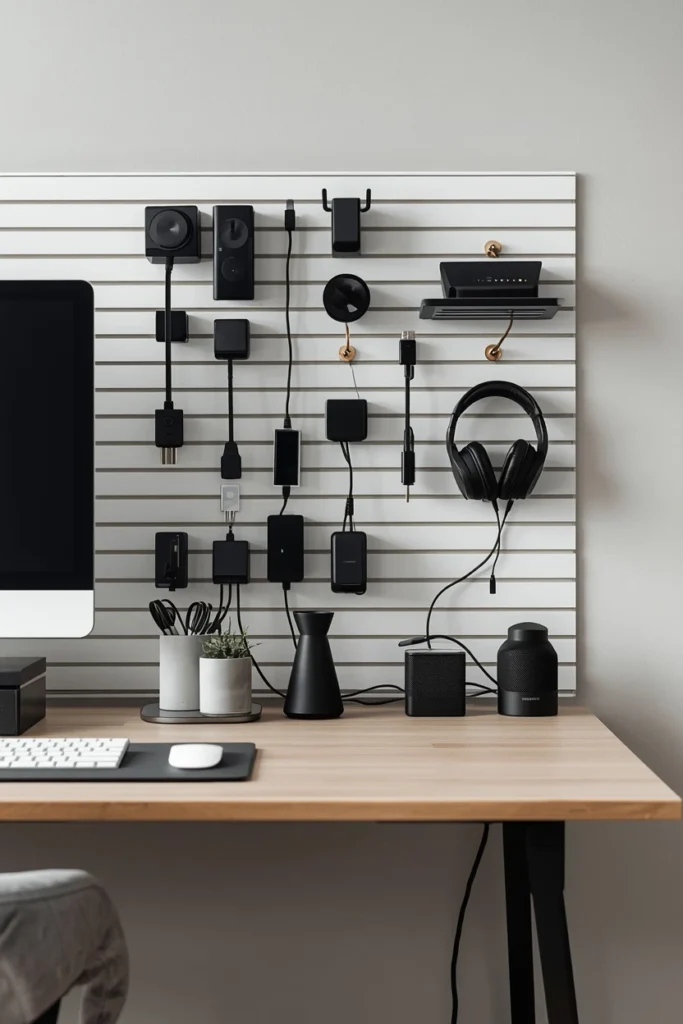
An electric desk against a wall with a discreet pegboard or slatwall system behind it, holding cable organizers, a small shelf for a router, and hooks for headphones. Everything tech-related is mounted and visible but completely tidy, almost like a tool wall for a workspace instead of a garage.
Design Breakdown
This is the answer to the question nobody likes asking out loud: where do all the cords go? Electric desks already come with more wiring than standard desks because of the motor, so this design idea gets ahead of the problem instead of fighting it daily.
Expert Tip
Use a slatwall system instead of a basic pegboard. It holds more weight and looks more intentional as a design feature, not just storage.
Why It Works
Don’t skip the next tip because this one matters: visible clutter raises cortisol levels according to environmental psychology research, even when you’re not consciously focused on it. A hidden, organized system removes that low-level stress entirely.
Best For
- Small spaces
- Large spaces
- Budget makeovers
- Renters
Common Mistake To Avoid
Running all cords loose along the floor, which is both a tripping hazard and the fastest way to make an otherwise beautiful setup look chaotic.
Quick Wins
- Install a slatwall or pegboard system behind the desk
- Use cord clips along the desk legs, not just the floor
- Keep a small shelf for routers or chargers off the main desktop
Related Home Office and Desk Ideas
If you’ve made it this far, you clearly care about getting your workspace right, not just functional. Here are a few more guides worth exploring next.
- Home Office Ideas
- Small Desk Ideas
- Sit Stand Desk Ideas
- Wood Desk Ideas
- Gaming Desk Design Ideas
- Cosy Home Office Ideas
- Home Office in Bedroom Ideas
- Cozy Cubicle Inspiration Ideas
Final Thoughts on Choosing the Right Electric Desk Design
So here’s the recap, minus the fluff.
The best electric desk design ideas all share one thing in common: they treat the desk as part of the room’s overall design, not an afterthought bolted into a corner. Whether that means going minimalist, embracing bold color, solving a family’s multi-user problem, or finally taming your cord chaos, the function and the aesthetic are supposed to work together.
Pick one idea from this list. Just one. Implement it this week, even if it’s something small like adding a memory height preset or finally mounting that monitor arm.
Small, immediate changes tend to stick better than waiting for the “perfect” full room overhaul that never actually happens.
Which design would you try first? I’d love to know if it’s the warm wood and brass look, the family command station, or something else entirely.
If you’re already thinking about the rest of your workspace, our home office ideas guide is the natural next stop; it covers everything beyond just the desk itself.
And if you’re curious where this trend goes next, keep an eye out for our upcoming piece on smart home office tech, because electric desks are just the beginning of how home workspaces are quietly getting smarter.