Full Sun Perennials
This article was created in line with Trends Oraa’s research and content standards.
Most people don’t realize this.
Their sunniest garden bed is also their most neglected one.
That’s why it looks patchy by July and completely fried by August.
If you’ve got a sun-baked corner of the yard that either burns through annuals every single season or just sits there looking sad, you’re not alone. The good news? The right sun perennials plants solve this problem once, not every spring.
You might also love our guide on 10 Perfect Foolproof Perennials That Thrive in the Shade if you’ve got a mixed-light yard, but today we’re talking full sun — the spot most gardeners struggle with the most.
I’ve spent years testing which perennials actually hold up to six-plus hours of direct sun without turning into a crispy, wilted mess by mid-afternoon. Some plants just fake it. These ten don’t.
Here’s what makes this list different: every plant below is genuinely low maintenance. No babying, no daily watering schedule, no diva behavior. Just plant, water them in, and let them do their thing for years.
Keep scrolling — the third idea on this list is the one most people skip, and it’s honestly the one I’d plant first.
Why Full Sun Perennials Are a Game-Changer for Your Garden
Before we get into the list, let’s talk about why this matters so much.
Annuals are expensive. You buy them every year, plant them every year, and watch them die every single fall.
Sun perennials plants flip that entire equation. Plant once, and they come back bigger and better every season.
But here’s the important part: not every “full sun” plant actually means it. A lot of nursery tags lie. Some plants listed as sun-tolerant still sulk, stretch, or scorch once real July heat hits.
The plants on this list don’t do that. They were bred — or evolved — to thrive in exactly the conditions most of us are trying to landscape around.
Picture yourself walking outside in August to a garden bed that’s still blooming, still full, and still gorgeous, without you touching a hose every day. That’s what we’re building toward.
1. Black-Eyed Susan (Rudbeckia hirta)
What You’re Seeing
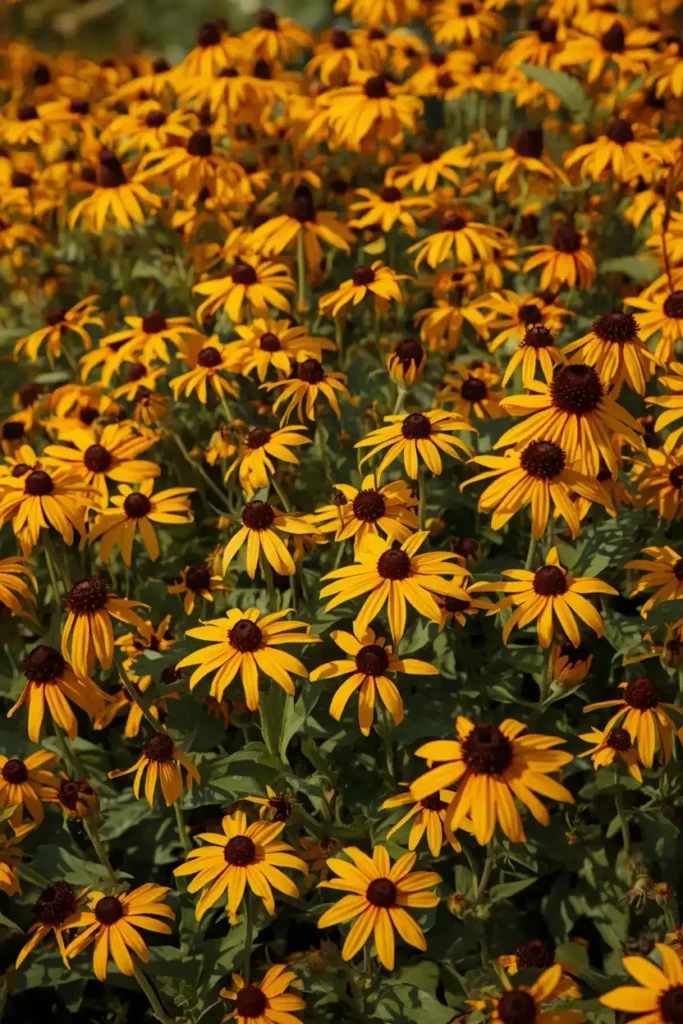
Imagine walking into a garden bed packed with cheerful golden-yellow blooms, each with a deep chocolate-brown center, swaying gently above coarse, slightly fuzzy green foliage. The flowers sit on sturdy stems that hold up beautifully even after a summer storm, creating a wash of warm color that seems to glow when the afternoon sun hits it directly.
Design Breakdown
Black-Eyed Susan is the classic cottage-garden workhorse, and for good reason. It self-seeds generously, meaning your patch tends to expand on its own year after year without you lifting a finger. It pairs beautifully with purple coneflower and ornamental grasses for that effortless, prairie-meadow look that’s trending hard on Pinterest right now.
Expert Tip
Deadhead the spent blooms every couple of weeks in midsummer, and you’ll get a noticeably longer bloom window that can stretch well into October.
Why It Works
The bright yellow tone is scientifically proven to read as “cheerful” to the human eye, which is part of why this plant photographs so well and performs so well in curb-appeal-focused front yards.
Best For
- Budget makeovers
- Large spaces
- Renters
- Families
Common Mistake To Avoid
Planting it in rich, heavily fertilized soil. Black-Eyed Susan actually prefers average-to-lean soil — too much fertilizer gives you floppy stems and fewer blooms.
Quick Wins
- Blooms from June through the first frost
- Attracts pollinators like bees and butterflies
- Tolerates drought once established
- Divides easily every 3-4 years for free plants
2. Purple Coneflower (Echinacea purpurea)
What You’re Seeing
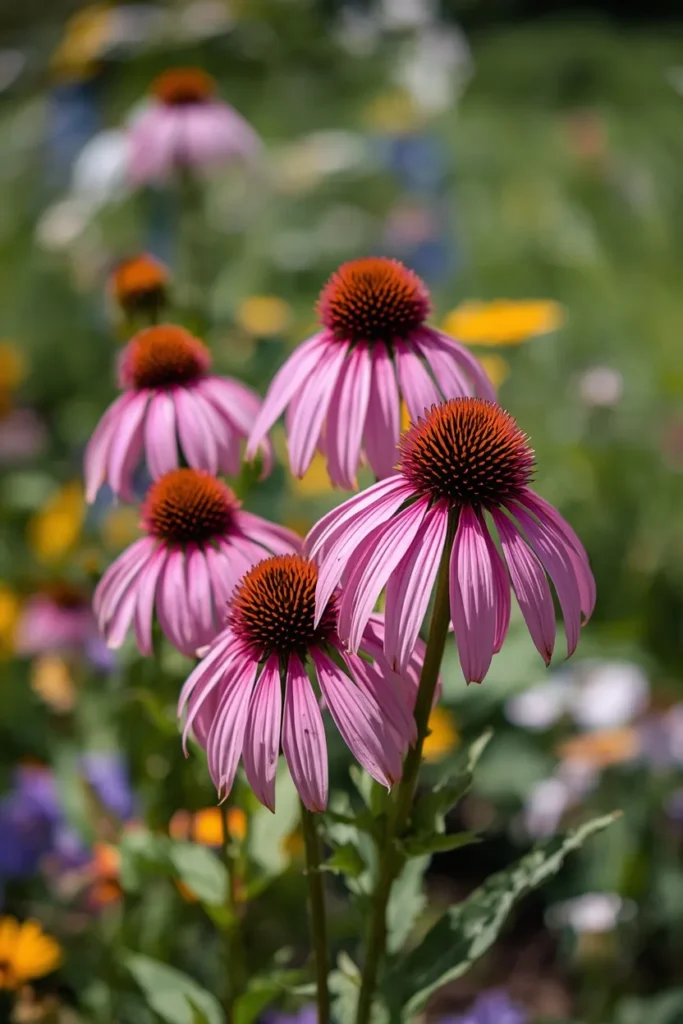
Picture a bold cluster of daisy-like blooms in rich magenta-purple, each with a spiky, copper-toned cone rising from the center like a tiny crown. The sturdy stems hold their shape even in windy conditions, and the blooms sit at just the right height to create movement without overwhelming a mixed border.
Design Breakdown
Coneflower is a native prairie plant that’s become a modern landscaping favorite for one simple reason: it just works. It’s remarkably tolerant of poor soil, humidity, and even short dry spells, which makes it a near-perfect anchor plant for a low-water full sun garden.
Expert Tip
Leave the spent seed heads standing through winter instead of cutting them back in fall. Goldfinches love them, and the structural silhouette adds real winter interest to an otherwise bare bed.
Why It Works
Coneflower’s long bloom time and pollinator appeal make it a functional and aesthetic win — it’s doing landscape work (feeding bees, structuring the bed) while also looking effortlessly elegant.
Best For
- Small spaces
- Budget makeovers
- Families
- Renters
Common Mistake To Avoid
Overwatering. Coneflower is drought-adapted, and soggy soil is one of the fastest ways to rot the roots and lose the whole plant.
Quick Wins
- Extremely low water needs once established
- Comes in pink, white, orange, and purple varieties
- Great cut flower for arrangements
- Naturally deer and rabbit resistant
Most people don’t know this: the biggest reason full-sun perennial beds fail isn’t sun exposure — it’s drainage. Even the toughest sun-lovers on this list will struggle in compacted clay that holds water after a storm. One thing I’ve learned after years of trial and error is that amending your soil with coarse sand or compost before you plant saves you from replacing plants two summers later. If your yard tends to puddle, raised beds solve this instantly, and our DIY Elevated Garden Bed Plans walk through exactly how to build one on a weekend.
Most people waste more space than they realize when they plant sun perennials in scattered, single spots instead of drifts. Here’s where it gets interesting.
3. Russian Sage (Perovskia atriplicifolia)
What You’re Seeing
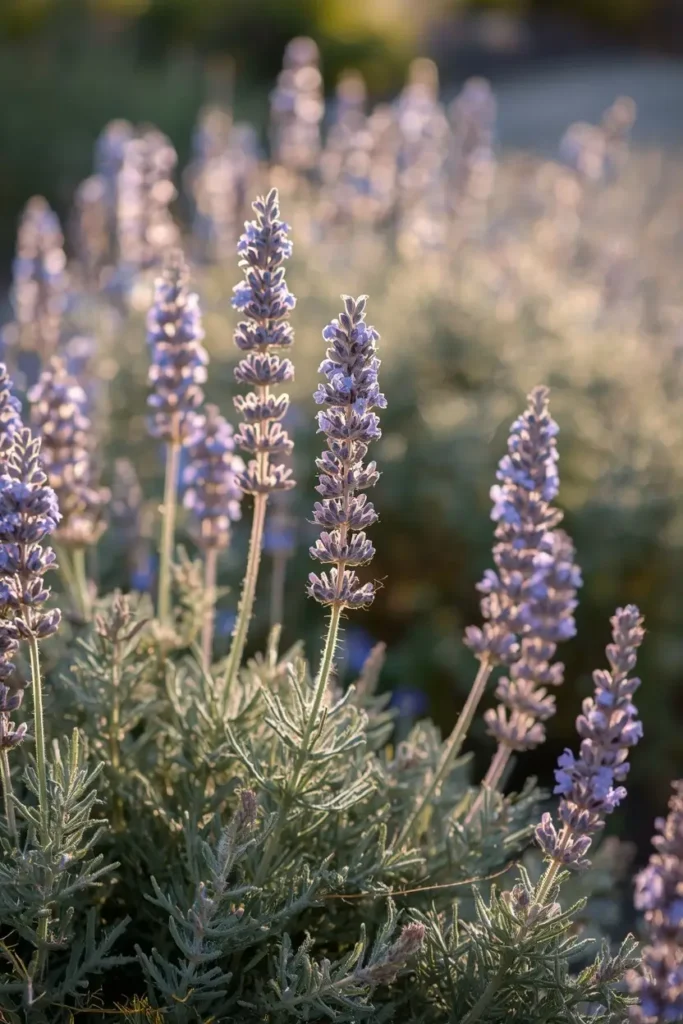
Visualize a haze of soft lavender-blue flower spikes rising above silvery, aromatic foliage, creating a cloud-like texture that seems to shimmer in bright sunlight. The airy, see-through quality of this plant makes it look almost like a soft mist woven through the rest of your border.
Design Breakdown
Russian Sage is one of those plants that looks delicate but is anything but. It’s practically indestructible once established, tolerating heat, drought, poor soil, and even salty coastal air without complaint. The silvery foliage also adds contrast to a bed full of typical green-leafed plants.
Expert Tip
Cut it back hard — to about 6 inches — in early spring. This encourages bushier growth and way more blooms than if you leave last year’s woody stems in place.
Why It Works
The airy texture and cool blue-purple tone create visual “breathing room” in a busy border, which is why professional designers use it constantly to soften harder-edged plants like boxwood or yucca.
Best For
- Large spaces
- Luxury homes
- Budget makeovers
Common Mistake To Avoid
Planting it somewhere with rich, moist soil or afternoon shade. Russian Sage genuinely wants the harshest, sunniest, driest spot in your yard — treat it too well, and it gets leggy and flops.
Quick Wins
- Deer and rabbit resistant
- Fragrant foliage deters some pests
- Thrives in poor, rocky soil
- Blooms for 10+ weeks straight
You might also love our guide on Small Front Yard Landscaping Ideas if you’re planning where these sun-loving beds should actually go.
You May Also Like:
- Small Garden Design Ideas
- 15 Cheap Front Yard Flower Bed Ideas
- Vintage Garden Decor Ideas
- Cut Flower Garden Layout Ideas
- Garden Ideas
4. Daylily (Hemerocallis)
What You’re Seeing
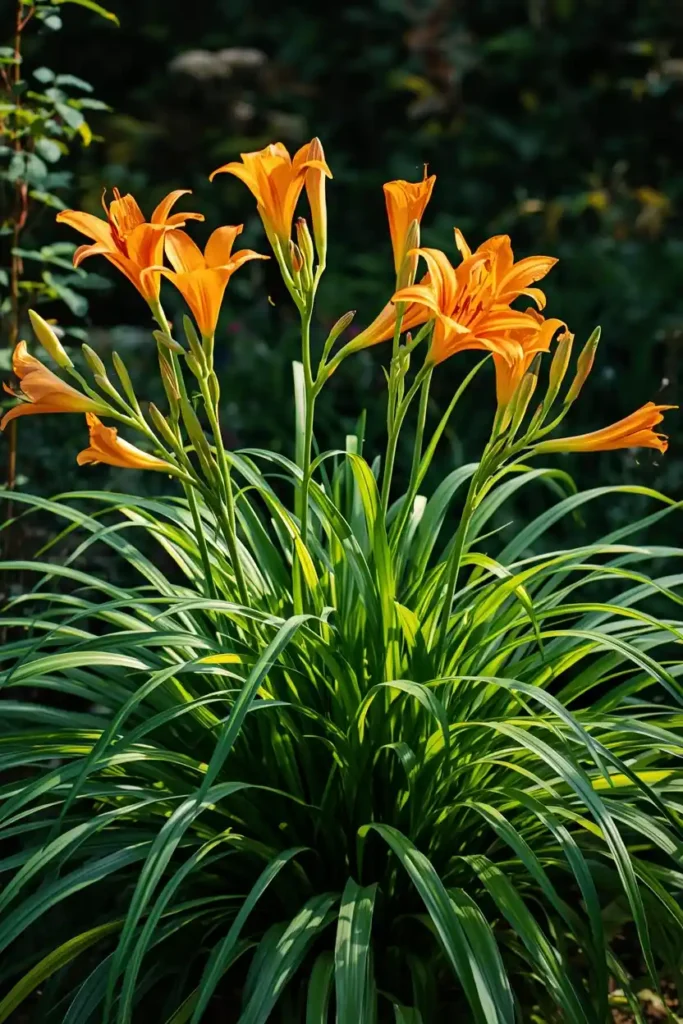
Think about how much easier your border looks with clumps of arching, grass-like foliage topped by trumpet-shaped blooms in shades of orange, yellow, red, and pink, each flower opening fresh every single morning.
Design Breakdown
Daylilies are the definition of “plant it and forget it.” Each individual bloom only lasts a day (hence the name), but a mature clump produces so many buds that you get weeks of continuous color. They multiply on their own, which means free plants for the rest of your yard within a couple of seasons.
Expert Tip
Choose “reblooming” varieties like Stella de Oro if you want color from late spring all the way through fall instead of just a few weeks in early summer.
Why It Works
Daylilies fill space fast, which suppresses weeds naturally and reduces the maintenance work of mulching and weeding a bare bed.
Best For
- Budget makeovers
- Large spaces
- Families
- Renters
Common Mistake To Avoid
Planting them too deep. The crown should sit right at soil level — bury it too far down, and blooming slows dramatically.
Quick Wins
- Virtually pest and disease free
- Divides easily for more plants
- Tolerates poor soil and drought
- Comes in hundreds of color varieties
Which of these ideas would work best in your home? Daylilies tend to be the answer for anyone dealing with a big, blank slope or border that needs filling fast.
5. Sedum ‘Autumn Joy’ (Hylotelephium)
What You’re Seeing
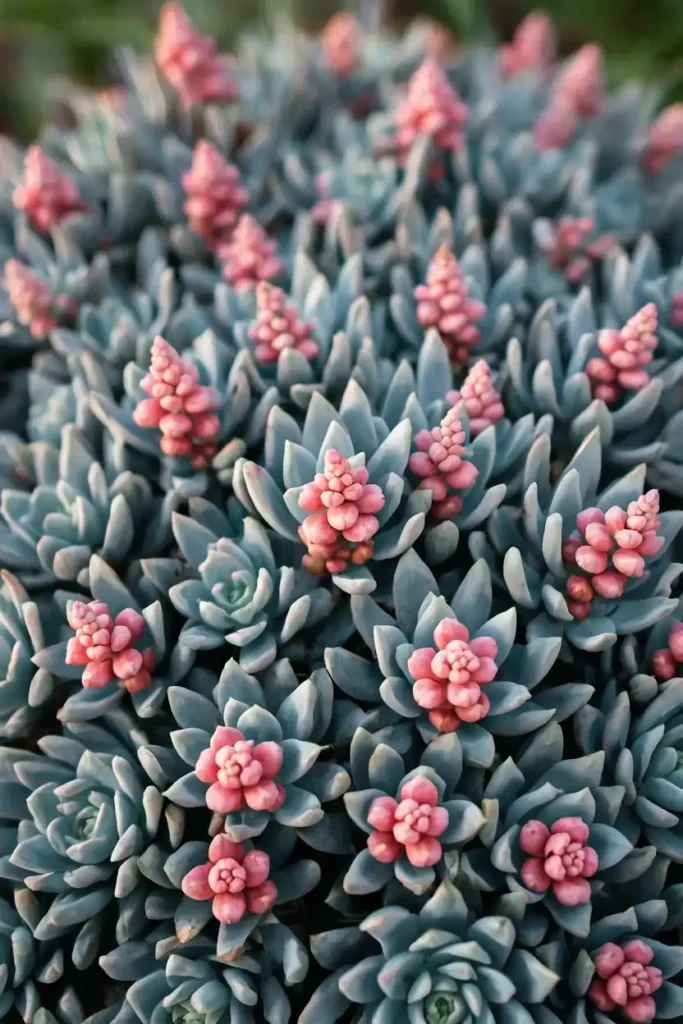
Picture thick, succulent, blue-green foliage forming a tidy mound that slowly transforms into broad, flat clusters of dusty pink flowers by late summer, deepening to a rich rust-red as autumn arrives.
Design Breakdown
Sedum is essentially a succulent that happens to be fully cold-hardy, which means it stores its own water in those fleshy leaves and barely needs you at all. It’s one of the few perennials that actually gets more interesting as the season winds down, giving your garden a second wave of color right when everything else is fading.
Expert Tip
Don’t cut it back in fall. The dried seed heads hold up beautifully through winter, especially dusted with frost, and add texture when most of the garden is bare.
Why It Works
Its succulent structure means it’s essentially drought-proof, and its late bloom time extends your garden’s color season by a full month or more.
Best For
- Small spaces
- Budget makeovers
- Renters
Common Mistake To Avoid
Overwatering, especially in containers. Soggy soil is basically the only thing that reliably kills sedum.
Quick Wins
- Nearly indestructible once planted
- Attracts late-season pollinators like butterflies
- Provides winter interest left standing
- Easily propagated from cuttings
Here’s where it gets interesting: most homeowners plant their sun perennials in one flat, single-height row along a fence or walkway. Designers almost never do this. Layering height — tall Russian Sage or daylilies at the back, mid-height coneflower in the middle, and low sedum spilling toward the front — creates depth that makes even a small bed photograph like a professional landscape. It costs nothing extra. It’s purely about arrangement.
6. Coreopsis (Tickseed)
What You’re Seeing
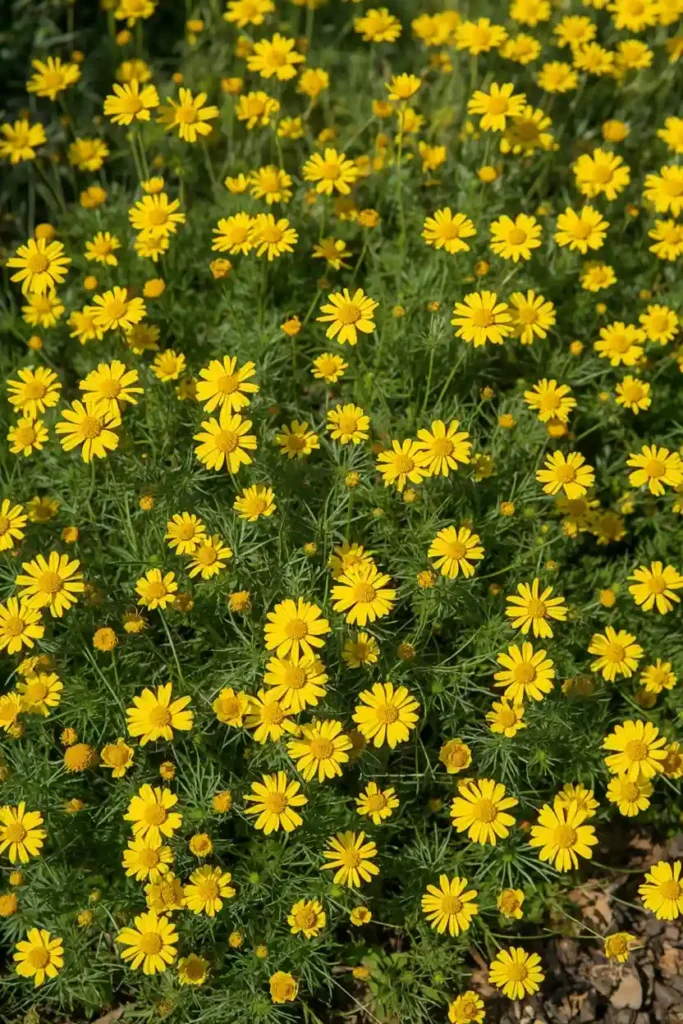
Imagine a low, mounding plant absolutely covered in small, bright golden-yellow daisy-like blooms, so dense that the fine, thread-like foliage barely shows through underneath.
Design Breakdown
Coreopsis is one of the most prolific bloomers on this entire list. A single established clump can produce hundreds of flowers over the course of a summer, all while asking for basically nothing in return. It’s a fantastic front-of-border filler because of its compact, tidy habit.
Expert Tip
Shear the whole plant back by about a third mid-summer once the first flush of blooms fades. You’ll get a fresh flush of flowers within a couple of weeks.
Why It Works
The sheer volume of small blooms creates a “meadow” effect that reads as lush and abundant, even in a tiny space — it’s one of the most efficient plants for visual impact per square foot.
Best For
- Small spaces
- Budget makeovers
- Renters
- Families
Common Mistake To Avoid
Planting it in shade “just to see.” Even partial shade causes coreopsis to get leggy, floppy, and stop blooming almost entirely.
Quick Wins
- Blooms non-stop from early summer to fall
- Extremely drought tolerant
- Great for pollinator gardens
- Reseeds gently without becoming invasive
The next idea is one designers secretly love.
7. Salvia (Meadow Sage)
What You’re Seeing
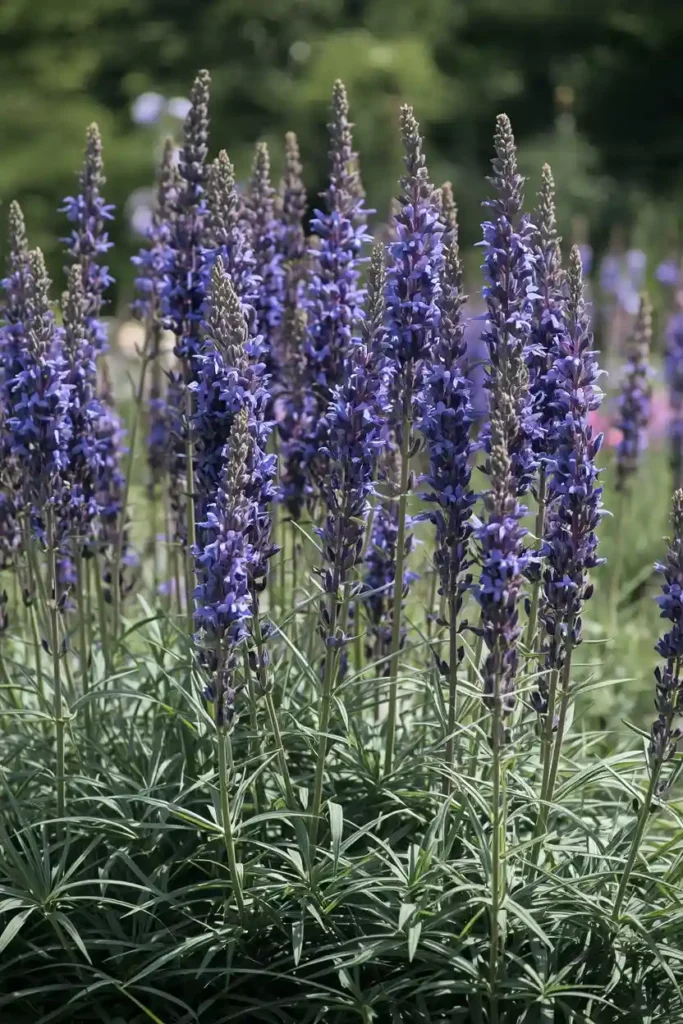
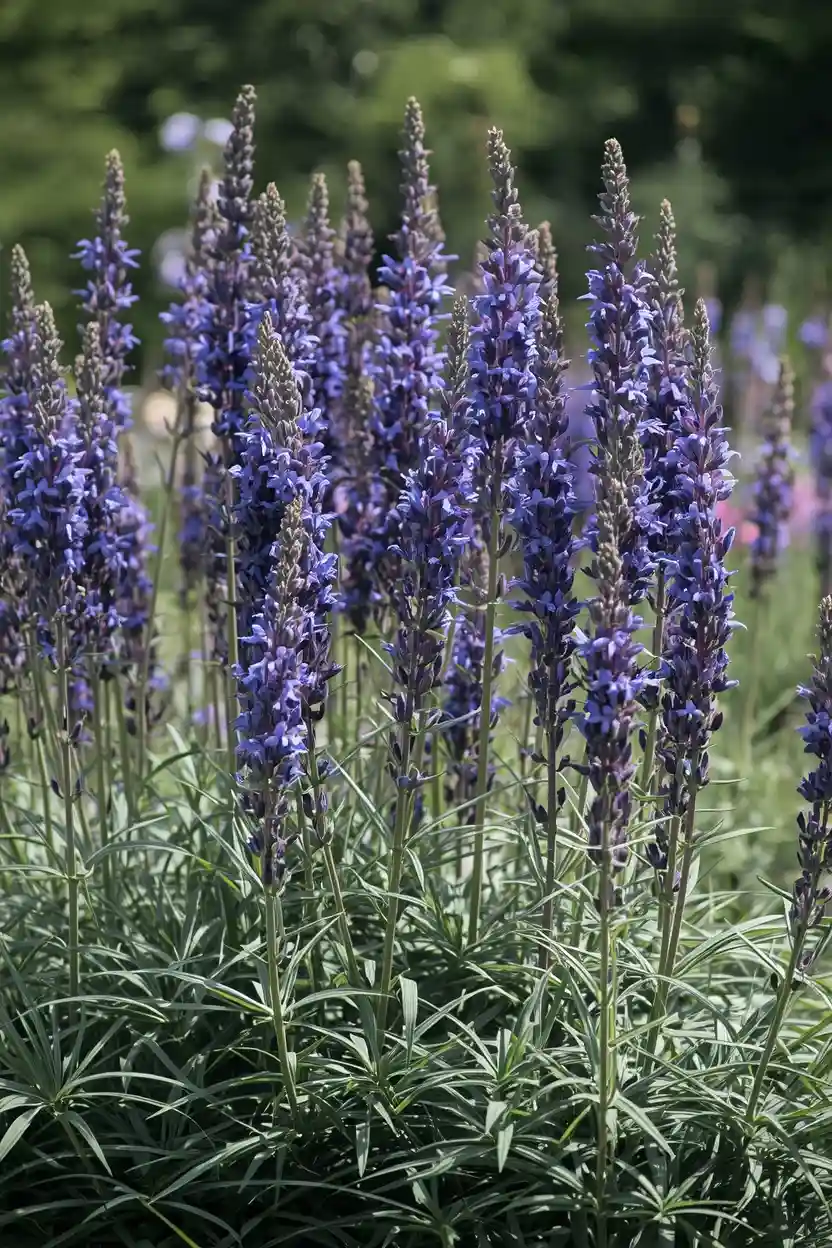
Visualize dense, upright spikes of deep purple-blue flowers rising above wrinkled, gray-green foliage, the whole plant forming a tidy, structured clump that holds its shape all season long.
Design Breakdown
Salvia brings something a lot of sun gardens are missing: strong vertical lines. Where daisy-shaped blooms tend to dominate a full-sun palette, salvia’s spiky form adds contrast and structure, which is exactly what separates an amateur garden bed from one that looks intentionally designed.
Expert Tip
After the first big bloom flush fades in early summer, cut the spent flower spikes back to the base foliage. Most varieties will rebloom within three to four weeks.
Why It Works
The cool purple-blue tone is one of the most universally pleasing colors in garden design, and it pairs with virtually everything else on this list without clashing.
Best For
- Small spaces
- Large spaces
- Budget makeovers
Common Mistake To Avoid
Skipping the mid-summer deadheading. Without it, salvia tends to look tired and stop blooming by August instead of carrying you through fall.
Quick Wins
- Attracts hummingbirds and bees
- Deer and rabbit resistant
- Fast to establish
- Adds vertical structure to a bed
You May Also Like:
- Tiny Garden Ideas
- West-Facing Garden Design Ideas
- Small Balcony Garden Ideas
- Front Porch Flower Pot Ideas
- Garden Shed Landscaping Ideas
Mid-Article Deep Dive: A Budget Breakdown for Building a Full Sun Perennial Bed
This is where many homeowners make a mistake — they assume perennials are expensive to start, so they either overspend on mature plants or give up before they even begin. Let’s break down what this actually costs, because the numbers usually surprise people.
Starting small (nursery 4-inch pots)
- Most 4-inch perennial starts run affordably per plant at big-box garden centers
- A 10×10 foot bed typically needs 15-25 plants depending on spacing
- This route costs less upfront but takes 2-3 seasons to fill in fully
Starting bigger (1-gallon containers)
- Costs more per plant than starts, roughly double
- Fills in visually within a single season
- Worth it for high-visibility areas like front entrances
Free plant strategies
- Daylilies, coneflower, and sedum all divide easily — one plant becomes three or four within two years
- Ask neighbors or local plant swap groups; perennial gardeners almost always have extras they’re happy to share
- Fall is the best time to divide and transplant, giving roots a full season to settle before summer heat
Common cost mistakes to avoid
- Buying annuals every single year “to fill gaps” instead of investing once in perennials — this adds up to far more over a 5-year period
- Skipping soil prep to save money upfront, which often means replacing plants that fail within the first year
- Overplanting densely because the bed “looks empty” at first — most perennials need 12-18 inches of room to reach full size
Realistic timeline
- Year one: plants establish roots, minimal top growth, light blooming
- Year two: noticeably fuller, strong blooming season
- Year three onward: mature, self-sustaining bed that may need dividing rather than adding
Would you choose function or style when budgeting? The good news is that with this particular group of plants, you rarely have to choose — they deliver both without a luxury price tag.
8. Lavender (Lavandula)
What You’re Seeing
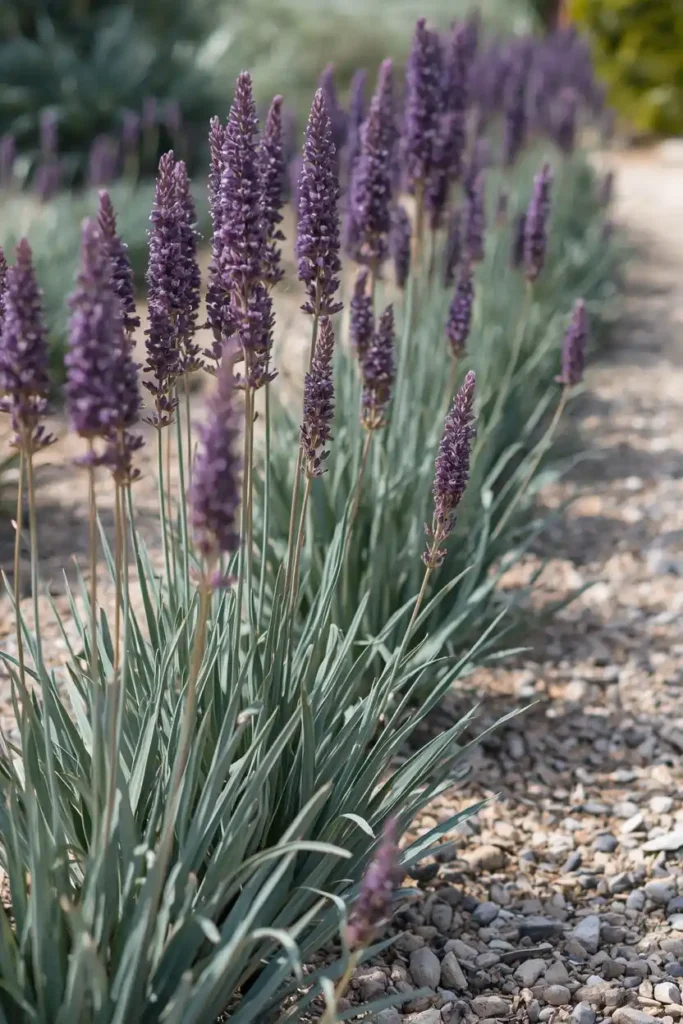
Imagine narrow, silvery-green foliage topped with tall, slender spikes of tiny purple flowers, the whole plant releasing a soft, calming fragrance every time it’s brushed against or warmed by the sun.
Design Breakdown
Lavender does double duty as both a landscaping plant and a genuinely useful one — dried bundles work beautifully in home decor, sachets, and even cooking. It thrives in exactly the conditions most gardeners consider “problem areas”: rocky, sandy, poor soil with reflected heat.
Expert Tip
Never mulch lavender with wood chips or heavy organic mulch. Use gravel or light stone instead — it reflects heat back up to the plant and keeps the base dry, which is exactly what lavender wants.
Why It Works
Fragrance adds a sensory layer most garden plants can’t offer, and studies consistently link lavender scent to reduced stress, making it a functional choice for a relaxation-focused outdoor space.
Best For
- Small spaces
- Luxury homes
- Budget makeovers
Common Mistake To Avoid
Planting it in a spot with good soil and regular irrigation. Counterintuitively, lavender performs worse in “pampered” conditions and better when slightly neglected.
Quick Wins
- Deer and rabbit resistant
- Doubles as a cut-and-dry flower
- Repels some garden pests
- Evergreen structure in mild climates
One thing I’ve learned: lavender’s biggest killer isn’t cold winters — it’s wet feet. If you’re in a region with humid summers or heavy clay soil, plant lavender on a slight mound or in a raised bed rather than flat ground. That few extra inches of drainage is often the entire difference between a lavender plant that lives for a decade and one that rots out by its second winter.
This simple change can completely transform the room — or in this case, the whole bed.
9. Yarrow (Achillea millefolium)
What You’re Seeing
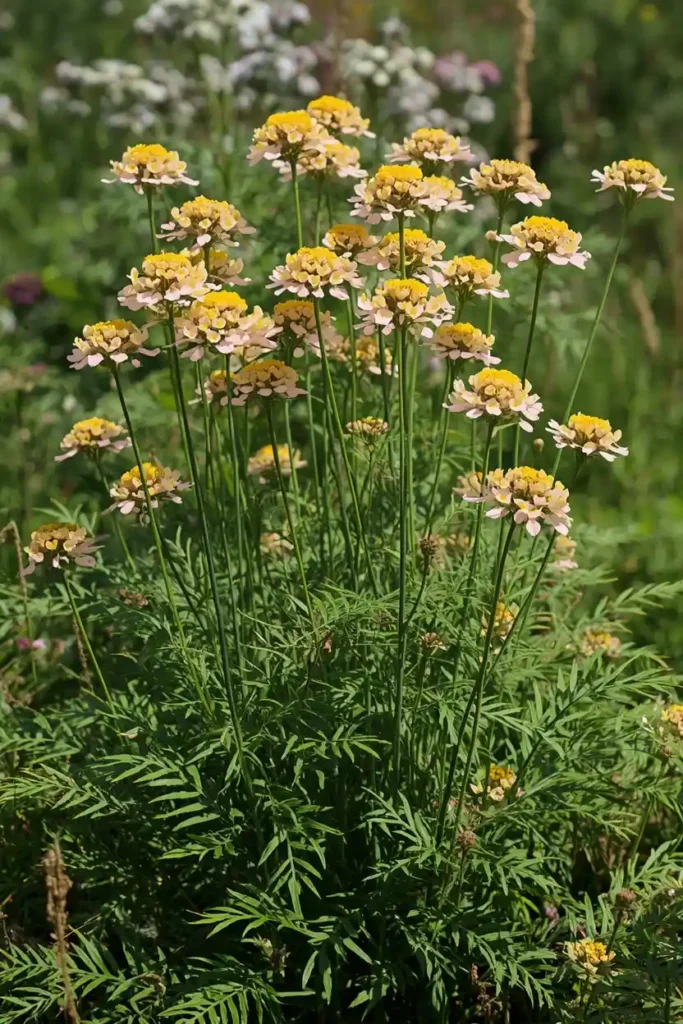
Picture flat, plate-like clusters of tiny flowers in shades of yellow, white, pink, or red, sitting above soft, fern-like, aromatic foliage that stays attractive even when the plant isn’t in bloom.
Design Breakdown
Yarrow is one of the toughest perennials you can plant, full stop. It handles poor soil, drought, heat, and neglect better than almost anything else on this list, spreading gradually to form a low-maintenance ground cover in sunny areas where other plants struggle.
Expert Tip
Divide yarrow every 2-3 years. It spreads by rhizomes and can get congested in the center, which reduces blooming — dividing keeps it vigorous and gives you free plants for other beds.
Why It Works
The flat-topped flower clusters are a favorite landing pad for beneficial pollinators, and the fine, feathery foliage adds a completely different texture than the broader leaves of daylilies or coneflower.
Best For
- Large spaces
- Budget makeovers
- Renters
Common Mistake To Avoid
Overfertilizing. Rich soil makes yarrow flop and spread aggressively — lean soil keeps it compact and controlled.
Quick Wins
- Extremely drought tolerant
- Great cut and dried flower
- Attracts beneficial pollinators
- Handles poor, rocky soil beautifully
What’s your biggest challenge right now — too much sun, or too little water? Yarrow tends to solve both problems at once.
10. Shasta Daisy (Leucanthemum x superbum)
What You’re Seeing
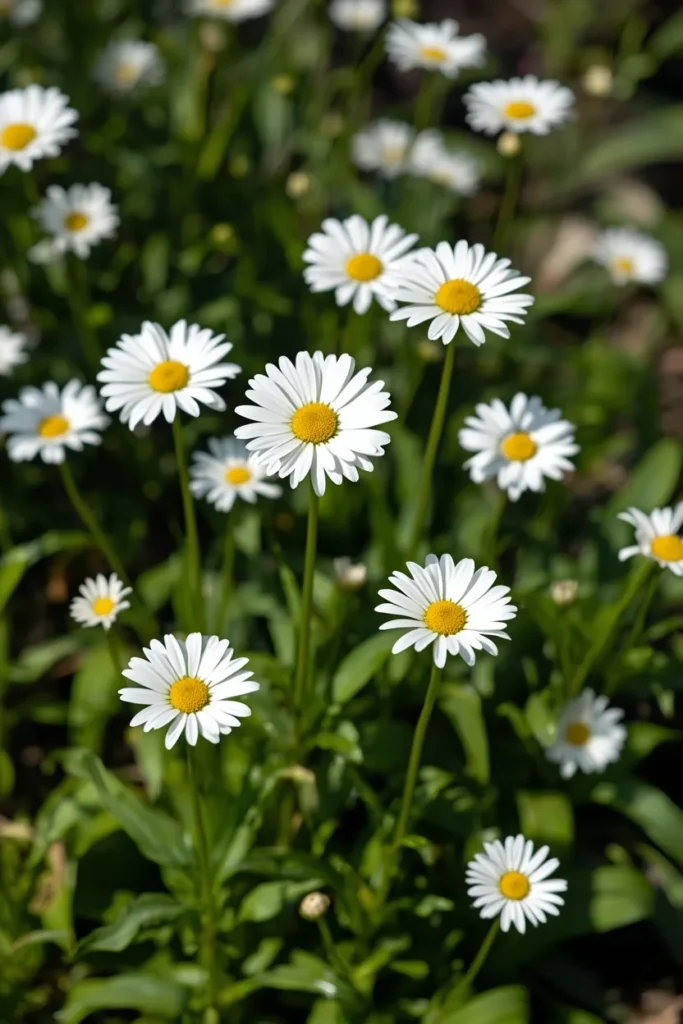
Visualize classic, crisp white petals surrounding a sunny yellow center, held on sturdy stems above deep green, glossy foliage — the kind of cheerful, timeless bloom that instantly reads as “cottage garden.”
Design Breakdown
Shasta Daisy brings brightness and simplicity to a border that might otherwise feel too busy with color. The clean white-and-yellow palette acts almost like a visual reset point between bolder plants like Russian Sage or salvia.
Expert Tip
Stake taller varieties early in the season, before they need it. Once stems start to lean, staking is far less effective and looks obviously artificial.
Why It Works
White flowers reflect light beautifully at dusk, making Shasta Daisy one of the best choices for a garden bed you actually enjoy from the porch in the evening.
Best For
- Small spaces
- Families
- Budget makeovers
- Renters
Common Mistake To Avoid
Letting the center of an established clump get woody and bare without dividing. Refresh clumps every 2-3 years for continuous full blooming.
Quick Wins
- Long summer bloom season
- Excellent cut flower
- Pairs with nearly any color scheme
- Easy to divide for more plants
Let me know which one is your favorite — I’d genuinely love to know if you’re leaning toward the bold color of coneflower or the classic simplicity of Shasta Daisy.
Related Garden Ideas
If this list got you thinking about a full backyard refresh, don’t stop here — the next idea changes everything once you start connecting these smaller projects together.
- Small Balcony Garden Ideas
- Vegetable Garden Ideas
- Balcony Garden Ideas
- Tomato Trellis Ideas
- 10 Best Growing Peonies in Pots Ideas
- Modern Garden Shed Ideas
- Indoor Hydroponic Gardening Ideas
- Garden Bird Feeders Ideas
Final Thoughts on Choosing Sun Perennials Plants
Here’s the truth: you don’t need all ten of these to transform a sunny, struggling bed.
Start with two or three — maybe coneflower for pollinators, Russian Sage for structure, and sedum for that late-season color boost nobody else has in October.
Pick one this week. Just one. Get it in the ground, water it well for the first two weeks, and let it do the rest.
What’s stopping you from starting this weekend?
If you’re still deciding where these plants should actually live in your yard, our guide on Small Garden Design Ideas is the natural next stop — it’ll help you map out a layout before you buy a single plant.
And if your yard leans more shady than sunny in certain corners, don’t miss our companion guide on shade perennials — because the truth is, most yards need both lists to really come together.
Frequently Asked Questions About Sun Perennials Plants
1. What are the best low maintenance perennials for full sun? Black-Eyed Susan, coneflower, Russian Sage, daylily, and sedum are widely considered the toughest, lowest-maintenance options for full sun gardens.
2. How many hours of sun do full sun perennials actually need? Most full sun perennials need at least six hours of direct sunlight daily to bloom well and maintain a healthy, compact growth habit.
3. Can sun perennials survive extreme heat and drought? Yes — plants like Russian Sage, yarrow, sedum, and lavender are specifically adapted to hot, dry conditions and often perform worse with too much water.
4. Do full sun perennials come back every year? Yes, that’s the defining feature of a perennial. Unlike annuals, they die back in winter and regrow from the same root system each spring.
5. What is the easiest sun perennial for beginners? Daylilies and Black-Eyed Susan are widely recommended for beginners because they tolerate mistakes in watering, soil, and timing better than most other perennials.
6. When is the best time to plant sun perennials? Early spring or early fall are ideal, giving roots time to establish before extreme summer heat or winter cold sets in.
7. Do sun perennials attract pollinators? Most do. Coneflower, salvia, yarrow, and coreopsis are especially attractive to bees, butterflies, and hummingbirds.
8. How far apart should full sun perennials be planted? Most need 12-18 inches of spacing to reach mature size without overcrowding, though this varies by specific plant.
9. Are full sun perennials deer resistant? Many are. Russian Sage, salvia, lavender, and yarrow are commonly listed as deer and rabbit resistant due to their fragrant or textured foliage.
10. Can I mix full sun perennials with vegetables or a cut flower garden? Absolutely. Many gardeners incorporate coneflower, yarrow, and daisies directly into cut flower or vegetable garden borders for both beauty and pollinator support.