
10 Bullet Journal Ideas That’ll Actually Make You Want to Pick Up a Pen Again
This article was created in line with Trends Oraa’s research and content standards.
Most people don’t realize this.
That’s why their bullet journal ends up shoved in a drawer by week three.
The good news? Fixing it is easier than you think.
If you’ve ever started strong and quietly given up by the second week, you’re not alone. The problem usually isn’t motivation. It’s the layout itself — the wrong spread makes journaling feel like homework instead of a creative outlet.
That’s exactly why I pulled together these bullet journal ideas. They’re the ones people actually stick with, the ones that get screenshotted and pinned to boards labeled “someday.” You might also love our guide on Smart Apartment Organization Ideas if you’re trying to get your whole space — not just your notebook — under control.
Keep scrolling. Idea #4 is the one I almost skipped writing about, and it ended up being the one readers save the most.
10 Bullet Journal Ideas Worth Trying This Week
These aren’t random spreads pulled from a Pinterest board. Each one solves a specific problem — clutter, inconsistency, burnout, or just plain boredom with your own handwriting.
Let’s get into it.
1. The Minimalist Dot-Grid Daily Log
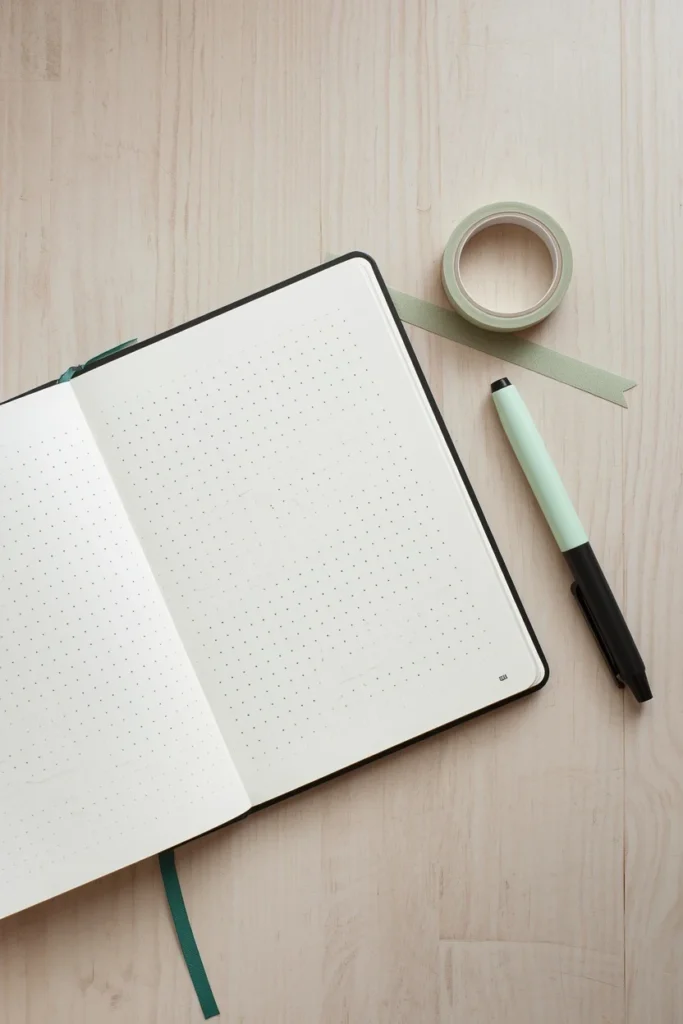
What You’re Seeing: A clean, open dot-grid notebook with three narrow columns. Black ink, one soft sage highlighter, and a single strip of plain washi tape along the top edge. No stickers, no clutter — just tiny rapid-log bullets marching down the page.
Design Breakdown: This is the original bullet journal method, stripped back to basics. Tasks get a dot, events get a small circle, notes get a dash. Everything lives in three columns so your eye never has to hunt for information.
Expert Tip: Pick one accent color and stick with it for the whole month. Switching palettes mid-month is the fastest way to make a spread feel chaotic.
Why It Works: Less decision fatigue means more consistency. When there’s nothing to “design,” you’re more likely to actually open the notebook every day.
Best For:
- Budget makeovers
- Renters
- Small spaces
Common Mistake To Avoid: Adding decorative elements before the system itself feels automatic. Master the layout first, decorate later.
Quick Wins:
- Use a 0.3mm pen for tighter, neater rows
- Limit yourself to one highlighter color per spread
- Keep a key/legend on the inside cover so symbols never get confusing
But here’s the important part — minimalist doesn’t mean boring. It means the system does the heavy lifting so your creativity goes toward what matters.
2. The Habit Tracker Grid
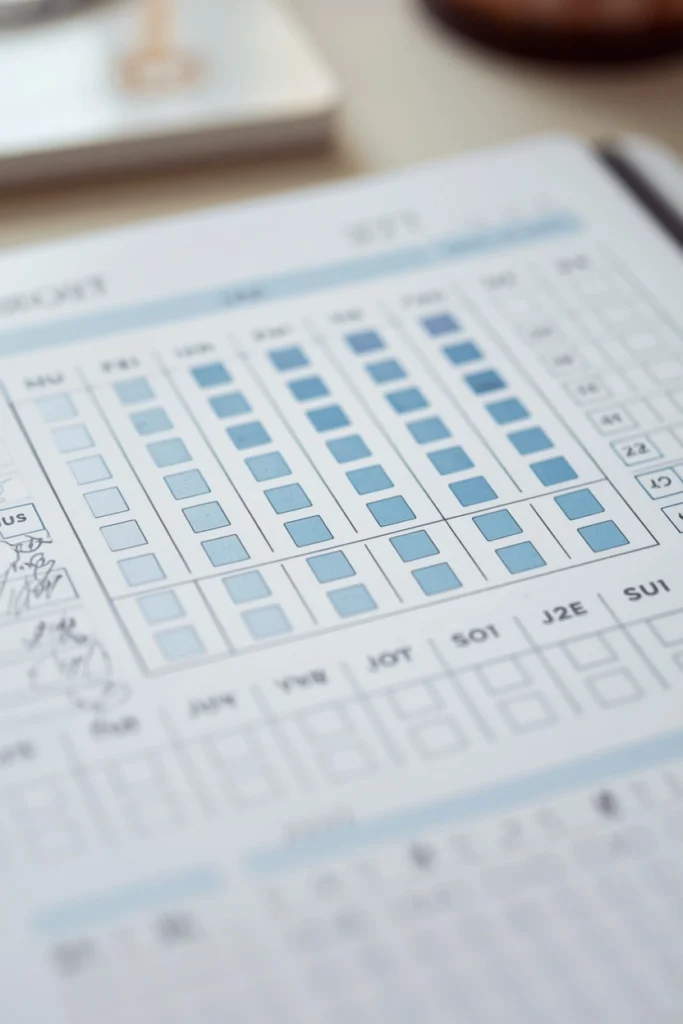
What You’re Seeing: A full-page grid, days running across the top and habits listed down the side. Each completed day gets a tiny filled-in square in a gradient of blues, building a satisfying wall of color by month’s end.
Design Breakdown: This spread turns invisible progress into something visual. Water intake, workouts, reading, sleep — anything you want to build consistency around gets its own row.
Expert Tip: Track no more than five habits at once. More than that, and the tracker itself becomes a chore.
Why It Works: Visual progress triggers the same reward response as checking off a to-do list — it’s why habit trackers are one of the most-saved bullet journal ideas on Pinterest.
Best For:
- Families
- Budget makeovers
- Renters
Common Mistake To Avoid: Starting mid-month and trying to backfill every missed day. Just start where you are.
Quick Wins:
- Color-code by category (health, work, personal)
- Leave one row blank for a “mystery habit” you’re testing out
- Review it every Sunday instead of daily — less pressure, same results
Would you choose function or style for this one? Most readers tell me they want both, and honestly, this spread is one of the few that delivers.
One thing I’ve learned: habit trackers fail less because of the design and more because of the goal. If you’re tracking eight things at once, your brain quietly checks out by day four. Pick the two or three habits that would genuinely change your week if you nailed them, and build the entire tracker around those. Everything else can wait until next month.
Most people waste more space than they realize.
3. The Monthly Cover Page
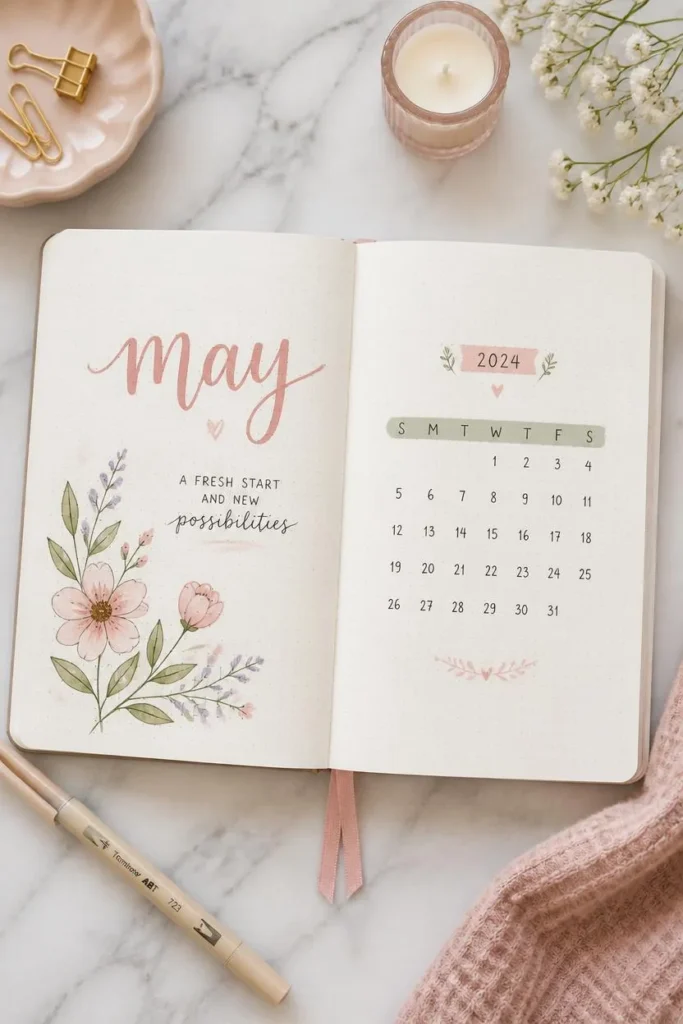
What You’re Seeing: A two-page spread opening each month — a hand-lettered title, a small illustrated motif (think florals for spring, leaves for fall), and a mini calendar tucked into the corner.
Design Breakdown: This is less about function and more about ritual. It’s the page that signals “new month, fresh start” before you even get to the task list.
Expert Tip: Sketch your lettering in pencil first, then ink it. Rushing straight to pen is where most cover pages go wrong.
Why It Works: Starting a new section with something visually satisfying makes you want to keep filling the notebook. It’s the same psychology behind a clean desk boosting productivity.
Best For:
- Budget makeovers
- Small spaces
Common Mistake To Avoid: Spending so long on the cover page that you run out of motivation for the actual planning pages behind it.
Quick Wins:
- Use a seasonal color palette to keep months visually distinct
- Add a one-word “theme” for the month instead of a long quote
- Keep a stencil set on hand for consistent lettering size
Here’s where it gets interesting — your cover page doesn’t need to be elaborate to work. It just needs to exist.
You May Also Like:
- Desk Ideas for a More Productive Workspace
- Small Desk Ideas for Tight Corners
- Cosy Home Office Ideas
- Documents Organization Ideas
- DIY Organization Hacks
4. The Brain Dump Page
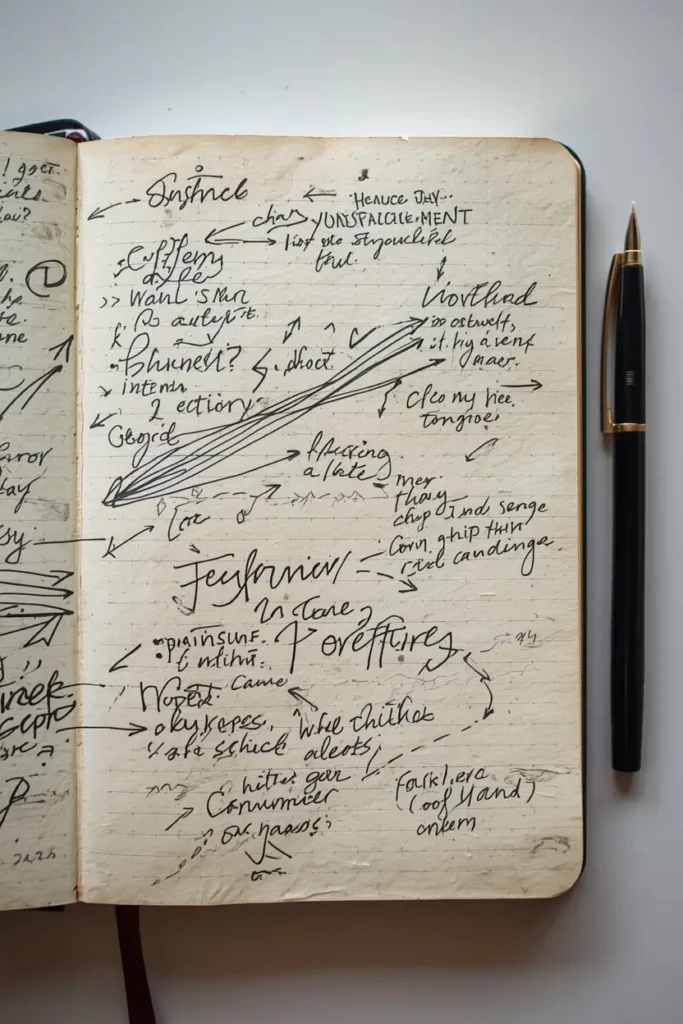
What You’re Seeing: A messy, unstructured page filled with scattered phrases, half-finished thoughts, and arrows connecting random ideas. It looks chaotic — and that’s exactly the point.
Design Breakdown: Before you can organize anything, you have to get it out of your head. This spread has no columns, no grid, no rules. Just a blank page and five uninterrupted minutes.
Expert Tip: Set a timer for five minutes and write without stopping to edit. The second you start judging what you’re writing, the page stops working.
Why It Works: Mental clutter is real clutter. Getting it onto paper — even messily — frees up working memory the same way clearing a countertop frees up physical space.
Best For:
- Budget makeovers
- Renters
- Families
Common Mistake To Avoid: Trying to make this page look pretty. It’s a release valve, not a showcase.
Quick Wins:
- Do this first thing in the morning before checking your phone
- Circle the three items that feel most urgent once you’re done
- Transfer those circled items into your daily log
Imagine opening your notebook to a page that’s just for you — no pressure to make it Instagram-worthy. That’s this page. It’s the one most people don’t talk about, but it’s quietly the most useful.
The next idea changes everything for anyone who’s tried — and failed — at meal planning.
5. The Meal Planning Spread
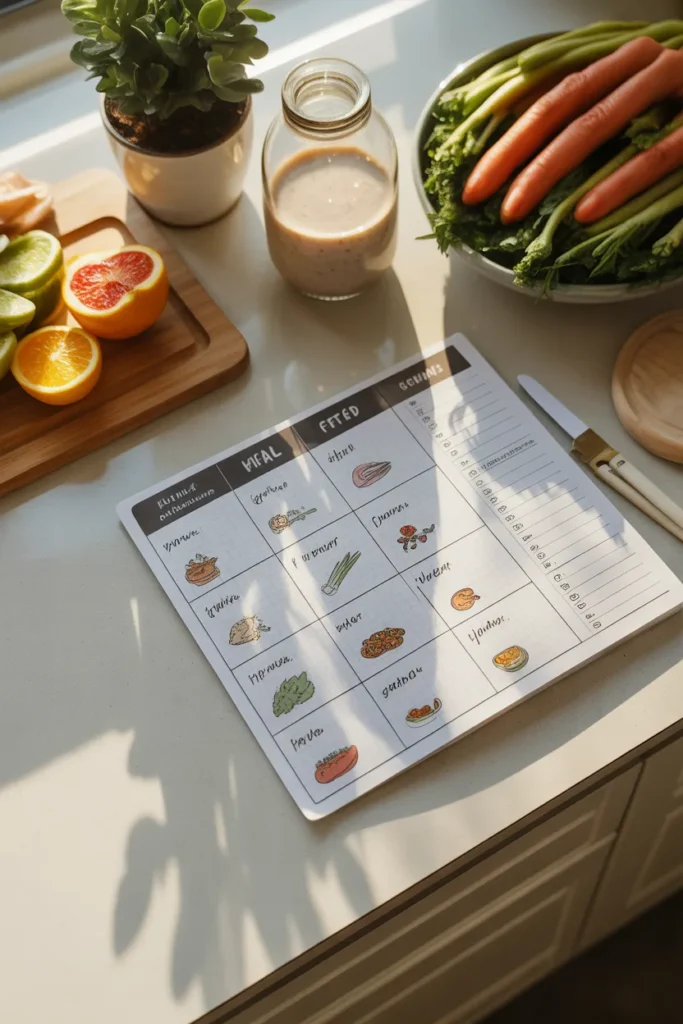
What You’re Seeing: A weekly grid with each day labeled, small icons for breakfast/lunch/dinner, and a column down the side for a running grocery list. A few hand-drawn food doodles add personality without overwhelming the page.
Design Breakdown: This spread bridges your kitchen and your notebook. Instead of guessing what’s for dinner every night, the week is mapped out in advance.
Expert Tip: Plan around what’s already in your fridge before adding new recipes. It cuts grocery costs and food waste at the same time.
Why It Works: Decision fatigue is real — and dinner is often the decision people dread most by the end of a long day. Removing that daily choice frees up real mental energy.
Best For:
- Families
- Budget makeovers
Common Mistake To Avoid: Over-planning every single meal down to the snack. Leave one or two days flexible for leftovers or takeout.
Quick Wins:
- Color-code meals by who’s cooking
- Leave a “leftover night” built into every week
- Pair this spread with a running pantry inventory list
Picture yourself opening the fridge on a Tuesday and already knowing exactly what’s for dinner. No 5 p.m. scramble, no extra trip to the store.
Here’s where it gets interesting: the meal planning spread is one of the few bullet journal pages that pays for itself. Readers who’ve used this consistently for a month report noticeably lower grocery bills, simply because impulse purchases drop when there’s already a plan. One thing I’ve learned is that the spread works best when it lives somewhere visible — tape it near your fridge or keep it as a bookmark, not buried thirty pages deep in your journal.
What Bullet Journaling Really Costs
This is the section most people skip — and it’s the one that saves the most money.
You don’t need a $40 notebook and a drawer full of markers to make this work. But it helps to know where your money actually makes a difference and where it doesn’t.
The Starter Tier ($15–$25 total):
- A basic dot-grid notebook ($8–$12)
- One fine-tip black pen ($3–$5)
- A simple ruler ($2)
This setup covers 90% of what you actually need. Everything else is optional.
The Mid-Range Tier ($40–$70 total):
- A higher quality notebook with thicker, no-bleed paper ($18–$25)
- A small set of dual-tip brush pens ($15–$20)
- A few sheets of washi tape ($8–$12)
- A basic stencil set ($5–$8)
This tier is where most consistent journalers eventually land. The paper quality upgrade alone is worth it if you use fountain pens or watercolor accents.
The Splurge Tier ($100+):
- Premium leather or fabric-bound notebooks
- Full brush pen sets with 24+ colors
- Specialty stamps, stencils, and stickers
- A dedicated journaling desk caddy or storage box
Here’s the truth: the splurge tier rarely makes people journal more consistently. It just makes the page prettier once you’re already committed.
Where to actually spend money:
- Paper quality, if you use any wet media (watercolor, brush pens)
- One good pen you genuinely enjoy writing with
- Storage so your supplies don’t end up scattered everywhere
Where to save:
- Stickers and decorative add-ons — these are almost always impulse buys
- Multiple notebooks “in case you mess up” — you won’t need them
- Subscription planner kits — most go unused after month two
Common Budget Mistakes:
- Buying a full 100-color marker set before knowing if you’ll stick with journaling
- Choosing a notebook based on the cover instead of the paper weight
- Underestimating how much washi tape costs add up over a year
What’s your biggest challenge right now — sticking with the habit, or finding the right supplies? Honestly, most people overestimate how much the supplies matter and underestimate how much the system does.
This is where many beginners make a mistake: they think a better pen will fix an inconsistent habit. It won’t. The layout has to work first.
The next idea is one designers secretly love.
6. The Gratitude Log
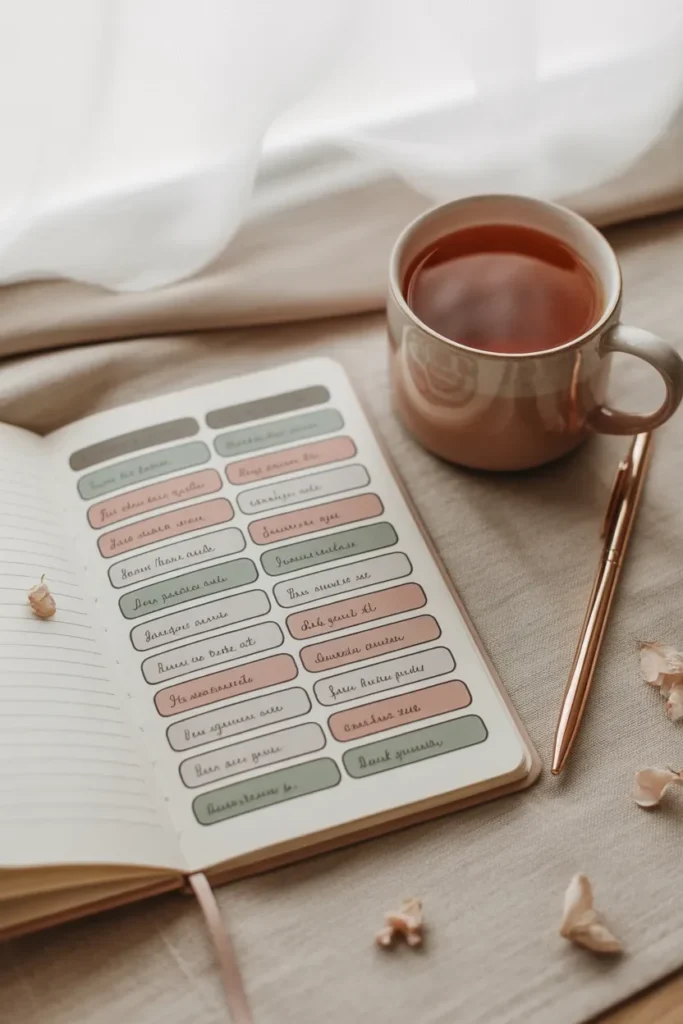
What You’re Seeing: A short, simple page divided into small daily boxes, each holding just one or two lines. Soft, muted colors. No elaborate art — just space to jot something small and good.
Design Breakdown: This spread asks for almost nothing — one sentence a day about something you’re grateful for. The simplicity is intentional.
Expert Tip: Keep this page near your daily log so it becomes part of your existing routine instead of a separate task you forget about.
Why It Works: Gratitude journaling has been linked to improved mood and lower stress in multiple studies. The bullet journal format just makes it sustainable long-term, since it takes under a minute.
Best For:
- Families
- Renters
- Budget makeovers
Common Mistake To Avoid: Treating this like a creative writing assignment. One short phrase is enough — “warm coffee,” “good nap,” “funny text from a friend.”
Quick Wins:
- Keep entries to five words or less
- Review the page at month’s end — it doubles as a mood log
- Pair it with the habit tracker for a fuller wellness picture
Don’t skip the next tip — it’s the one expert insight box that gets saved the most.
Most people don’t know this: the gratitude log works better as a five-second habit than a five-minute one. The moment it starts feeling like an assignment, people quietly stop doing it. Keep a pen clipped right to this page so there’s zero friction between thinking “I should write that down” and actually doing it. The shorter the entry, the longer the habit lasts — that’s the real secret behind why this spread outlasts almost every other one in this list.
7. The Reading & Book Tracker

What You’re Seeing: A grid of small book spine illustrations lined up like a tiny bookshelf, each one labeled with a title and a star rating underneath. A cozy reading nook sketch sits in the corner.
Design Breakdown: Instead of a plain list, this spread visually mimics an actual shelf — making your reading progress feel tangible and satisfying to look back on.
Expert Tip: Add a small “currently reading” tab that sticks out from the page edge so you can flip to it instantly.
Why It Works: Visual progress (a growing shelf) is more motivating than a text list. It taps into the same completion-driven satisfaction as checking off tasks.
Best For:
- Renters
- Budget makeovers
- Small spaces
Common Mistake To Avoid: Only logging books you finish. Track the ones you start and abandon too — it’s useful data about your actual reading habits.
Quick Wins:
- Color-code by genre for an at-a-glance overview
- Add a one-line takeaway under each title
- Set a loose yearly goal instead of a monthly one — less pressure, more consistency
Visualize the difference between a vague “I should read more” and an actual shelf of book spines proving you already are.
You May Also Like:
8. The Future Log / Year-at-a-Glance
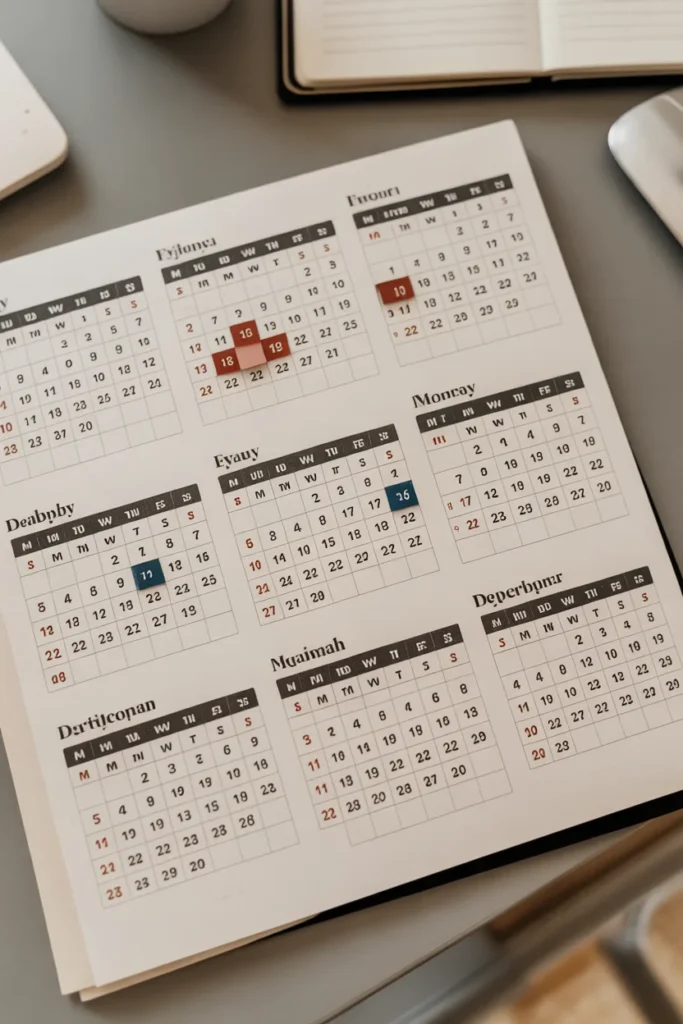
What You’re Seeing: A condensed twelve-month calendar spread, each mini-month given just a few inches, used to jot down dates that are months away — birthdays, trips, deadlines.
Design Breakdown: This isn’t for daily tasks. It’s the catch-all for anything too far out to belong in a weekly or monthly spread, so it doesn’t get forgotten between now and then.
Expert Tip: Place this at the very front of your notebook so it’s the first thing you see every time you open it.
Why It Works: Long-term planning reduces the low-grade anxiety of “wait, did I forget something important?” It gives your brain permission to stop holding onto far-off dates.
Best For:
- Families
- Budget makeovers
- Large spaces
Common Mistake To Avoid: Skipping this page because “it’s just for big stuff.” Big stuff is exactly what slips through the cracks without it.
Quick Wins:
- Use a different color for recurring annual dates (birthdays, anniversaries)
- Leave extra space in busier months like November and December
- Transfer items to your monthly spread as soon as the month begins
This simple change can completely transform the room — or in this case, your sense of control over the whole year.
Here’s where it gets interesting: the future log is the spread people regret skipping the most once they hit month six. By then, half-remembered dates start surfacing — “wait, wasn’t there a wedding in August?” — and there’s nowhere to check. One thing I’ve learned after years of journaling is that this page takes ten minutes to set up in January and saves hours of scrambling by December. It’s boring to make and genuinely indispensable to have.
9. The Self-Care Check-In
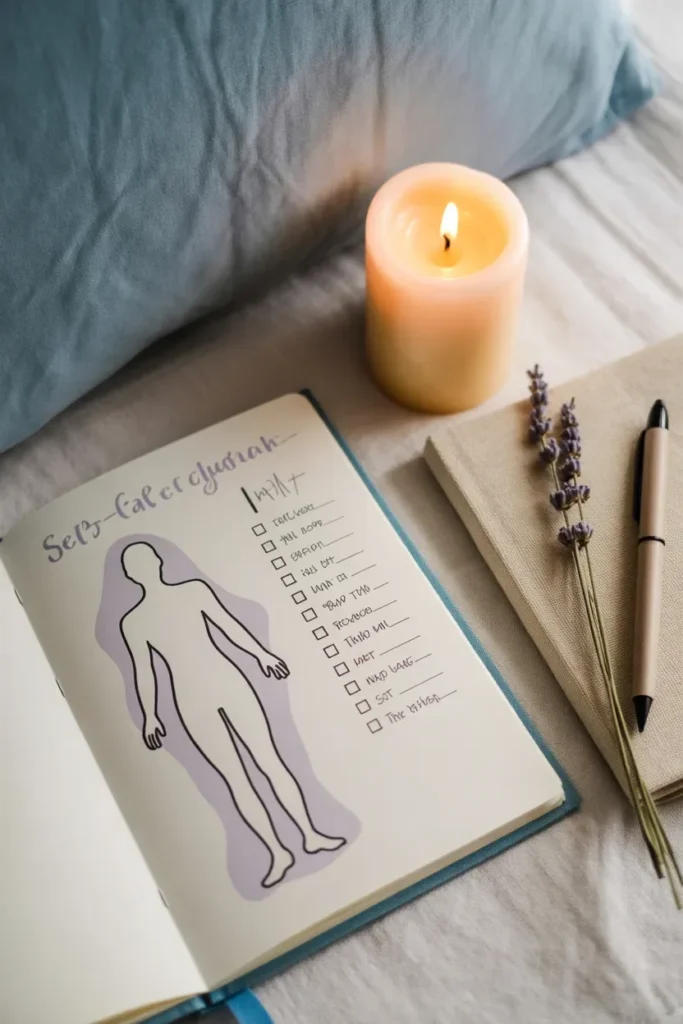
What You’re Seeing: A soft, calming spread with a small body outline for noting physical tension, a mood scale from 1–5, and a short prompt: “What does my body need today?”
Design Breakdown: This spread treats self-care as data, not just a vague intention. It gives you a quick, structured way to check in with yourself before burnout sets in.
Expert Tip: Do this check-in at the same time every day — right before bed works well — so it becomes a closing ritual rather than an afterthought.
Why It Works: Naming a feeling or sensation reduces its intensity, a concept therapists often call “affect labeling.” This spread turns that practice into a habit.
Best For:
- Families
- Renters
- Budget makeovers
Common Mistake To Avoid: Using this spread only during hard weeks. Check in consistently, not just in crisis mode, so you actually notice patterns.
Quick Wins:
- Keep the format identical every day — speed matters more than beauty here
- Track sleep alongside mood for a fuller picture
- Review monthly for patterns tied to specific weeks or events
Which design would you try first if you could only pick one self-care spread for the next month?
10. The Yearly Memory Log
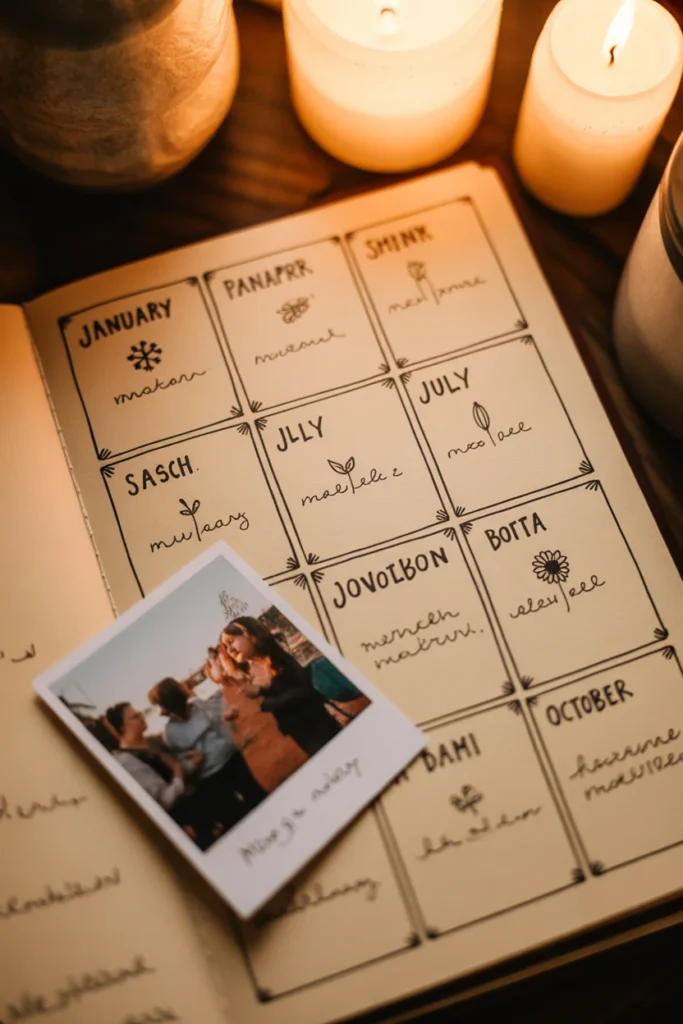
What You’re Seeing: A single page with twelve small boxes, one per month, each holding a tiny doodle and a one-line memory. By December, it’s a miniature visual diary of the entire year.
Design Breakdown: Instead of journaling daily, this spread asks for one sentence per month — the best moment, the funniest thing that happened, the proudest win.
Expert Tip: Set a recurring reminder on the last day of each month so this page never gets forgotten in the shuffle.
Why It Works: Memory fades fast. A single page capturing twelve highlights creates a snapshot of the year that’s far more meaningful than scrolling through old photos.
Best For:
- Families
- Budget makeovers
- Renters
Common Mistake To Avoid: Waiting until December to fill in the whole year from memory. By then, most of it is genuinely gone.
Quick Wins:
- Keep this page near the front so it’s easy to find each month
- Add one photo printout if you want a slightly fuller record
- Revisit it every New Year’s Eve as your own personal year-in-review
Think about how much easier it’ll be to remember this year when it’s condensed onto a single, beautifully simple page.
Related Organization Ideas
If any of these spreads sparked an idea for the rest of your space, you’re going to want to keep going. Organization has a way of spilling out of the notebook and into every room once it clicks.
- DIY Organization Hacks
- Apartment Organization Ideas
- Documents Organization Ideas
- Small Desk Ideas
- Wood Desk Ideas
- Home Office Ideas
- Home Office Ideas for Women
- Sit-Stand Desk Ideas
Final Thoughts on These Bullet Journal Ideas
If you take nothing else from this list, take this: the spreads that last aren’t the prettiest ones. They’re the ones that ask the least of you on a bad day.
The minimalist daily log, the habit tracker, and the gratitude page are the three I’d start with if you’re easing back into journaling after falling off. They’re fast, forgiving, and don’t require a single fancy supply.
Pick one bullet journal idea from this list and set it up this week — not all ten, just one. Momentum builds from a single page, not a perfect system.
Which of these ideas would work best in your home and your routine right now? Let me know which one is your favorite — I always love hearing which spreads actually stick for people versus which ones just look good on a shelf.
If you’re already thinking about where this notebook lives, it might be worth looking at how the rest of your workspace is set up too. A cluttered desk has a funny way of cancelling out a clean notebook.
And if you liked this list, there’s a good chance you’ll love what’s coming next — a deep dive into the small layout shifts that make even the tiniest home office feel twice as functional. It’s one of those topics where the fix is almost embarrassingly simple once you see it.