10 Computer Chair Design Ideas That Actually Change How Your Space Feels
This article was created in line with Trends Oraa’s research and content standards.
Most people don’t realize this.
Their desk chair is quietly ruining their whole workspace.
The good news? Fixing it is easier than you think.
I used to think a computer chair was just… a chair. Something you grab off a shelf because it has wheels and looks “office enough.” Then I sat in the wrong one for three years and wondered why my home office never felt like a place I wanted to be.
It wasn’t the desk. It wasn’t the lighting. It was the chair.
You might also love our guide on home office ideas if you’re rethinking your whole setup — but let’s start here, because the chair is where comfort and style either come together or completely fall apart.
These 10 computer chair design ideas aren’t just about ergonomics. They’re about making your workspace feel intentional, photo-worthy, and like somewhere you actually want to sit for eight hours a day. Let’s get into it.
Why Your Computer Chair Design Matters More Than You Think
Here’s the thing nobody tells you when you’re shopping for a desk setup.
You’ll spend more hours touching your chair than almost any other piece of furniture you own.
- More than your couch
- More than your bed (if you work full-time)
- Definitely more than that accent chair in the corner nobody sits in
So when the chair is wrong — wrong height, wrong material, wrong vibe — it shows up everywhere. In your posture. In your photos. In how “finished” your home office actually looks.
But here’s the important part. A great computer chair design doesn’t have to mean sacrificing style for support, or support for style. The best ones do both. That’s exactly what we’re breaking down below.
Idea #1: The Ergonomic Mesh Chair With a Soft Color Twist
What You’re Seeing
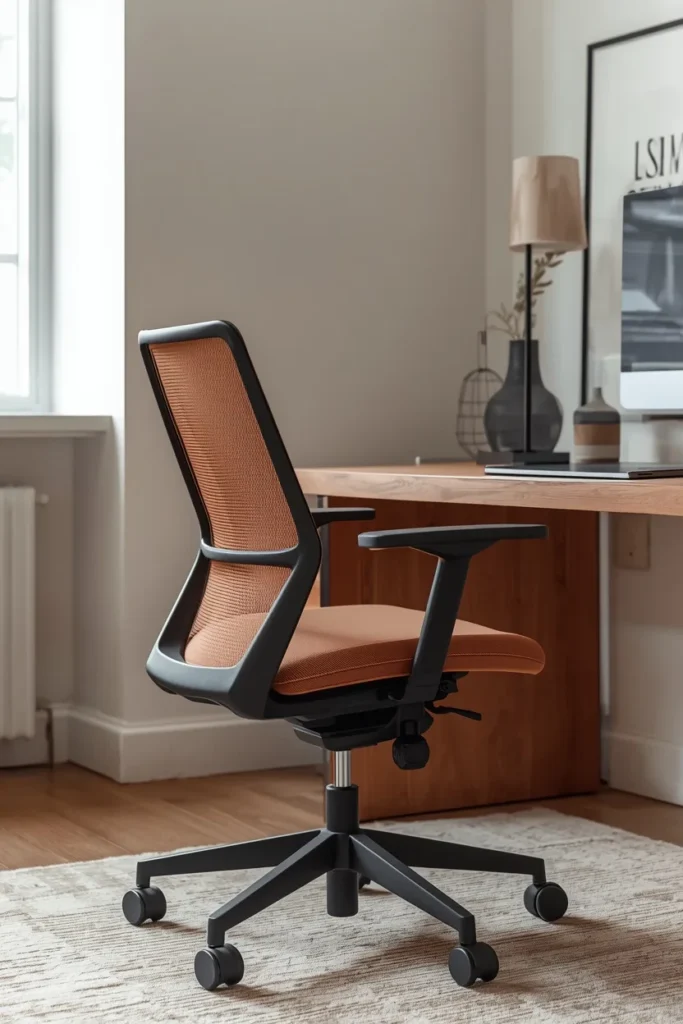
Picture a sleek mesh-back office chair, but instead of the usual black-on-black corporate look, it’s done in a warm terracotta or sage green mesh with matte black legs and armrests.
Design Breakdown
Mesh chairs get a bad reputation for looking sterile, but the secret is the color. Swapping standard black mesh for an earthy tone instantly makes the chair feel like furniture instead of equipment.
Expert Tip
Pair the chair with a desk in a similar warm wood tone so the whole vignette feels coordinated instead of like two separate purchases.
Why It Works
Mesh breathes, which matters if you’re sitting for long stretches, and the color choice keeps the ergonomic shape from feeling cold or clinical.
Best For
- Small spaces
- Budget makeovers
- Renters
Common Mistake To Avoid
Don’t choose mesh that’s too thin or stretchy — it’ll sag within a year and lose all its support.
Quick Wins
- Look for adjustable lumbar support built into the mesh
- Choose a muted color, not a bright accent, for longevity
- Match leg finish to other metal accents in the room
Idea #2: The Boucle Task Chair for a Soft, Cozy Home Office
What You’re Seeing
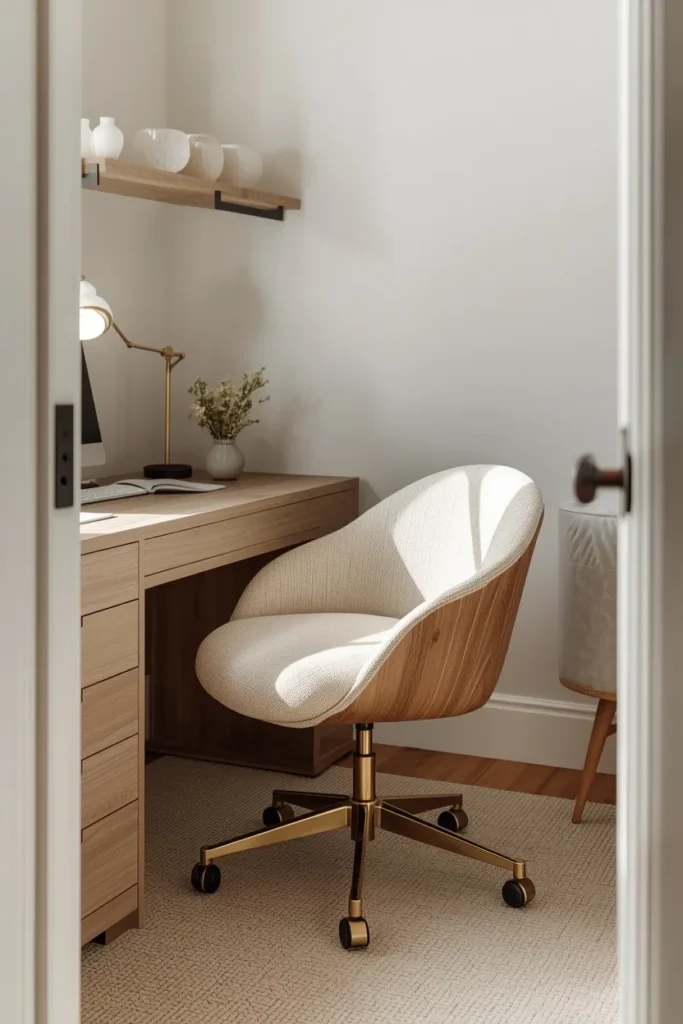
A rounded, boucle-upholstered task chair in cream or oatmeal, often on a swivel base with subtle wooden or brass casters instead of the typical plastic ones.
Design Breakdown
Boucle has taken over living rooms and bedrooms, and now it’s making its way into home offices. The textured fabric softens an otherwise hard, technical space.
Expert Tip
If you’re worried about cleaning, look for a performance-fabric boucle blend — it resists stains while keeping that same cozy, tactile texture.
Why It Works
Texture changes how a room feels emotionally. A boucle chair makes a desk corner feel like part of your living space rather than a separate “work zone.”
Best For
- Small spaces
- Luxury homes
- Renters
Common Mistake To Avoid
Skipping a fabric protector spray — boucle is gorgeous but it stains faster than people expect.
Quick Wins
- Choose neutral tones so it pairs with multiple desk styles
- Add a faux fur lumbar cushion for extra texture layering
- Position it where natural light highlights the texture
Most people don’t know this: the height of your chair relative to your desk affects your shoulders more than your back. I learned this the hard way after months of shoulder tension that had nothing to do with my mattress or my pillow — it was my elbows sitting two inches too low every single day. A quick fix? Your elbows should rest at a 90-degree angle when your hands are on the keyboard. If they’re not, the chair height (or the desk height) needs adjusting before anything else.
Would you choose function or style for your own setup? Honestly, the best computer chair design ideas prove you don’t have to pick — but it’s worth knowing which one matters more to you before you shop.
Most people waste more space than they realize.
Idea #3: The Compact Swivel Chair for Tiny Desk Nooks
What You’re Seeing
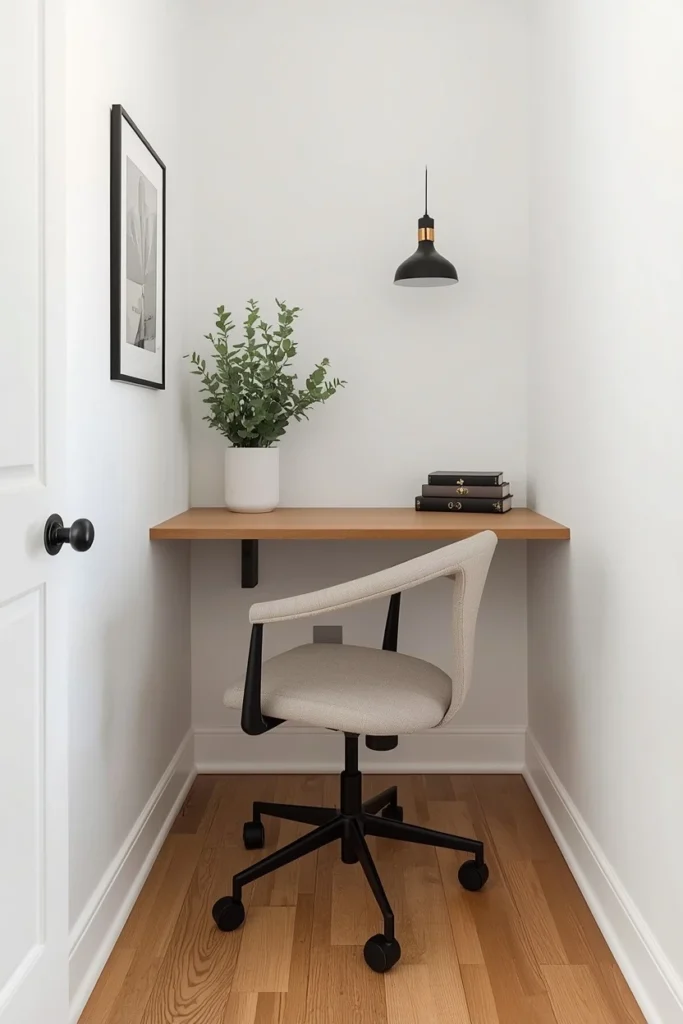
A small-scale swivel chair with a slim profile, armless design, and a low-profile base that tucks completely under a desk when not in use.
Design Breakdown
If your “office” is a corner of your bedroom or a closet nook, bulky executive chairs eat up space you don’t have. A compact swivel chair solves this without forcing you into a stiff, uncomfortable seat.
Expert Tip
Measure the depth of your desk nook before buying — armless chairs that tuck fully under the desk free up walking space in tight rooms.
Why It Works
Smaller chairs visually open up cramped spaces, making the whole area feel less cluttered, which matters enormously in studio apartments and shared rooms.
Best For
- Small spaces
- Renters
- Budget makeovers
Common Mistake To Avoid
Buying a chair that looks small in photos but has wide armrests that make it impossible to tuck under a narrow desk.
Quick Wins
- Prioritize armless or slim-arm designs for tight nooks
- Choose a chair that swivels 360 degrees for flexible use
- Look for a base under 24 inches wide
Imagine walking into your home office and actually having room to pull the chair out without bumping into the wall. That’s the real win here.
You May Also Like:
- Small Desk Ideas
- Home Office in Bedroom Ideas
- Space Saving Furniture Ideas
- Sit Stand Desk Ideas
- Cosy Home Office Ideas
Here’s where it gets interesting. The next few ideas move away from “small space solutions” and into pure style territory — the kind of chairs that make people ask where you got them.
Idea #4: The Mid-Century Leather Executive Chair
What You’re Seeing
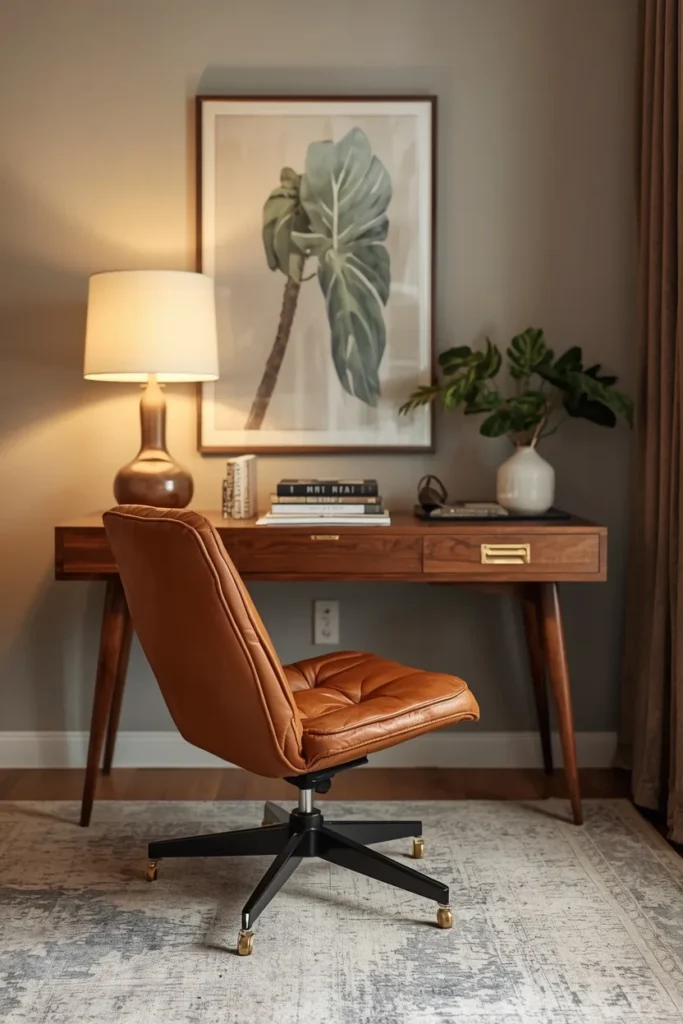
A low-back leather chair with a walnut wood frame, brass accents, and a slight recline — the kind of piece that looks more like a vintage lounge chair than office furniture.
Design Breakdown
Mid-century design has never really left, and bringing that aesthetic into your computer chair design instantly elevates a home office from “functional” to “designed.”
Expert Tip
Cognac or chestnut leather ages beautifully and develops a patina over time, so don’t be afraid of a slightly lighter shade than you’d normally choose.
Why It Works
Wood and leather read as warm, established, and intentional — the opposite of the disposable feeling that comes with most all-plastic office chairs.
Best For
- Luxury homes
- Large spaces
Common Mistake To Avoid
Choosing a chair that’s stunning but has zero lumbar adjustment — beauty without support backfires after a few hours.
Quick Wins
- Look for genuine or top-grain leather for longevity
- Pair with a wood desk in a similar tone
- Add a sheepskin throw for contrast texture
Idea #5: The Bold Accent Chair That Doubles as Decor
What You’re Seeing
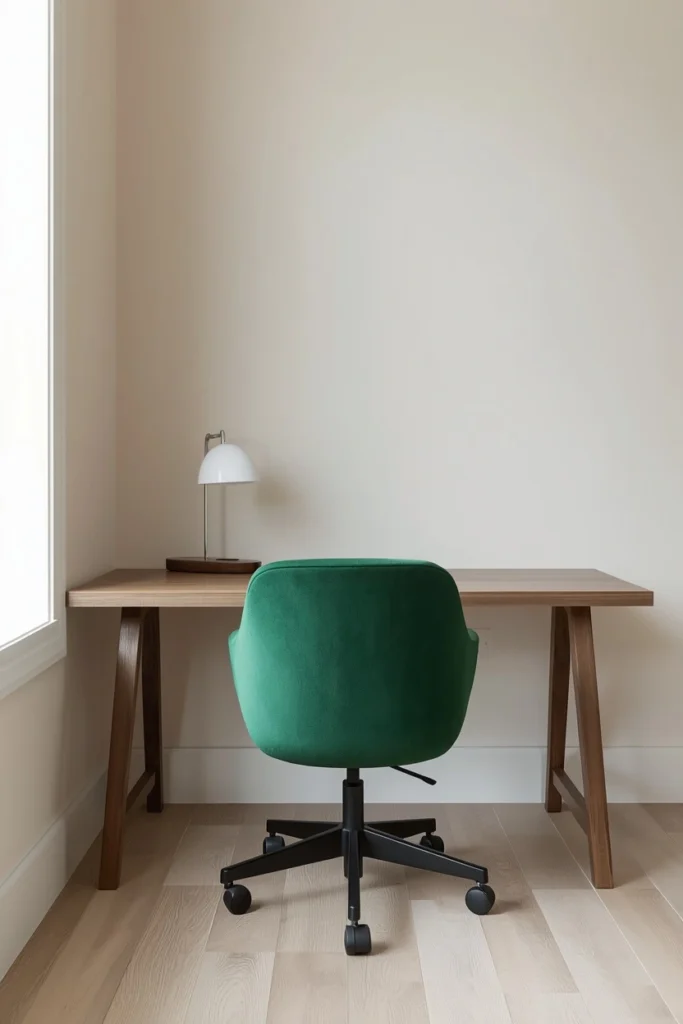
A computer chair in a saturated color — think deep emerald, burnt orange, or cobalt — designed to stand out rather than blend in with the rest of the room.
Design Breakdown
This is for people who want their chair to function as a statement piece, the same way a bold accent chair works in a living room.
Expert Tip
If you’re nervous about commitment, choose a neutral desk and let the chair carry all the color — that way nothing competes for attention.
Why It Works
A single bold piece of furniture creates a focal point, which makes small or plain rooms feel more curated and less like an afterthought.
Best For
- Large spaces
- Luxury homes
- Families
Common Mistake To Avoid
Adding too many other bold colors in the same room — let the chair be the statement, not one of five competing statements.
Quick Wins
- Stick to one bold chair color per room
- Balance with neutral walls and flooring
- Use the chair color to inspire one or two small accent pieces nearby
One thing I’ve learned: color commitment in a home office is less risky than it feels. Unlike a sofa, a chair is easy to swap out later if you change your mind, so it’s actually one of the lowest-risk ways to experiment with bold color in your home. If you’ve been hesitant to try a saturated tone anywhere else in the house, your desk chair is the safest place to start.
What’s your biggest challenge right now — finding a chair that looks good, or one that actually feels good after hour three? Keep that in mind as we move through the rest of this list, because idea #6 might solve both.
The next idea is one designers secretly love.
Idea #6: The Gaming-Inspired Chair, Reimagined for Style
What You’re Seeing
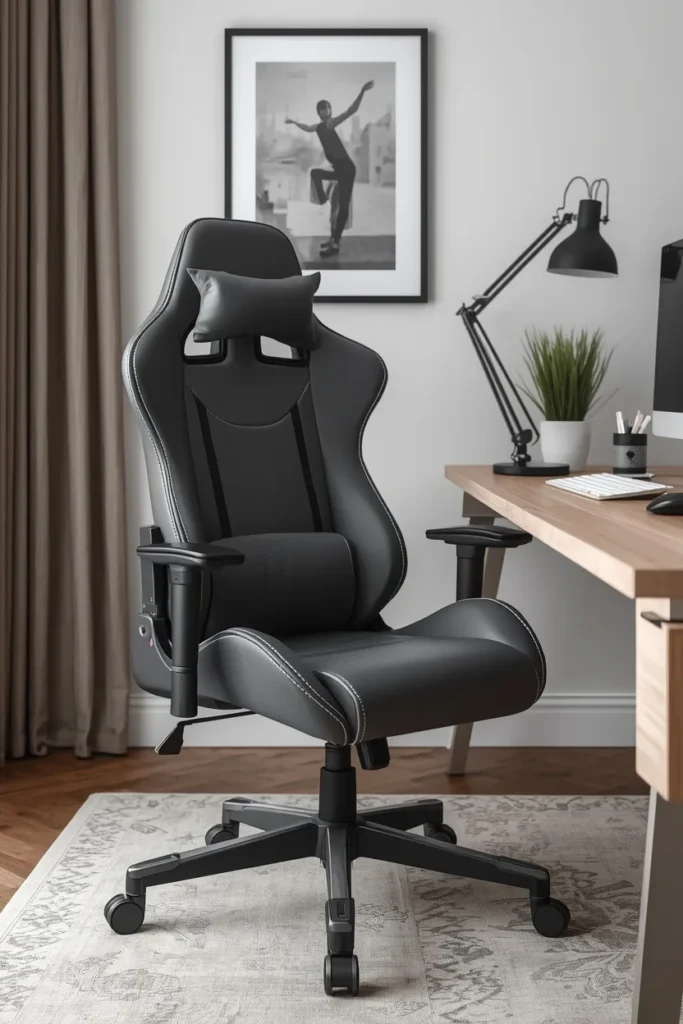
A streamlined version of a gaming chair — high-back support and bold stitching, but in muted tones like charcoal, cream, or olive instead of the typical neon racing stripes.
Design Breakdown
Gaming chairs get dismissed by design blogs constantly, but the support they offer is genuinely excellent. The trick is choosing a toned-down colorway that doesn’t scream “gamer setup.”
Expert Tip
Look for brands that offer the same ergonomic structure in matte, single-tone finishes — the support stays the same, but the look completely changes.
Why It Works
High-back support with strong head and neck positioning genuinely reduces fatigue during long work or gaming sessions, and a neutral palette means it fits into shared living spaces.
Best For
- Families
- Budget makeovers
- Large spaces
Common Mistake To Avoid
Assuming all gaming chairs look the same — the design has come a long way, and dismissing the category means missing some genuinely comfortable, good-looking options.
Quick Wins
- Choose matte over glossy finishes for a more grown-up look
- Pick muted colorways over bright contrast stitching
- Check for adjustable headrest and lumbar pillows
This is where many homeowners make a mistake. They assume style and serious back support are mutually exclusive, so they pick one extreme or the other. You don’t have to.
Idea #7: The Woven Rattan Swivel Chair
What You’re Seeing
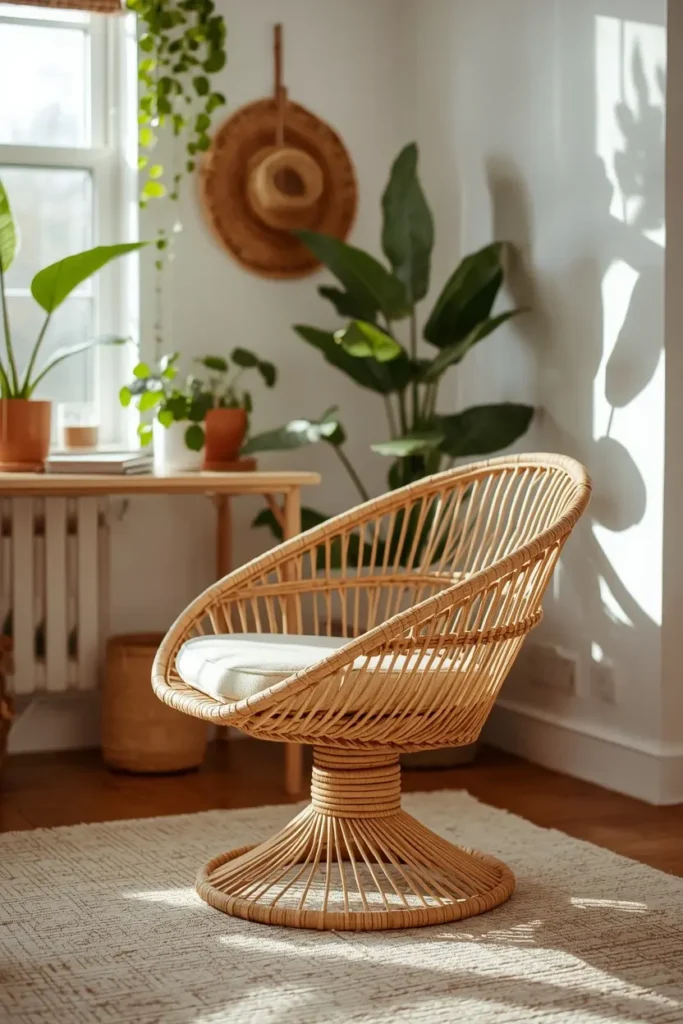
A natural rattan or wicker-back swivel chair with a cushioned seat, often paired with a casual cane desk for a relaxed, coastal-meets-boho aesthetic.
Design Breakdown
This style brings texture and warmth into a home office in a way leather and mesh simply can’t. It feels less “corporate” and more like a sunroom you happen to work in.
Expert Tip
Add a removable cushion in a washable fabric — rattan alone isn’t always the most comfortable for full work days, but a good cushion fixes that instantly.
Why It Works
Natural materials soften technical spaces and bring an organic, relaxed energy that pairs beautifully with indoor plants and linen curtains.
Best For
- Large spaces
- Luxury homes
- Renters
Common Mistake To Avoid
Choosing rattan without checking the swivel mechanism quality — cheaper bases can feel wobbly under regular use.
Quick Wins
- Pair with woven baskets or a jute rug for cohesion
- Add a plush cushion for all-day comfort
- Position near a window to highlight the natural texture
Picture yourself enjoying a slower, more relaxed work environment — one that doesn’t feel like it was airlifted in from a corporate office building. That’s the entire appeal of this idea.
You May Also Like:
- Indoor House Plants Aesthetic Ideas
- Wood Desk Ideas
- Hanging Chair Design Ideas
- Home Office Ideas for Women
- Small Console Tables Ideas
The following idea surprised me the most, mostly because it’s so simple and so often overlooked.
Idea #8: The Adjustable Kneeling Chair for an Unexpected Statement
What You’re Seeing
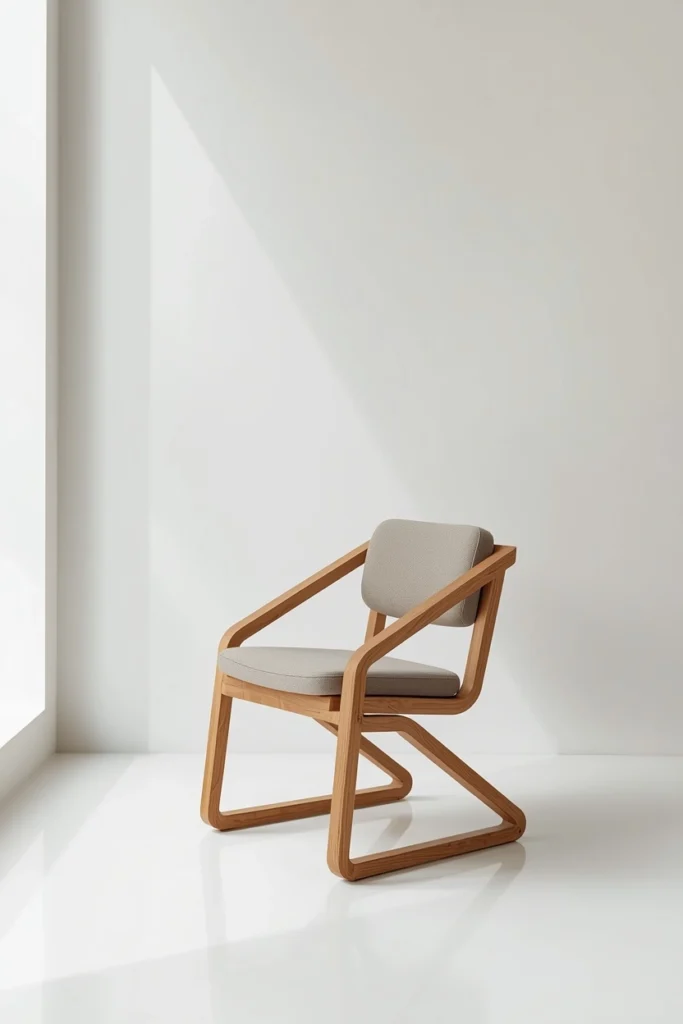
A minimalist kneeling chair with an angled seat and padded knee rest, usually in a single neutral tone, with a slim wooden or metal frame.
Design Breakdown
It looks unconventional, almost sculptural, sitting in a room. But it’s designed to shift your posture forward, engaging your core instead of letting you slump.
Expert Tip
Don’t replace your main chair entirely — use a kneeling chair as a secondary option to alternate throughout the day and break up long sitting stretches.
Why It Works
The visual novelty makes it a conversation piece, while the posture benefits give it real functional value beyond just looking interesting.
Best For
- Small spaces
- Budget makeovers
Common Mistake To Avoid
Using it as your only seat for full eight-hour days — it’s best in rotation, not as a total replacement for a supportive chair.
Quick Wins
- Introduce it gradually, starting with short sessions
- Choose a wood frame for a warmer, less clinical look
- Keep a cushioned mat underneath for comfort
Here’s where it gets interesting: alternating between two different chair types throughout the day does more for your back than any single “perfect” chair ever could. Our bodies aren’t built to hold one position for eight straight hours, no matter how ergonomic the seat is. If budget allows, having a primary chair and a secondary option — even something as simple as a stability ball or a kneeling chair — genuinely changes how your back feels by the end of the week.
Don’t skip the next tip, because idea #9 is the one that ties this whole list together.
This simple change can completely transform the room.
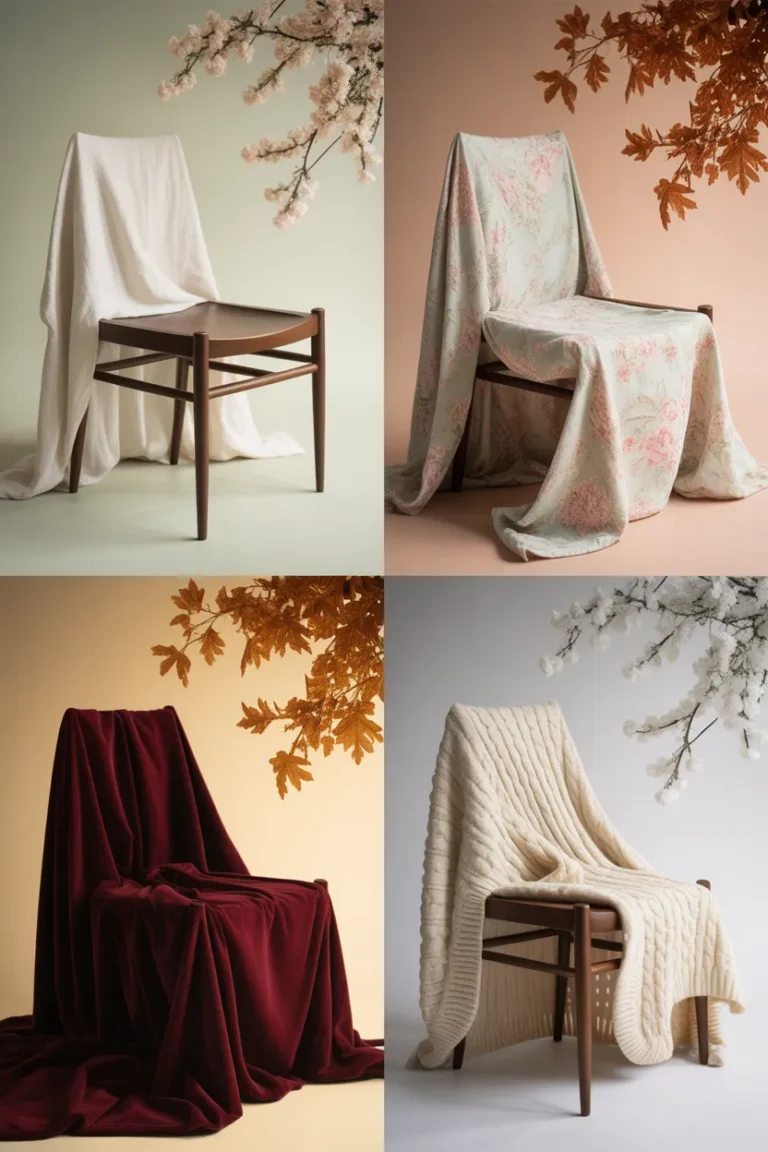
Idea #9: The Slipcovered Desk Chair for a Soft, Lived-In Look
What You’re Seeing
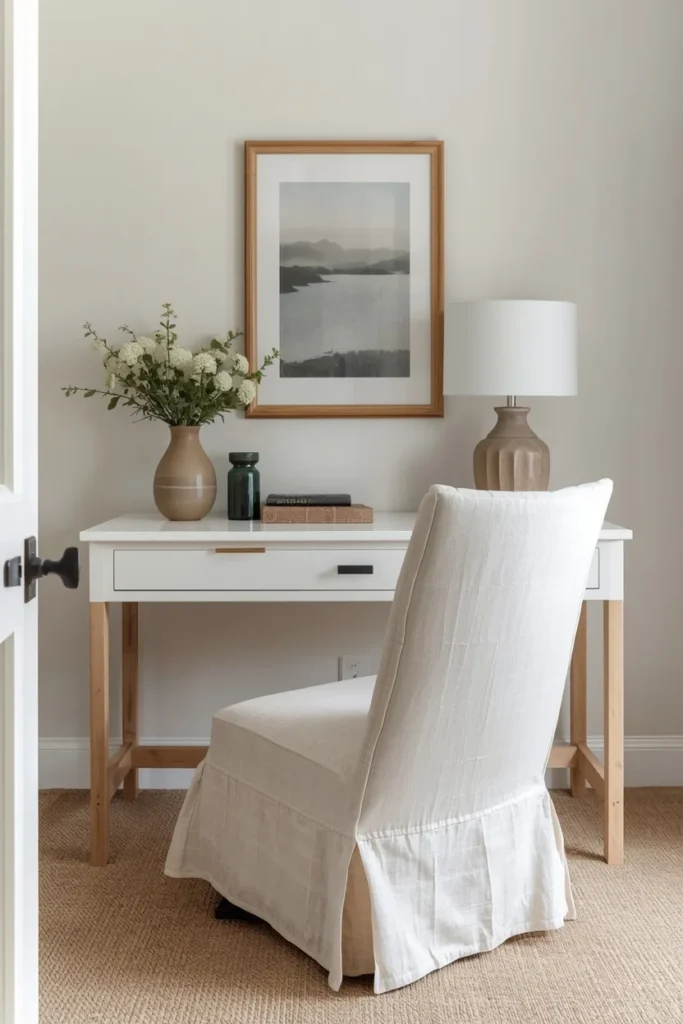
A classic wooden-frame desk chair with a removable fabric slipcover in linen or cotton, giving it a relaxed, almost European farmhouse feel.
Design Breakdown
Instead of buying a chair built specifically for “office use,” this idea repurposes a dining or accent chair design and softens it with washable fabric.
Expert Tip
Choose a slipcover in a slightly heavier linen blend — thin fabric wrinkles fast and can look messy within weeks of regular use.
Why It Works
Slipcovers add softness and color flexibility, and they’re easy to remove and wash, which matters in a chair that gets daily wear.
Best For
- Renters
- Budget makeovers
- Small spaces
Common Mistake To Avoid
Forgetting to check for back support — a beautiful slipcovered chair with a stiff, flat seat back will be uncomfortable fast.
Quick Wins
- Add a thin seat cushion underneath for support
- Choose machine-washable fabric for easy upkeep
- Stick to neutral tones so it transitions between rooms easily
Idea #10: The Statement Swivel Lounge Chair for a Work-Meets-Relax Vibe
What You’re Seeing
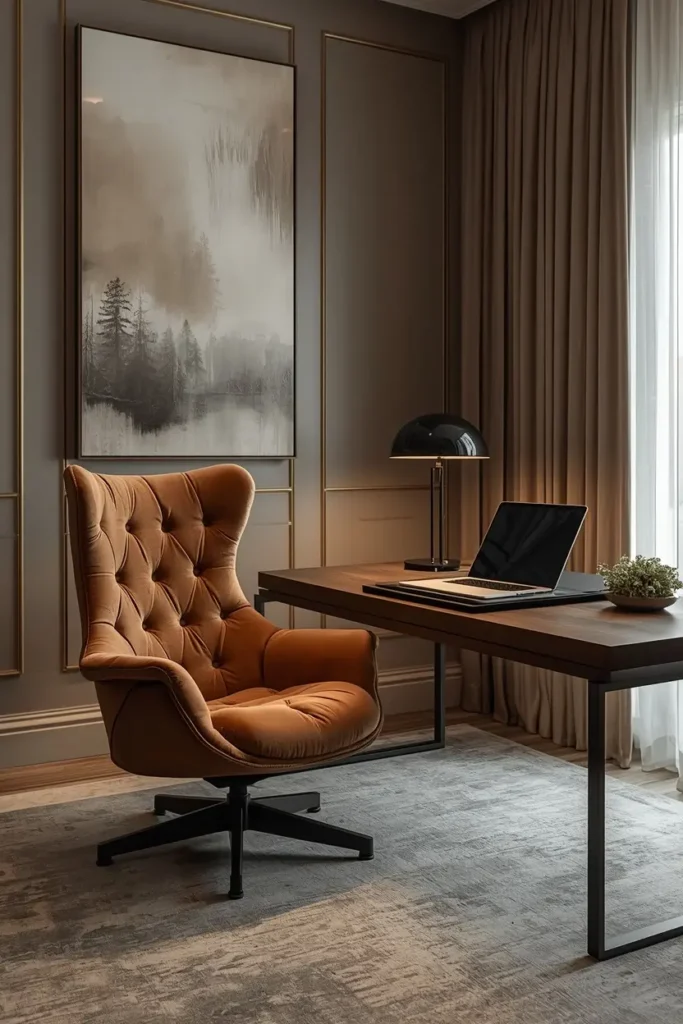
An oversized, plush swivel chair — more lounge chair than desk chair — in a soft bouclé or velvet, paired with a floating desk or laptop tray.
Design Breakdown
This idea blurs the line between “office chair” and “reading chair,” which works beautifully if your desk setup shares space with a living room or bedroom.
Expert Tip
Choose a chair with a swivel base, even if it looks like a lounge chair, so you can rotate easily between your desk and the rest of the room.
Why It Works
It signals that your workspace doesn’t have to look like a workspace — which is exactly the relaxed, multi-purpose energy a lot of modern small homes need.
Best For
- Luxury homes
- Large spaces
- Families
Common Mistake To Avoid
Choosing a chair so deep and plush that typing for long periods becomes uncomfortable — test the seat depth before committing.
Quick Wins
- Pair with a slim laptop desk rather than a bulky one
- Add a small side table for drinks or notebooks
- Choose a fabric that matches your existing living room palette
Visualize the difference between a desk chair that looks like equipment and one that looks like it belongs in a furniture catalog. That’s the entire shift these last few ideas are built around.
The Real Buying Guide: What Actually Matters When Choosing a Computer Chair
Before you go shopping, here’s the deep dive that most articles skip entirely.
Most people focus on looks first and function second. That’s backward, and it’s exactly why so many beautiful chairs end up shoved in a closet within a year.
Start with these four non-negotiables:
- Lumbar support. Your lower back needs consistent contact with support, especially if you sit for 6+ hours daily.
- Seat height range. Look for at least a 4-5 inch adjustment range so the chair works with different desk heights.
- Seat depth. Your knees should clear the front edge of the seat by about 2-3 inches when your back is against the chair.
- Material breathability. Mesh and woven fabrics breathe better than solid leather, especially in warmer climates or rooms without great airflow.
Budget breakdown — what you’re actually paying for:
- Under $150: Basic ergonomic shape, limited adjustability, shorter lifespan (1-3 years of heavy use)
- $150-$400: Real lumbar adjustment, breathable materials, sturdier base, 3-5 year lifespan
- $400-$800: Premium materials, multi-point adjustability, often better warranties
- $800+: Designer pieces, premium leather or specialty fabric, built to last 7+ years with proper care
Common mistakes people make at every price point:
- Buying based on looks alone, without checking adjustability
- Ignoring the base quality — cheap casters wear out fast on hardwood or tile
- Skipping the “test sit” if buying in person, or skipping the return window if buying online
- Choosing a chair that matches a desk’s color but ignores how it matches the room’s overall style
A simple decision-making framework:
If you work from home full-time, prioritize ergonomics first, style second — you’ll thank yourself in six months. If your “desk” is more occasional, used for a few hours a few days a week, you have more room to prioritize the look and aesthetic since your body isn’t logging the same wear and tear.
Which design would you try first based on how you actually use your space? That answer should guide your budget more than the price tag does.
Related Home Office Ideas
If this list got you thinking about your whole workspace and not just the chair, you’re going to want to keep exploring. Here’s where to go next:
- Home Office Ideas
- Small Desk Ideas
- Wood Desk Ideas
- Gaming Desk Design Ideas
- Sit Stand Desk Ideas
- Cosy Home Office Ideas
- Home Office in Living Room Ideas
- Cozy Cubicle Inspiration Ideas
Final Thoughts: Pick One Idea and Start There
If there’s one thing I hope you take from these computer chair design ideas, it’s this: your chair isn’t just furniture, it’s the piece that decides whether your workspace actually feels good to use.
The boucle task chair and the mid-century leather option are the two that consistently surprise people the most — they prove comfort and style were never actually competing goals.
So here’s my challenge for you. Don’t try to overhaul your whole office this week. Just pick one idea from this list — the rattan swivel, the bold accent chair, whatever caught your eye — and commit to it.
Which one is your favorite? I’d genuinely love to know which design speaks to your space the most.
Once your chair feels right, the rest of your home office tends to fall into place faster than you’d expect. If you haven’t already, take a look at our home office ideas guide for the bigger picture, or if you’re working with a tighter footprint, our small desk ideas post is exactly where to go next.
And if you thought finding the right computer chair design was tricky, wait until you see what we found while putting together our guide on dorm room chairs — there’s one idea in there that completely changes how a tiny room can function.