10 Fairy Garden Ideas for Kids That Turn Any Backyard Into Pure Magic
This article was created in line with Trends Oraa’s research and content standards.
Most parents don’t realize this.
The backyard they already have is one tiny idea away from becoming their kid’s favorite place on earth.
That’s why so many yards feel “fine” but never magical.
The good news? Fixing that is a lot simpler — and a lot cheaper — than you think.
If you’ve been searching for fairy garden ideas for kids that actually get used (not just admired once and forgotten), you’re in exactly the right spot. You might also love our guide on garden-ideas if you want the bigger picture before you zoom into the fairy-sized details — it pairs perfectly with everything below.
This isn’t a list of Pinterest photos that look pretty and go nowhere. These are 10 real, doable fairy garden ideas for kids, broken down piece by piece so you know exactly what you’re looking at, why it works, and how to avoid the mistakes most people make on their first try.
Grab a coffee. This one’s worth the scroll.
Why Fairy Garden Ideas for Kids Are Having a Moment
Here’s the thing nobody tells you about kids and outdoor play: they don’t need more toys.
They need a world.
A fairy garden gives them exactly that — a tiny, self-contained universe they get to build, rearrange, and story-tell their way through all summer long.
But here’s the important part: the best fairy gardens aren’t the most expensive ones. They’re the ones with the most personality.
Let’s get into it.
1. The Teacup Fairy Cottage
What You’re Seeing

A chipped vintage teacup, half-buried in soil, tipped on its side like it just tumbled out of a fairy’s picnic basket. Moss spills out of the opening like a tiny green rug, and a matchstick door leans against the rim.
Design Breakdown
This idea works because it repurposes something you already own — no one needs to buy a $40 miniature cottage kit when a thrifted teacup does the job better. The curve of the cup naturally creates a “roof,” and the handle becomes a built-in awning for a tiny fairy porch.
Expert Tip
Use a hot glue gun to anchor the moss before you place any figurines — loose moss is the number one reason these gardens look messy after the first rainstorm.
Why It Works
Kids respond to scale. A teacup instantly feels “fairy-sized” in a way a plastic house from the craft store doesn’t, because it’s a real object they recognize being reimagined.
Best For
- Small spaces
- Budget makeovers
- Renters
Common Mistake To Avoid
Using a cup with no drainage. Drill a small hole in the bottom or nestle it into a larger pot with drainage instead.
Quick Wins
- Costs less than $5 if you thrift the cup
- Takes under 20 minutes to assemble
- Works on a balcony, windowsill, or garden bed
2. The Stepping Stone Village
What You’re Seeing
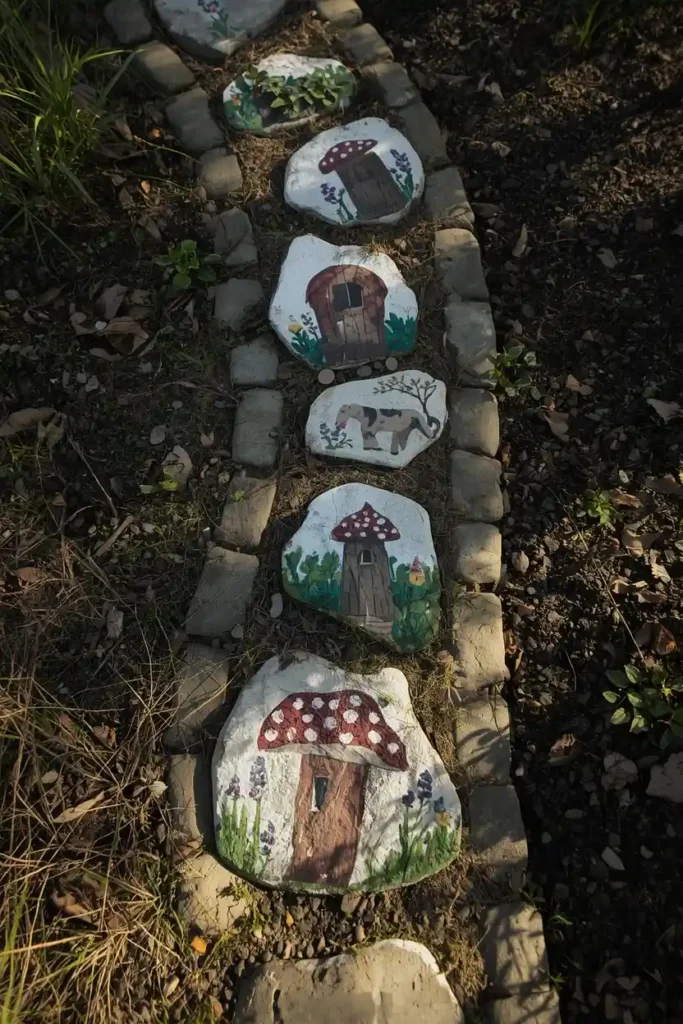
A winding path of flat stones, each one painted with a tiny door, window, or mushroom roof, leading from the patio into a shaded garden bed.
Design Breakdown
Instead of one fairy house, this idea spreads the magic across a whole path — every stone becomes its own “address” in the fairy village. Kids love following the path to see where it leads.
Expert Tip
Use outdoor acrylic paint sealed with a matte spray sealant so the designs survive rain, sprinklers, and little feet.
Why It Works
This taps into a kid’s love of narrative and discovery. A path implies a journey, and journeys are inherently more engaging than a static display.
Best For
- Large spaces
- Families
- Budget makeovers
Common Mistake To Avoid
Spacing the stones too far apart for little legs. Keep them close enough for a 4-year-old’s natural stride.
Quick Wins
- Reuses stones you may already have in storage
- Doubles as a functional walking path
- Easy to expand one stone at a time
Most people don’t know this: the difference between a fairy garden that gets played with daily and one that gets ignored after week one almost always comes down to accessibility. If a child has to ask an adult to move a chair or reach over a barrier to touch it, they’ll stop trying within a few days. One thing I’ve learned from watching dozens of these setups play out — put the garden at a height and location a child can reach, rearrange, and “fix” without permission. Ownership is what keeps the magic alive, not the decor itself.
Most people waste more space than they realize.
3. The Repurposed Wheelbarrow Garden
What You’re Seeing
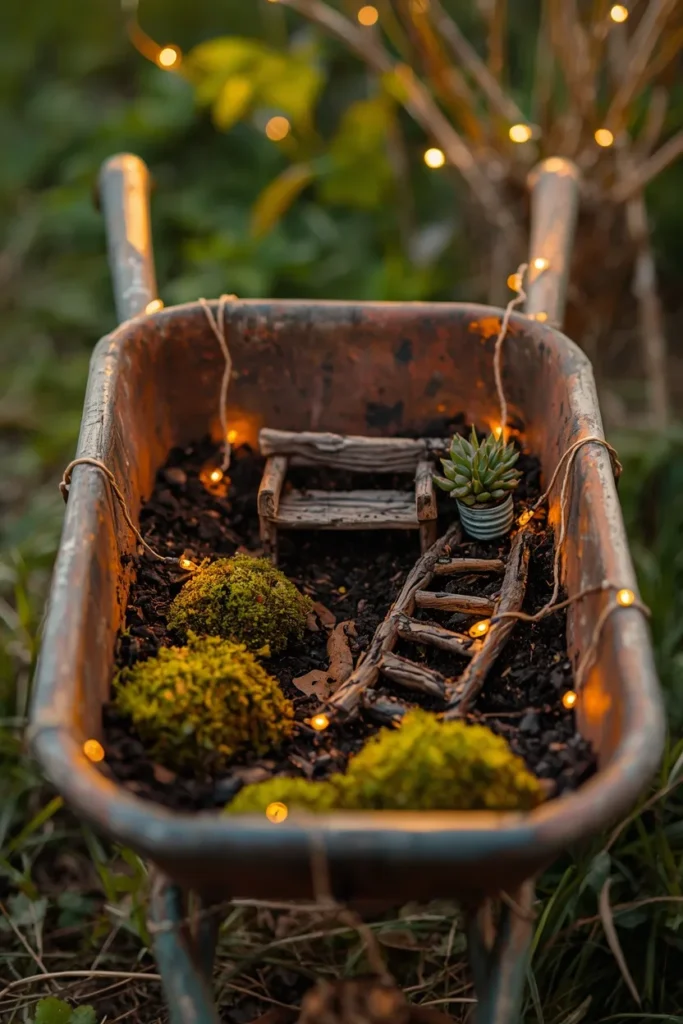
An old, slightly rusted wheelbarrow filled with soil, moss, and a cluster of miniature furniture — a tiny bench, a spiral staircase made of twigs, and a string of fairy lights woven through.
Design Breakdown
A wheelbarrow gives you built-in height, drainage (if it already has holes or rust spots), and portability. You can wheel the whole garden into shade during a heatwave or closer to the patio for evening viewing.
Expert Tip
Line the wheelbarrow with landscape fabric before adding soil if you plan to move it often — it keeps the weight down and prevents soil from spilling through gaps.
Why It Works
Elevated fairy gardens are easier on adult backs (no bending to weed or water) and harder for pets to disturb, which means less frustration and more longevity.
Best For
- Large spaces
- Families
- Budget makeovers
Common Mistake To Avoid
Overcrowding the space with too many figurines. Leave visual breathing room — three or four well-placed pieces beat twelve crammed together.
Quick Wins
- Portable — move it wherever the light is best
- Great use for a wheelbarrow that’s past its gardening prime
- Easy to add solar lights for nighttime magic
You May Also Like:
- Garden Ideas
- Vegetable Garden Ideas
- Small Garden Design Ideas
- Tiny Garden Ideas
- Diy Elevated Garden Bed Plans
Mid-Article Deep Dive: The Complete Fairy Garden Planning Guide
This is where it gets interesting — because before you build any of the remaining seven ideas, there are a few planning decisions that determine whether your fairy garden lasts one weekend or three summers.
Step 1: Choose your location wisely.
- Partial shade works best for most fairy gardens — full sun bakes moss and dries out miniature plants fast.
- Pick a spot visible from a window or the patio so the “magic” is part of everyday life, not something tucked away and forgotten.
- Avoid low spots that pool water after rain.
Step 2: Decide on your container or base.
- Container gardens (teacups, wheelbarrows, wagons) are best for renters or anyone who might move.
- In-ground gardens are best for families who want something semi-permanent and larger in scale.
- Raised beds split the difference — good drainage, good visibility, and less bending for adults helping out.
Step 3: Budget realistically.
- Budget tier ($10–20): thrifted containers, pinecones, twigs, stones you already own, painted rocks.
- Mid tier ($20–50): a bag of moss, a few resin figurines, a small solar light, mini fencing.
- Higher tier ($50+): pre-made miniature furniture sets, a dedicated water feature, custom-built structures.
Step 4: Involve your child in the decisions, not just the decorating.
This is where many homeowners make a mistake — they build the entire garden themselves and then present it as a surprise. Kids engage far more when they help choose the theme, the “fairy family” living there, and where the door should face. A garden a child helped design gets rearranged, storytold, and revisited for months. A garden built for them gets looked at once.
Step 5: Plan for maintenance from day one.
- Choose low-maintenance groundcover like moss or creeping thyme instead of anything that needs frequent watering.
- Pick weatherproof figurines (resin over painted wood) if the garden stays outside year-round.
- Build in a “reset day” once a month where you and your child tidy, replant, and reimagine the space together.
Common mistakes to avoid at the planning stage:
- Buying every miniature accessory before choosing a theme — it leads to a cluttered, mismatched look.
- Skipping drainage, which is the single biggest reason container fairy gardens fail within a month.
- Placing the garden somewhere pets can easily reach and dig.
Would you choose function or style here? The best fairy gardens actually manage both — and that balance is exactly what the next few ideas nail.
4. The Log Cabin Fairy House
What You’re Seeing
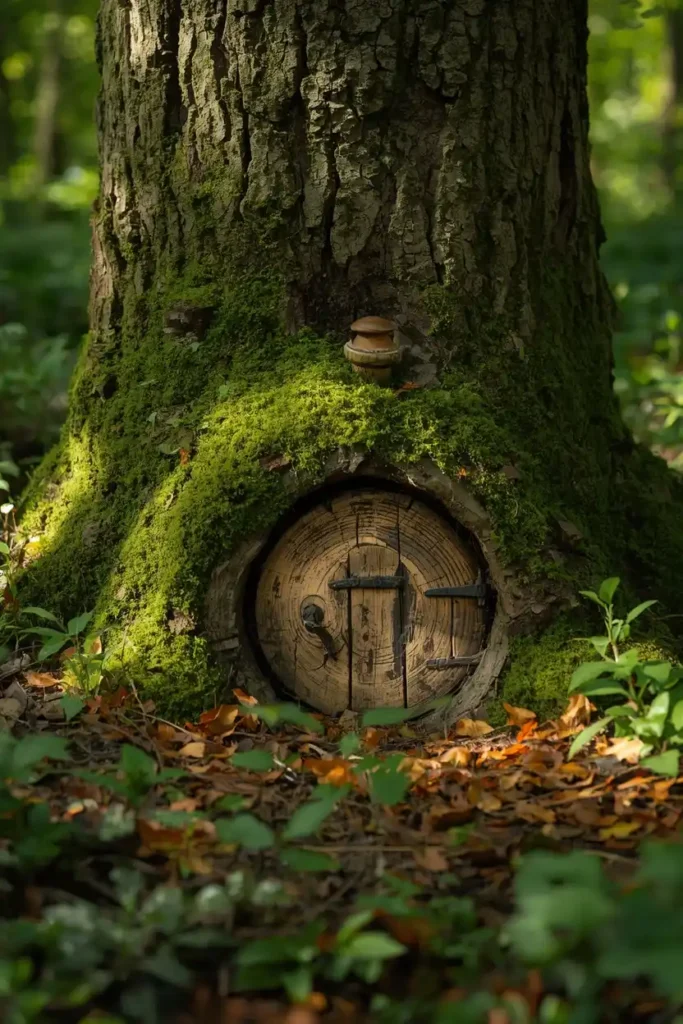
A small hollowed log, moss growing along its edges, with a tiny round door cut into the side and a chimney made from a bottle cap.
Design Breakdown
Using an actual piece of found wood instead of a plastic house gives the whole scene a woodland, storybook feel. The natural bark texture does more visual work than any painted detail could.
Expert Tip
Seal the cut edges of the log with a clear outdoor sealant to slow down natural decay, especially if it’s staying outside through multiple seasons.
Why It Works
Natural materials age gracefully instead of looking worn out — a weathered log looks more charming over time, not less, which means the garden improves rather than deteriorates.
Best For
- Families
- Budget makeovers
- Large spaces
Common Mistake To Avoid
Skipping ventilation. A sealed hollow log without airflow can trap moisture and rot faster than expected.
Quick Wins
- Free if you already have yard debris or a fallen branch
- Blends naturally into existing landscaping
- Pairs beautifully with moss, ferns, and shade plants
Imagine walking into the backyard and seeing this tucked under a tree, half-hidden until your child points it out to a friend like it’s a secret only they know about.
5. The Mason Jar Terrarium Fairy Garden
What You’re Seeing
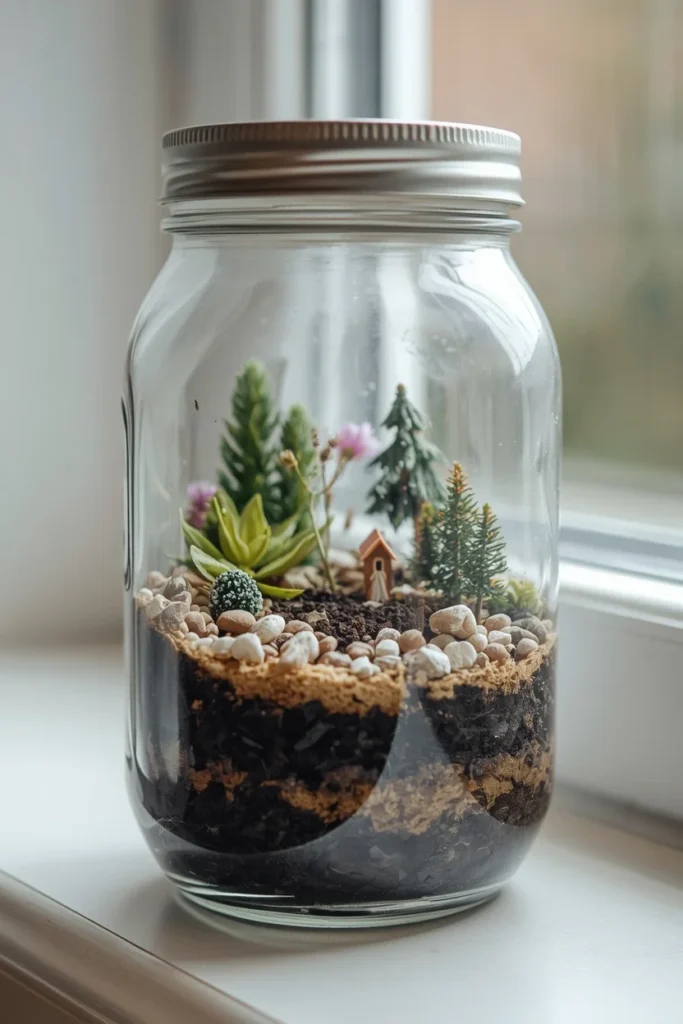
A large glass jar, laid on its side or left open-topped, layered with pebbles, activated charcoal, soil, and a tiny fairy scene visible through the glass from every angle.
Design Breakdown
This is the ideal option for anyone without outdoor space at all — it lives on a windowsill, a desk, or a shelf, and the glass turns the scene into something that feels almost like a snow globe.
Expert Tip
Layer pebbles at the bottom before soil so excess water has somewhere to go — this single trick prevents root rot in closed terrariums.
Why It Works
Enclosed, self-contained worlds are deeply satisfying to kids because everything is visible and controllable at once — nothing is hidden or out of reach.
Best For
- Small spaces
- Renters
- Budget makeovers
Common Mistake To Avoid
Overwatering. Terrariums need far less water than an open garden bed — a light misting once a week is usually plenty.
Quick Wins
- No outdoor space required
- Doubles as a science lesson on ecosystems
- Easy to gift or bring to a friend’s house
<div class=”expert-insight-box”>
Here’s where it gets interesting: terrarium fairy gardens are quietly becoming the most requested version of this trend, and it’s not just about small spaces. Parents in apartments and renters without a yard have been asking for an indoor option for years, and the enclosed jar format solves the two biggest complaints — mess and maintenance. One thing I’ve learned working with dozens of these builds is that kids treat the glass boundary like a stage, which actually increases the storytelling instead of limiting it. </div>
The next idea changes everything.
6. The Fairy Garden Treehouse Corner
The next idea is one designers secretly love.
What You’re Seeing
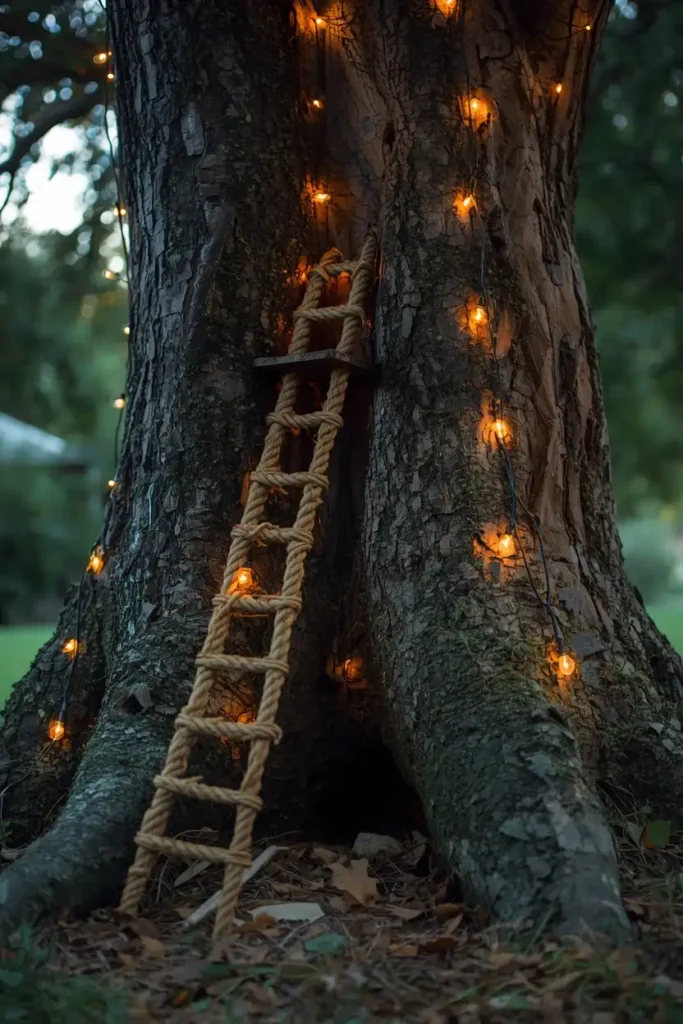
A tiny ladder made of twine and twigs leaning against the base of a real tree, with a miniature platform tucked into a root crevice and fairy lights strung upward into the lower branches.
Design Breakdown
Instead of building something separate from your landscaping, this idea uses an existing tree as the anchor, which means zero extra footprint and an automatically “grown-in” look from day one.
Expert Tip
Use removable garden wire instead of nails or screws to attach anything to the tree — it protects the tree’s health and lets you reposition pieces as they settle.
Why It Works
Vertical storytelling (a ladder going “up”) captures a kid’s imagination more than a flat scene because it implies rooms and levels they can’t fully see — which means more imagined detail, not less.
Best For
- Large spaces
- Families
Common Mistake To Avoid
Attaching decor too high for a child to see without help. Keep the visible action within eye level for the age group using it.
Quick Wins
- Works with a tree you already have
- Pairs naturally with our Treehouse Ideas For Kids
- Minimal ongoing maintenance once installed
Which of these ideas would work best in your home so far?
7. The Fairy Herb Spiral Garden
What You’re Seeing
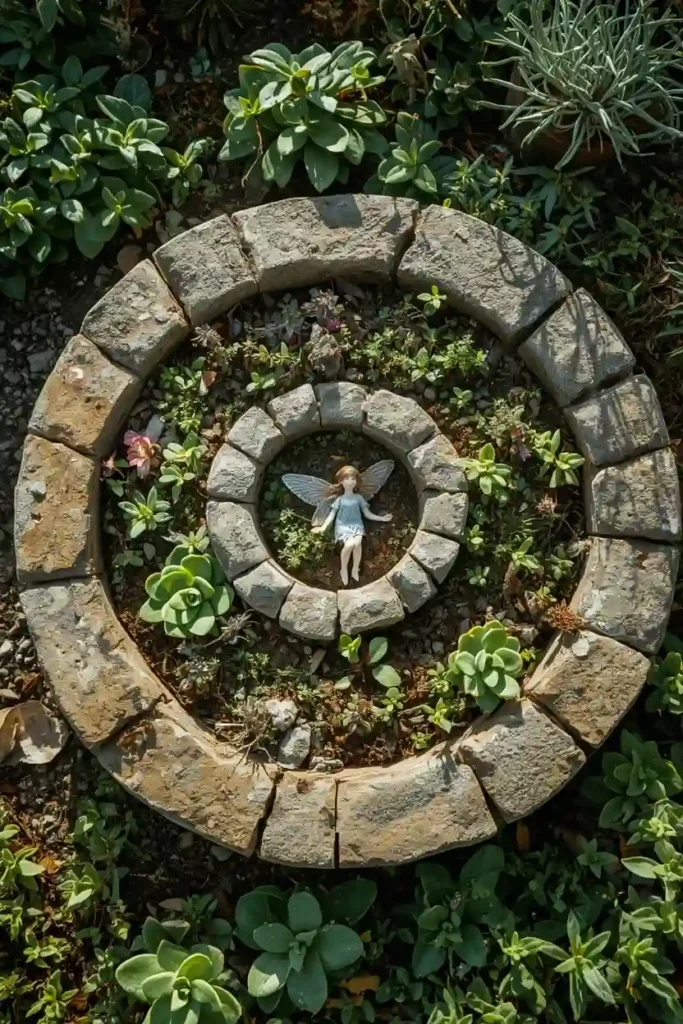
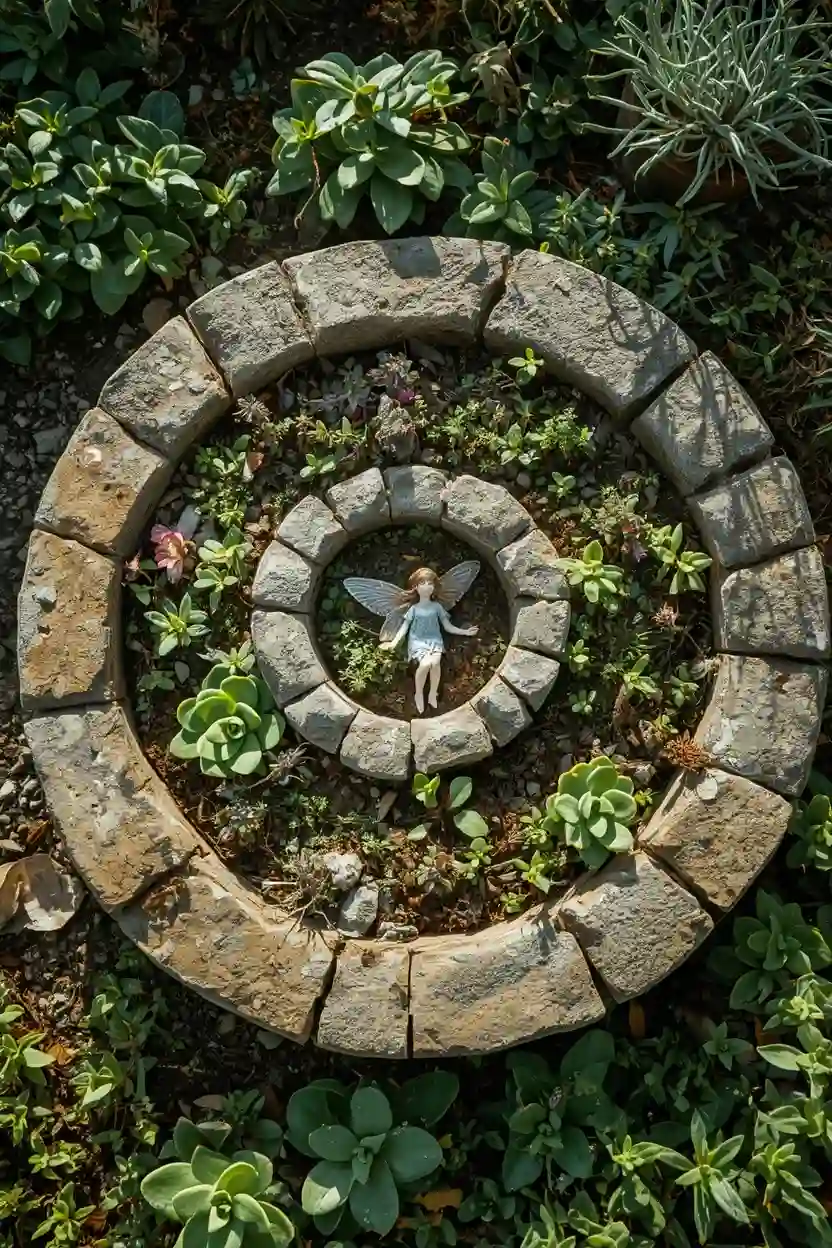
A small spiral of stacked stones, filled with creeping thyme, tiny succulents, and a fairy figure “resting” at the center like it’s the heart of a labyrinth.
Design Breakdown
The spiral shape does double duty — it’s visually striking from above (great for that Pinterest-worthy overhead shot) and it naturally creates different microclimates, since the top of the spiral drains faster than the base.
Expert Tip
Plant drought-tolerant herbs like thyme or oregano at the top of the spiral and moisture-loving plants like mint near the base, where water naturally collects.
Why It Works
This idea sneaks in a real gardening lesson — kids learn about plant needs, sun exposure, and water without it feeling like a lecture, because they’re too busy enjoying the fairy story layered on top.
Best For
- Large spaces
- Families
- Luxury homes
Common Mistake To Avoid
Planting mint anywhere it can spread into the rest of the yard — always contain it, even inside a spiral.
Quick Wins
- Doubles as a working herb garden
- Visually stunning from a second-story window or drone shot
- Great option to pair with our Cut Flower Garden Layout Ideas
You May Also Like:
- Small Balcony Garden Ideas
- Balcony Garden Ideas
- Garden Shed Landscaping Ideas
- Modern Garden Shed Ideas
- Garden Bird Feeders Ideas
8. The Recycled Wagon Fairy Garden
What You’re Seeing
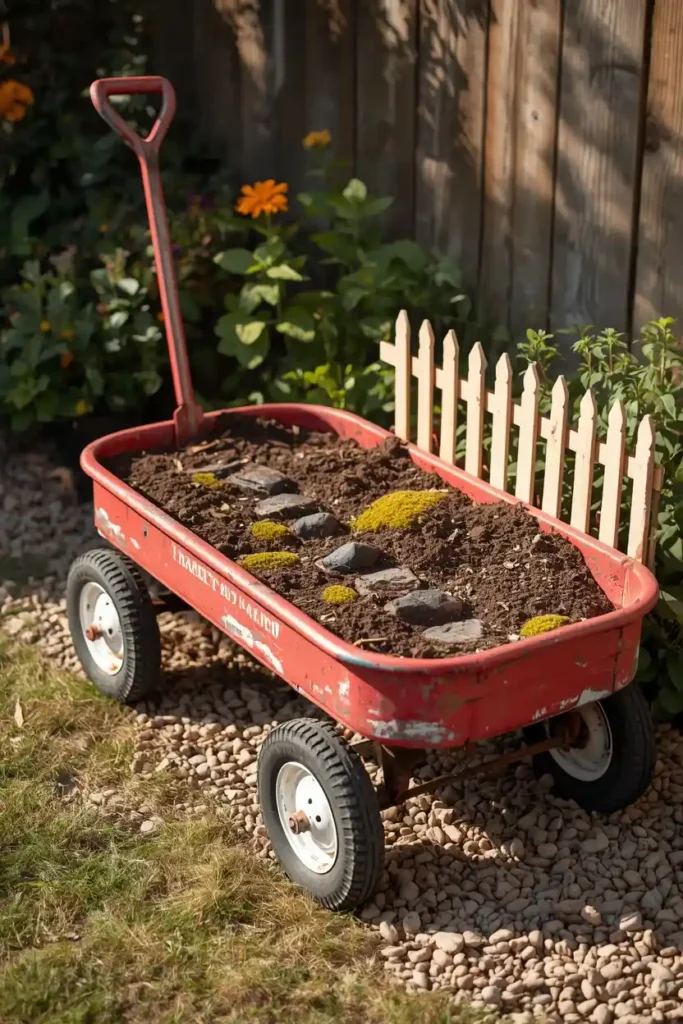
An old red wagon, no longer roadworthy, filled with soil and turned into a rolling fairy scene complete with a pebble pathway and a popsicle-stick fence.
Design Breakdown
Like the wheelbarrow idea, this repurposes something that already has sentimental value — many families have an old wagon sitting in the garage that’s perfect for this exact project.
Expert Tip
Drill several drainage holes in the wagon bed before adding soil, since most wagons are built to hold weight, not water.
Why It Works
Giving new purpose to an old, loved object creates emotional attachment on top of the visual appeal — kids often love the wagon garden more because it used to be “their” wagon.
Best For
- Families
- Budget makeovers
- Renters
Common Mistake To Avoid
Forgetting the wagon still has wheels — secure it in place if you don’t want it to roll away during play or wind.
Quick Wins
- Fully mobile if you want to move it seasonally
- Reuses an object with sentimental value
- Simple to theme around a season or holiday
Most people don’t know this: the “repurposed object” fairy gardens — the teacup, the wheelbarrow, the wagon — consistently outperform store-bought kits in how long kids stay engaged. Here’s where it gets interesting: it’s not really about cost at all. It’s about story. A wagon that used to carry a child down the driveway now carries a fairy family, and that transformation narrative is something a plastic kit simply can’t replicate.
This simple change can completely transform the room.
9. The Fairy Reading Nook Garden
This simple change can completely transform the room.
What You’re Seeing

A small garden bed tucked beside an outdoor bench or reading chair, with a miniature fairy “library” — tiny books made from folded paper, a lantern, and a bench scaled just for the fairies.
Design Breakdown
This idea blends two beloved kid spaces into one: the fairy garden and the reading corner. Placing them side by side means the fairy scene becomes part of quiet time, not just active play.
Expert Tip
Weatherproof the paper “books” with a thin coat of clear nail polish or resin so they hold their shape through humidity and dew.
Why It Works
Pairing a calm activity (reading) with an imaginative one (fairy storytelling) extends the time kids spend in that spot, which is exactly what increases outdoor screen-free time.
Best For
- Small spaces
- Families
Common Mistake To Avoid
Placing it somewhere without any shade — a reading nook in direct sun gets uncomfortable fast and goes unused.
Quick Wins
- Pairs naturally with our Reading Corner Ideas and Book Nook Ideas
- Encourages quiet, screen-free outdoor time
- Easy to refresh seasonally with new “book” titles
What’s your biggest challenge right now — space, budget, or just knowing where to start? This next one solves for all three.
10. The Whole-Family Fairy Garden Festival Corner
What You’re Seeing
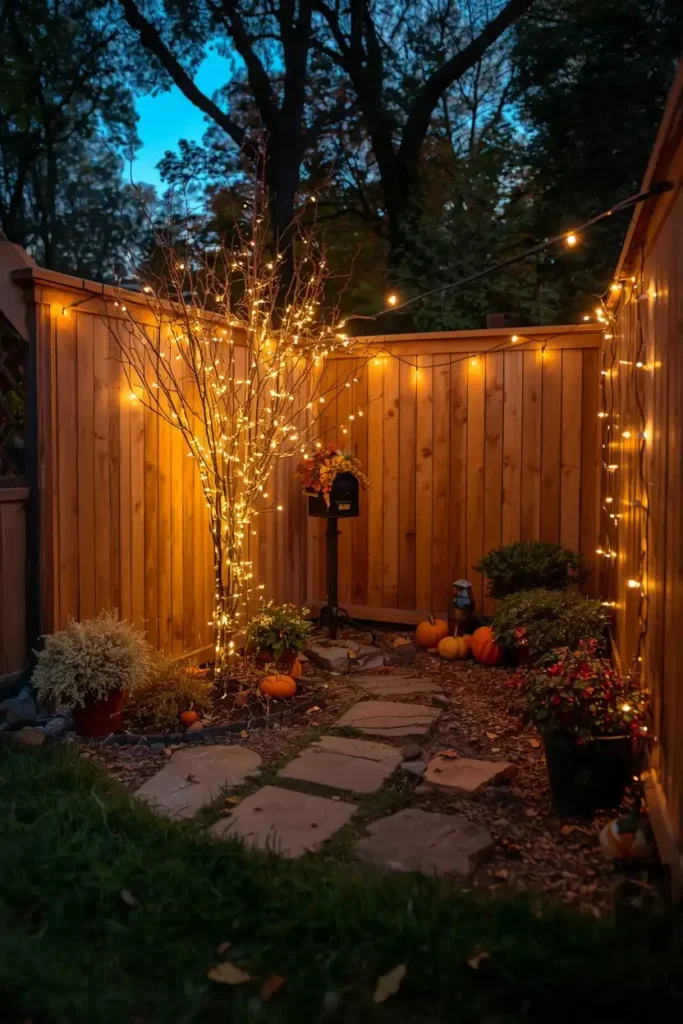
A larger dedicated corner of the yard combining several elements from this list — a stone path, a mailbox-sized fairy post office, string lights, and rotating seasonal decorations that change with birthdays and holidays.
Design Breakdown
Instead of choosing just one idea, this final concept treats the fairy garden as a living, evolving corner of the yard that grows alongside your family’s celebrations and your child’s changing interests.
Expert Tip
Build in one “permanent” structure (like a small fairy door mounted on a tree or fence) and rotate everything else seasonally — it keeps the space fresh without a full rebuild every few months.
Why It Works
Novelty keeps kids engaged. A space that changes with the seasons, holidays, or a child’s evolving interests stays exciting far longer than a static display ever could.
Best For
- Large spaces
- Families
- Luxury homes
Common Mistake To Avoid
Trying to build everything at once. Start with one anchor piece and add new elements gradually — it’s both cheaper and far less overwhelming.
Quick Wins
- Grows with your child instead of being outgrown
- Great for birthday parties — pair with our 10 DIY Rainbow Birthday Party Ideas
- Ideal weekend project to build in phases
Let me know which one is your favorite — I’d genuinely love to hear which idea matches your yard.
Related Fairy & Kids’ Outdoor Ideas
Picture yourself enjoying a whole weekend of small backyard projects instead of one big overwhelming one. If this list got you inspired, these related guides are the natural next step:
- Treehouse Ideas For Kids
- Outdoor Background Area For Kids Ideas
- 20 Homemade DIY Tent Ideas For Kids To Play
- Chalk Obstacle Course For Kids
- Driftwood Craft For Kids
- 10 Easy Pine Cone Crafts And Ideas For Kids And Adults
- DIY Garden Trellis Ideas
- Small Garden Design Ideas
Final Thoughts on Fairy Garden Ideas for Kids
If there’s one thing worth taking away from these 10 fairy garden ideas for kids, it’s this: the projects that get used and loved for years are almost never the most expensive ones.
The teacup cottage, the repurposed wagon, the stepping stone path — these hit hardest because they combine imagination with something real and familiar.
Think about how much easier this feels once you stop hunting for the “perfect” kit and start looking around your own garage, garden shed, or recycling bin instead.
My honest advice? Pick just one idea from this list and build it this week. Not all ten. Just one. Let your child help choose the theme, and watch how much longer they engage with something they had a hand in creating.
So — which of these will you try first, and who’s your fairy garden actually for: your kids, or the version of your own childhood you never quite got to build?
If you loved this list, our guide on Garden Shed Landscaping Ideas is a natural next stop, especially if your fairy garden corner is going to live near a shed or storage space.
And if you’re wondering what else might spark the same kind of backyard magic, keep an eye out for our upcoming guide on turning unused side-yard space into a kid-friendly outdoor world — it might just be the missing piece your yard has been waiting for.
Frequently Asked Questions About Fairy Garden Ideas for Kids
1. What is the cheapest way to start a fairy garden for kids? Thrifted containers like teacups, wagons, or wheelbarrows combined with found materials like twigs, stones, and pinecones can bring the total cost under $10.
2. Do fairy gardens need direct sunlight? Most fairy gardens do best in partial shade, since full sun dries out moss and miniature plants quickly.
3. What plants work best for a kids’ fairy garden? Moss, creeping thyme, small succulents, and miniature ferns are popular choices because they’re low-maintenance and scale well.
4. How do I keep a fairy garden from looking messy? Limit the number of figurines, secure moss with hot glue, and stick to one clear theme instead of mixing too many styles.
5. Can a fairy garden be built indoors? Yes — mason jar terrariums and small glass containers make excellent indoor fairy gardens for renters or anyone without outdoor space.
6. How often does a fairy garden need maintenance? A quick monthly reset — tidying moss, checking drainage, and replanting anything that’s died back — is usually enough.
7. What age group enjoys fairy gardens the most? Kids roughly ages 3 to 10 tend to engage with fairy gardens the most, though many families keep and expand them well beyond that.
8. Is it safe to use real plants kids might touch or eat? Stick to non-toxic plants like thyme, mint (contained), and common succulents, and avoid anything with berries or seeds you’re unsure about.
9. How do I make a fairy garden survive winter? Bring container gardens indoors or into a garage, and choose weatherproof, resin-based figurines for anything left outside year-round.
10. What’s the easiest first fairy garden project for a beginner? The teacup fairy cottage is widely considered the easiest starting point — low cost, minimal materials, and done in under 20 minutes.